Choosing the best Die Caster manufacturer in China is not a logo contest. The right choice depends on your parts, production volume, alloy, and support needs. A machine suited to small aluminum housings may not fit a large, high-pressure component. Details matter.
A useful comparison starts with the machine itself. Check its clamping force, shot control, cycle consistency, and compatibility with your die and alloy. Ask how performance is tested before shipment, and request clear specifications rather than broad claims. A stable cycle can reduce scrap, but only when tooling, process settings, and operator training work together. Look closely at the practical details: spare-part availability, service response times, installation guidance, and documentation in a language your team can use. Ask for references from buyers with similar production requirements. Verify them where possible.
The word “best” needs a little caution. Some suppliers manufacture die-casting machines; others make cast components or provide complete production lines. These are not interchangeable roles. Factory visits, recorded test runs, and direct technical discussions can reveal more than polished brochures. Still, one inspection cannot guarantee every future result. That is worth remembering. This guide explores how to assess Chinese manufacturers using evidence, application fit, quality practices, and after-sales support. It aims to help buyers ask sharper questions—not to crown a universal winner.
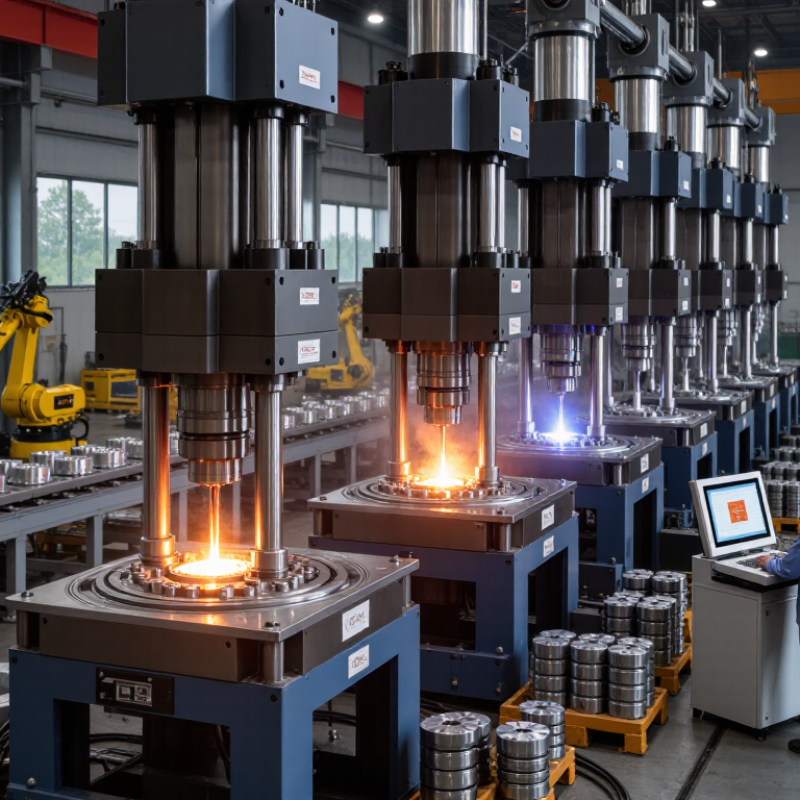
A die caster is a manufacturer that forms metal parts by injecting molten alloy into a reusable steel die. In high-pressure casting, a machine forces metal into the cavity quickly, then the part cools and is ejected. Die design, temperature control, and cycle timing affect dimensions and surface quality. Small vents and cooling channels matter. A clean-looking part can still contain porosity, so appearance alone is not proof of quality.
Aluminum is widely used for lightweight housings and structural components. Zinc suits smaller, detailed parts that need a smooth finish, while magnesium can reduce weight further but demands careful process control. Each alloy brings trade-offs in strength, weight, cost, and finishing needs. There is no universal best choice. A real project may reveal that the first alloy selected was not the most practical.
End markets include vehicles, electronics, lighting, and household equipment. Their requirements differ: an electronics enclosure may need precise mounting points, while a vehicle component may face vibration and heat. When evaluating a Chinese die caster, ask how samples are checked for dimensions, porosity, and repeatability across production runs. Review inspection records, not just a polished sample. The right process depends on the part’s function, production volume, and acceptable defect rate.
High-pressure die casting (HPDC) fills a closed steel die with molten metal at high speed. After the cavity fills, intensification pressure helps feed metal into sections as they shrink during solidification. A typical range is 30–100 MPa, but the required setting depends on the alloy, part geometry, and machine design. It is not a magic number.
During production, the machine applies pressure through the plunger while the gate remains open. If pressure rises too early, turbulence may trap gas; if it comes too late, thin ribs may already be freezing. Operators should examine pressure curves, biscuit thickness, and cut samples, rather than relying on the setpoint alone. Small changes matter. In practice, the ideal pressure window can be less tidy than a process sheet suggests.
When comparing a die caster manufacturer in China, ask how it validates intensification pressure for your specific casting. Trial reports, dimensional checks, and porosity results from representative parts offer useful evidence. Pressure cannot compensate for poor venting or unstable melt temperature, and that distinction is easy to overlook.
During the intensification stage of high-pressure die casting (HPDC), pressure helps feed molten metal into the die as it solidifies. Typical intensification pressures range from 30 to 100 MPa; the appropriate setting depends on the alloy, part design, and process conditions.
The bar represents a typical range, not a universal setting for every casting.
Choosing a die caster in China starts with evidence, not a polished machine list. Ask for monthly capacity by alloy, part size, and shift pattern. A press rated at 800 tons means little if your die requires 900 tons. Request recent production records and a sample schedule for your exact part. Check.
Scrap rate needs a clear definition: internal rejects, customer returns, or both. Ask for three months of defect data and the main causes, such as porosity near a machined face. A low headline rate can hide rework. Ask to see it. Compare cavity-level results when tooling has several cavities.
Lead time deserves equal scrutiny. Separate tooling, first-article approval, and repeat production; each has different risks. Ask how many days are buffer, and what happens when a furnace or trimming press stops. Cost should include tooling maintenance, packaging, freight, and likely yield loss, not just unit price. A spreadsheet can still mislead. I would favor a supplier that explains its assumptions plainly, even if its quotation is not the lowest.
Who Is the Best Die Caster Manufacturer in China? The answer depends partly on how well a supplier understands your drawing. ISO 8062-3 classifies casting dimensional tolerances as DCTG grades 1–15. A lower grade generally means a tighter tolerance. But the grade alone does not give the permitted variation. The relevant nominal dimension and its range matter too. A 50 mm feature and a 500 mm feature may have different limits under the same grade. Check the standard’s tables and state the required grade clearly on the drawing.
Tips: Identify critical dimensions before requesting quotations. Ask how the supplier measures them, and whether inspection records are available. For a machined bore, specify the casting allowance separately. Small details matter. So does the datum.
A tighter number is not automatically better. It can increase tooling, inspection, and scrap costs without improving how the part works. Discuss parting lines, draft, wall thickness, and measurement access during design review. These details can affect achievable tolerances. Ask for sample inspection results on features that control fit or assembly. A capable die caster should explain where the drawing is practical and where it may need revision. Some limits only become clear after a trial; leave room to learn from it.
Who Is the Best Die Caster Manufacturer in China?
How Can Buyers Compare China’s Die Casters? Verify IATF 16949 and Production Data
A certificate is a starting point, not proof of reliable output. Ask for the IATF 16949 certificate, then check that its site address and scope cover the actual die-casting operation. Confirm the issuing body is IATF-recognized, and ask about recent surveillance audits and open corrective actions. Small details matter. A certificate for a different facility tells you little about the plant making your parts.
Next, compare production data from the same period and product family. Request machine tonnage, cycle time, planned versus actual output, scrap rate, and on-time delivery. Ask to see dated dashboards or anonymized production records, not just a polished capacity sheet. China’s Association of Automobile Manufacturers reported 30.16 million vehicles produced in 2023, a useful signal of the scale of the automotive supply chain—not proof that any individual supplier can meet your order. Verify capacity on the specific machines and shifts assigned to your program.
A factory visit can expose gaps that spreadsheets hide: idle machines, crowded work-in-progress areas, or inspection records filled in after the shift. Compare quoted capacity with recent output and maintenance downtime. Be cautious about treating one strong month as a trend. Even good suppliers have imperfect data; ask how missing readings are handled, and whether scrap figures include rework. Sources: IATF 16949 requirements and CAAM’s 2023 automobile industry report.
Use this evidence-based comparison worksheet to assess suppliers. No supplier-specific performance data is assumed; enter values only after reviewing current records and, where appropriate, conducting an audit.
| Comparison Dimension | What to Request and Compare | Supplier A | Supplier B | Supplier C |
|---|---|---|---|---|
| IATF 16949 certification | Current certificate, certification body, certificate number, validity dates, manufacturing-site address, and certified scope. Confirm validity with the certification body and the official IATF certificate validity check. | Not provided — verify evidence | Not provided — verify evidence | Not provided — verify evidence |
| Certified site and process scope | Check that the certificate covers the actual production site and relevant activities. Confirm whether die casting, machining, or other outsourced processes are included or controlled separately. | Not provided — verify evidence | Not provided — verify evidence | Not provided — verify evidence |
| Die-casting equipment | Machine inventory by process type and clamping force (tonnes); identify which machines can run the buyer’s part, alloy, and die. Verify against the equipment list and shop-floor records. | Not provided — request machine list | Not provided — request machine list | Not provided — request machine list |
| Available production capacity | For the relevant part and machine, request demonstrated output per shift or month, scheduled shifts, planned downtime, and current load. Compare available capacity with the buyer’s forecast. | Not provided — verify production plan | Not provided — verify production plan | Not provided — verify production plan |
| Production history | Request recent, part-relevant production records showing date range, quantity produced, rejects, and rework. Check that the data can be traced to production orders and inspection records. | Not provided — request dated records | Not provided — request dated records | Not provided — request dated records |
| Quality performance | Compare scrap rate, first-pass yield, customer complaints, and PPM using the same definition, product scope, and reporting period. Request trend data and supporting quality records. | Not provided — request defined metrics | Not provided — request defined metrics | Not provided — request defined metrics |
| Process control and traceability | Review the process flow, control plan, work instructions, material-lot traceability, parameter records, nonconformance handling, and corrective-action evidence for a comparable part. | Not provided — review records | Not provided — review records | Not provided — review records |
| Inspection and measurement | Check inspection methods against drawing requirements. Review equipment capability, calibration status, measurement reports, and access to any required testing or laboratory services. | Not provided — request inspection evidence | Not provided — request inspection evidence | Not provided — request inspection evidence |
| Tooling and engineering support | Compare die-design review, tooling ownership and maintenance terms, die-life records, engineering-change control, and the process for approving samples and production changes. | Not provided — request procedures and terms | Not provided — request procedures and terms | Not provided — request procedures and terms |
| Delivery performance | Request on-time delivery results for a stated period, the calculation method, lead-time assumptions, and evidence of shipment history for comparable products. | Not provided — request dated delivery data | Not provided — request dated delivery data | Not provided — request dated delivery data |
| Audit and verification outcome | Record the audit date, scope, documents sampled, open findings, corrective-action status, and any site or production-line observations relevant to the buyer’s part. | Not provided — complete buyer verification | Not provided — complete buyer verification | Not provided — complete buyer verification |
Buyer decision rule: Compare suppliers using the same part requirements, reporting periods, metric definitions, and evidence standard. Treat certificates and capacity statements as claims to verify; a certificate alone does not establish part-specific capability or available production capacity.
Ask for monthly capacity by alloy, part size, and shift pattern. A press rating alone may not suit your die. Check the evidence.
Ask whether the rate includes internal rejects, customer returns, or both. Request three months of defect data and causes, such as porosity near a machined face. Rework can hide behind a low headline rate.
Multi-cavity tooling can produce uneven results. Compare defects by cavity, not only across the whole production run. Small details matter.
Separate tooling, first-article approval, and repeat production. Ask how many buffer days are included and what happens if a furnace stops. Plans can slip.
Look beyond unit price. Include tooling maintenance, packaging, freight, and likely yield loss. A spreadsheet can still mislead.
DCTG grades run from 1 to 15; a lower grade generally means a tighter tolerance. The nominal dimension and its range also affect the permitted variation.
Review parting lines, draft, wall thickness, and measurement access. For a machined bore, specify the casting allowance separately. Ask for sample inspection results on critical features.
No. Tighter limits can raise tooling, inspection, and scrap costs without improving fit. I might still focus too much on the spreadsheet; a trial can show what it misses.
Choosing the best Die Caster manufacturer in China requires more than comparing prices. Buyers should first understand how die casting works, including the processes and alloys suited to their parts and the end markets they serve. In high-pressure die casting, molten metal is injected into a steel mold, with typical intensification pressures ranging from 30 to 100 MPa. The right process and material depend on part geometry, performance needs, and production volume.
A careful supplier comparison should consider verified production capacity, scrap rates, lead times, and total cost, as well as the tolerances required for the finished component. ISO 8062-3 classifies casting dimensional tolerances across DCTG grades 1 through 15, providing a useful reference when discussing specifications. Buyers can also review current production data and verify IATF 16949 certification to assess quality systems. These checks help identify a supplier capable of delivering consistent parts and dependable production over time.

Xinyunyang Precision