Choosing the right Die Casting Dies manufacturer in China can shape product quality, production costs, and delivery reliability. A polished brochure is not enough. Buyers should examine die design, tool steel selection, machining capability, cooling layout, and documented trial results. Ask how the supplier manages porosity, flash, dimensional variation, and die wear. These details matter when a tool must produce thousands of consistent parts.
Casting researcher John Campbell is widely associated with this principle: “The quality of a casting is determined by the quality of the liquid metal.” It is a useful reminder, though not the whole story. A well-made die cannot compensate for every process problem, but poor venting or uneven cooling can undermine otherwise sound production. Look for manufacturers that explain how their tooling supports stable filling, temperature control, and repeatable cycle times. Request sample inspection records and clarify who handles revisions after the first trial.
No supplier is perfect. That matters. Even experienced teams can underestimate a difficult geometry or a tight tolerance. A credible manufacturer will discuss risks plainly, share relevant project experience, and provide a realistic plan for correction. This guide compares Chinese Die Casting Dies manufacturers through practical criteria, including engineering support, production capacity, quality controls, communication, and after-sales service. The goal is not to crown a name based on claims alone. It is to help buyers identify a partner whose evidence, process, and capabilities fit the part they need to make.
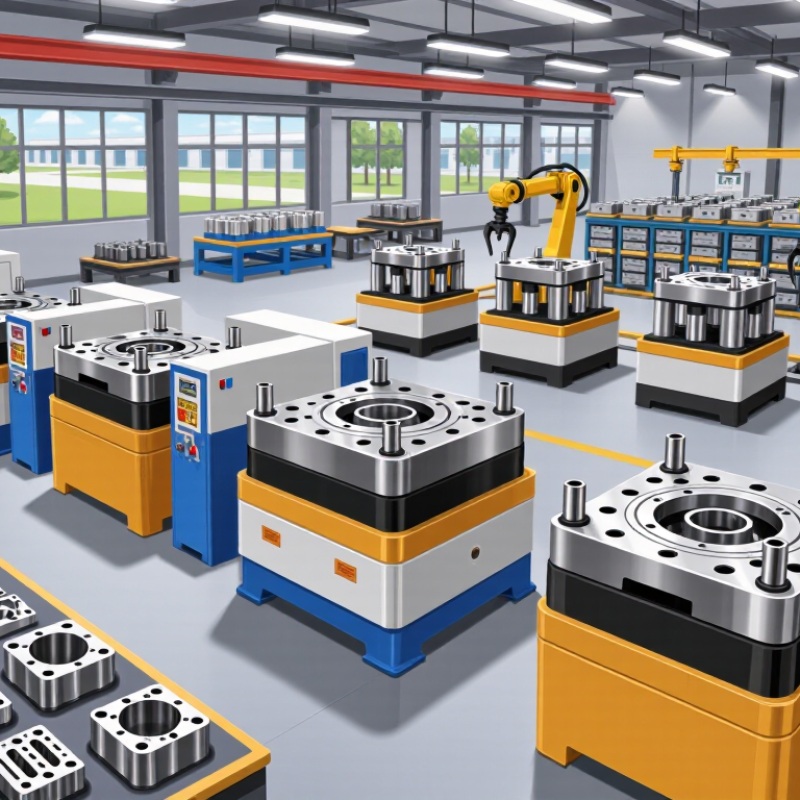
Die casting dies are precision-made metal tools that shape molten alloy under pressure. A typical die has two steel halves, each carrying part of the component’s cavity. When the halves close, a machine injects molten aluminum, zinc, or magnesium into the space between them. The metal cools and solidifies against the cavity surfaces. Small details matter.
Channels inside the die guide the metal, while vents allow trapped air to escape. Cooling passages help control solidification, and ejector pins push the finished casting out after the die opens. In cold-chamber machines, molten metal is transferred into an injection sleeve; hot-chamber systems keep the injection mechanism immersed in the melt. The right setup depends on the alloy, part geometry, and production needs.
A stable process requires more than a well-machined cavity. Operators monitor metal temperature, injection pressure, cycle time, and casting dimensions. Flash along the parting line may point to poor alignment or excessive pressure; incomplete filling can signal flow or temperature problems. In practice, the first trial rarely resolves every issue. Engineers may adjust gates, vents, or cooling after reviewing sample parts. Regular cleaning and inspection also help detect wear before it affects fit or surface quality. A die’s useful life varies with its material, maintenance, and operating conditions.
When evaluating die casting die manufacturers in China, look beyond the quoted price. Ask for a design review showing parting lines, draft angles, gate locations, cooling channels, and ejector positions. These details affect cycle time, porosity, and die life. Request steel certificates, heat-treatment records, and inspection results for critical dimensions. A polished presentation is not proof.
The World Foundry Organization’s 2023 Census reports about 117.3 million metric tonnes of castings produced worldwide. That scale makes repeatability essential. Ask how the manufacturer validates a die: Do they run mold-flow simulations, record trial parameters, and provide sample-part measurements? Request evidence from a comparable alloy, part size, and production volume. A successful trial matters. So does the correction log.
Check practical support, too. Clarify who owns design changes, how spare inserts are stored, and how quickly repairs can be made. Visit the workshop if possible; inspect machining equipment, tool assembly, and measurement practices. One weak spot in supplier comparisons is relying on promised die life without stated assumptions. Ask which alloy, shot count, maintenance schedule, and failure criteria support that estimate. Then compare the answers, not just the numbers.
Suggested evaluation weighting (%) for comparing suppliers. These are practical starting-point weights, not published market-survey results; adjust them to your project requirements.
Review evidence for each area: engineering reviews and sample designs, material certificates, machining and inspection records, documented trial results, maintenance plans, and project schedules.
What Are the Best Die Casting Dies Manufacturers in China?
Leading Die Casting Die Manufacturers in China
China’s leading die casting die manufacturers distinguish themselves through engineering depth, stable production, and clear communication—not just polished sample parts. Fortune Business Insights valued the global die casting market at US$77.03 billion in 2023 and projected growth to US$119.25 billion by 2032. This market outlook points to sustained demand for dependable tooling, though it does not rank individual Chinese manufacturers. Strong suppliers should show documented experience with the intended alloy, casting machine, and annual production volume. Ask how they manage cooling channels, venting, and die wear. A detailed design review matters.
Tips: Request a mold-flow analysis, a trial-casting plan, and a sample inspection report. Check whether the supplier records dimensional results from multiple shots, not just one ideal part. Ask who handles die maintenance after delivery. A fast quote is useful, but it cannot replace technical evidence.
Factory visits can reveal practical details: clean tool storage, labeled components, and accessible measurement records. Still, one visit is only a snapshot. Compare lead times, revision procedures, and repair support alongside price. Be cautious when guarantees sound too broad; die life depends on alloy, cycle conditions, and maintenance. Some buyers focus heavily on the first sample. That can be a mistake. Confirm how the tool performs during extended production before committing to a large order.
| Evaluation Dimension | What a Qualified Die Manufacturer Should Offer | What to Verify Before Ordering |
|---|---|---|
| Die Design and Engineering | Design support for the selected casting alloy, part geometry, machine, gating, venting, cooling, and ejection requirements. | Request a design review, 3D die model, parting-line proposal, and documented approval process before machining begins. |
| Flow and Thermal Analysis | Simulation capability to assess metal filling, air entrapment, solidification, and thermal balance where appropriate. | Ask for project-specific simulation reports and confirmation that design changes are reviewed with the customer. |
| Die Steel and Traceability | Clearly specified hot-work tool steel suitable for the application, with material certificates and traceable heat-treatment records. | Confirm the steel grade, supplier documentation, hardness requirements, and traceability for critical die components. |
| CNC and EDM Machining | Machining processes suited to the die design, including CNC milling and electrical discharge machining for detailed features. | Review equipment capability, inspection records, machining plans, and how critical dimensions are measured and reported. |
| Heat Treatment | A controlled heat-treatment process appropriate to the selected tool steel and the die’s intended service conditions. | Request heat-treatment certificates and verify that hardness checks are recorded for specified areas of the die. |
| Die Tryout and Sampling | A documented tryout plan, sample castings, and a process for addressing defects or dimensional issues found during trials. | Agree in advance on the casting machine, alloy, sample quantity, inspection scope, and approval criteria. |
| Quality Management | Documented inspection and corrective-action procedures, with measurement methods matched to the drawing and risk level. | Ask for a sample dimensional report, calibration information, nonconformance procedure, and relevant quality-system certificates. |
| Maintenance and Spare Parts | Practical maintenance documentation and clear identification of replaceable or wear-prone die components. | Confirm spare-part availability, maintenance instructions, repair support, and the process for managing design revisions. |
| Project Management and Delivery | A schedule covering design approval, material procurement, machining, heat treatment, tryout, corrections, and final acceptance. | Request milestone dates, progress updates, packaging details, shipping terms, and a written scope of supply. |
| Technical Fit | Relevant experience with the intended casting process, alloy, part size, production volume, and customer’s machine requirements. | Compare documented examples of similar work and assess each supplier against the same technical checklist; capabilities vary by project. |
What Are the Best Die Casting Dies Manufacturers in China?
Comparing Chinese die makers means looking beyond quoted tolerances. The right partner can show measured results from a comparable part, not just a polished sample. Ask how cavity dimensions are checked, how tool wear is tracked, and whether inspection records follow each production run. A coordinate measuring machine report can reveal variation that a visual check misses. That matters.
Materials shape both tool life and part quality. Ask for the specified die steel, its heat-treatment records, and the expected maintenance interval. For aluminum parts, review venting and cooling layouts; uneven cooling can cause porosity or distortion. Zinc and magnesium projects need their own process checks. A supplier’s experience with one alloy does not prove equal skill with another. Grand View Research valued the global die-casting market at USD 73.29 billion in 2023 and forecast 6.4% annual growth from 2024 to 2030. That scale makes capable tooling support increasingly important, but it does not guarantee consistent workmanship.
Service matters after the first sample. Compare design-for-manufacturing feedback, trial-shot reporting, spare inserts, and response times for repairs. Request a sample inspection report and ask who handles corrective actions when dimensions drift. I would still verify these claims through a pilot run; supplier documents can be incomplete, and I have seen that detail overlooked. A clear plan for revisions is often more useful than a low initial tool price.
Choosing the right die casting die manufacturer in China starts with the part, not the quotation. Share the alloy, annual volume, critical dimensions, and expected tool life. Ask how the supplier checks draft angles, wall thickness, and cooling layout before cutting steel. A detailed design review can reveal risks early. A low quote cannot.
Grand View Research estimated the global die casting market at USD 80.92 billion in 2023 and forecast 7.3% annual growth through 2030. This expansion makes supplier capacity and process control worth checking, not assuming. Request evidence of machining capability, mold-flow analysis, dimensional inspection, and documented trial runs. Ask to review sample measurement reports and inspect tool maintenance records. Details matter.
Also test communication before committing. Send one drawing question and note how clearly the engineering team responds. Confirm who approves design changes, how defects are tracked, and what spare inserts are available. Compare lead times against a realistic tool-build schedule, including revisions. A polished presentation is not proof. Even a careful audit has limits; a first trial can expose issues that paperwork misses. Choose a supplier willing to discuss those findings plainly.
Share the alloy, annual volume, critical dimensions, and expected tool life. The part comes first.
Price does not show how a supplier manages cooling, venting, or die wear. Ask for technical evidence.
Request mold-flow analysis, a trial-casting plan, and sample inspection reports. Check measurements from several shots.
Ask how the team reviews draft angles, wall thickness, and cooling layouts before cutting steel. Details matter.
Look for clean tool storage, labeled components, and accessible measurement records. One visit is only a snapshot.
Send a drawing question and note how clearly the engineering team responds. A polished presentation proves little.
Ask who maintains the die after delivery and which spare inserts are available. Support can be overlooked.
Not always. Extended production may reveal problems that one sample misses. That deserves a closer look.
Die Casting Dies are precision-engineered tools that shape molten metal into consistent components under pressure. Their design, material selection, and manufacturing quality influence part accuracy, production efficiency, tool life, and overall cost. When assessing die makers in China, buyers should consider engineering capabilities, machining technology, quality-control procedures, experience with relevant materials, communication, and the support available throughout the project.
Chinese manufacturers vary in their precision, die steel options, testing methods, customization, and after-sales services. The best choice depends on the part’s complexity, required tolerances, expected production volume, budget, and delivery schedule. Compare suppliers using clear technical requirements, review their production and inspection processes, and confirm how they handle design changes, maintenance, and troubleshooting. A careful evaluation helps identify a manufacturer that can deliver dependable tooling and provide practical support from initial design through ongoing production.
Xinyunyang Precision