China’s aerospace manufacturing base is expanding from airframes into precision sensor protection. The Aerospace Sensor Housing sits at a critical boundary. It shields delicate electronics from vibration, heat, moisture, pressure changes, and electromagnetic interference.
Industry reports show strong demand. MarketsandMarkets estimates the global aerospace sensors market could grow from about USD 5 billion in 2024 to more than USD 7 billion by 2029. Grand View Research also identifies aircraft modernization and unmanned systems as major growth drivers. These figures describe sensors, not housings alone. That distinction matters.
Small parts. Serious consequences.
A reliable housing must balance weight, thermal stability, sealing, machinability, and long service life. Aluminum alloys remain common, while titanium, stainless steel, and engineered polymers serve harsher applications. NASA materials-selection expert Dr. Michael F. Ashby has written, “Materials and process selection is a key part of the design process.” His point applies directly here. A cheaper enclosure may increase maintenance, calibration drift, or failure risk.
This guide examines China’s top 10 Aerospace Sensor Housing manufacturers through practical criteria. These include aerospace certifications, machining capability, surface treatment, pressure testing, traceability, and experience with custom drawings. Supplier websites can overstate capability. Verification is still necessary.
The ranking should not be treated as an official certification list. Public data remains uneven, especially for private manufacturers. Buyers should request inspection records, material certificates, environmental test results, and sample housings before approving production. A polished catalog is not enough. Real performance appears under heat, vibration, and repeated assembly.
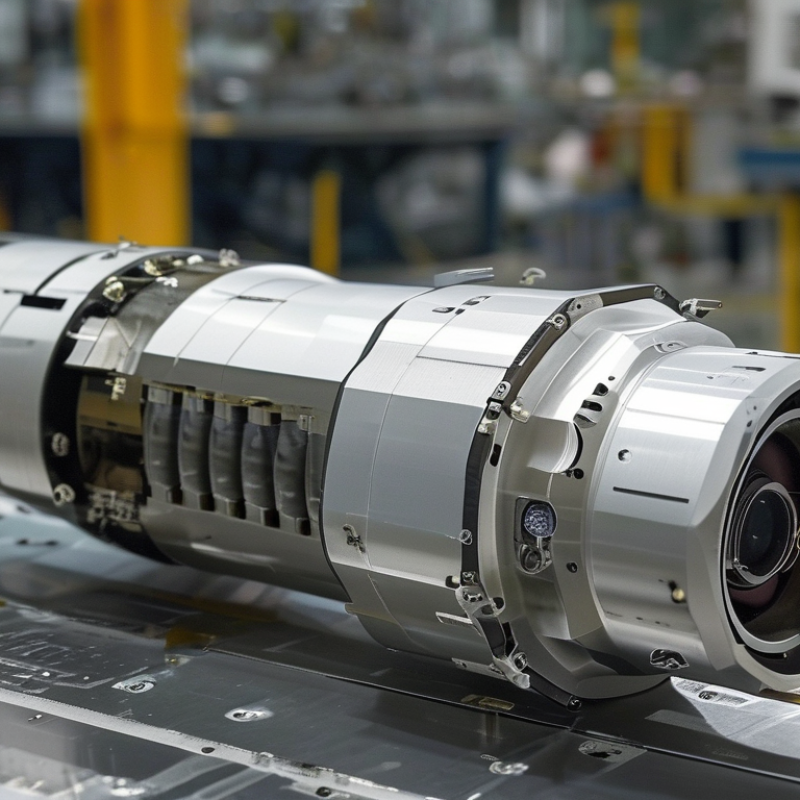
China Top 10 Aerospace Sensor Housing Manufacturers?
Aerospace sensor housings protect delicate instruments from vibration, pressure changes, moisture, dust, and extreme temperatures. They surround sensing elements without blocking accurate measurements. In aircraft and spacecraft, even a small housing defect can distort data or shorten service life.
Material selection matters greatly. Aluminum alloys can reduce weight, while stainless steel and titanium offer strong corrosion and heat resistance. Engineers also study wall thickness, mounting points, cable openings, and sealing surfaces. A reliable housing should limit electromagnetic interference and prevent condensation near sensitive circuits. It must remain stable during launch loads, engine vibration, or rapid temperature changes.
Small details matter.
During practical design reviews, engineers often test housings beyond normal operating conditions. They may use vibration tables, thermal cycling, pressure checks, and leak testing. These tests reveal weak threads, loose fasteners, or seals that harden too quickly. However, laboratory results do not always predict field performance. Installation errors, aging cables, and repeated maintenance can create unexpected problems. A polished housing is not automatically a reliable one. Sometimes, a slightly heavier design provides better protection and easier inspection. That trade-off deserves honest review, especially when weight targets dominate early decisions. Manufacturers serving China’s aerospace sector therefore need controlled processes, traceable materials, skilled inspection, and clear testing records. Reliability is built through evidence, not appearance.
Material and design technology comparison for aerospace sensor housing selection
| No. | Housing Category | Typical Material or Construction | Approximate Density | Primary Aerospace Applications | Main Technical Advantages | Key Design and Qualification Considerations |
|---|---|---|---|---|---|---|
| 1 | Lightweight Metal | Aluminum 6061-T6 or 7075-T6, commonly machined or die-cast | Approximately 2.70 g/cm³ | Avionics temperature sensors, pressure sensors, navigation equipment and flight-control electronics | Low mass, good machinability, useful thermal conductivity and established aerospace availability | Requires surface protection against corrosion; sealing, thread strength and galvanic compatibility must be verified |
| 2 | High-Strength Titanium | Ti-6Al-4V, machined, forged or additively manufactured | Approximately 4.43 g/cm³ | Engine monitoring, flight-control systems, high-load airframe and spaceflight sensor assemblies | High strength-to-weight ratio, excellent corrosion resistance and good performance at elevated temperatures | Higher machining cost and lower thermal conductivity than aluminum; careful control of surface finish and fasteners is required |
| 3 | Nickel-Based Alloy | Inconel 718 or comparable nickel-chromium superalloy | Approximately 8.19 g/cm³ | Combustion-zone, turbine, exhaust and other high-temperature engine sensor locations | Maintains mechanical strength and oxidation resistance at high temperatures | High density, difficult machining and higher material cost; thermal expansion and internal heat management must be considered |
| 4 | Stainless Steel | 316L or precipitation-hardening stainless steel such as 17-4 PH | Approximately 7.75–8.00 g/cm³ | Hydraulic, fuel, environmental-monitoring and externally mounted aerospace sensors | Good corrosion resistance, robust threads, strong pressure containment and broad manufacturing compatibility | Greater mass than aluminum or titanium; material grade, heat treatment and passivation affect performance |
| 5 | Hermetic Metal Package | Metal shell with glass-to-metal or ceramic-to-metal electrical feedthroughs | Depends on shell and feedthrough materials | Pressure, inertial, optical and electronic sensors requiring protection from moisture and contamination | High resistance to humidity, vacuum leakage and internal atmosphere changes | Hermeticity is normally verified by helium leak testing; feedthrough design must withstand thermal cycling and vibration |
| 6 | Polymer Engineering Housing | PEEK, PPS or other aerospace-qualified high-performance thermoplastics | Approximately 1.30–1.60 g/cm³ | Cabin, environmental, low-load and electrically insulated sensor assemblies | Very low mass, chemical resistance, electrical insulation and potential for injection molding | Temperature capability, creep, outgassing, flame behavior and dimensional stability must be qualified for the installation environment |
| 7 | EMI-Shielded Housing | Conductive aluminum or plated polymer with conductive gaskets and cable interfaces | Depends on structural material and coating | Radar, radio-frequency, navigation, data-acquisition and electrically noisy avionics environments | Reduces electromagnetic interference and helps maintain sensor signal integrity | Shield continuity must include covers, seams, connectors and cable shields; grounding and bonding require system-level testing |
| 8 | Pressure-Rated Housing | Thick-wall aluminum, titanium, stainless steel or nickel alloy enclosure | Material-dependent | Pressure transducers, hydraulic monitoring, fuel systems and sealed aerospace instrumentation | Protects internal electronics and sensing elements from differential pressure and fluid exposure | Wall thickness, burst pressure, fatigue life, proof testing, seal compression and fluid compatibility must be documented |
| 9 | Thermally Managed Housing | Conductive metal housing with heat spreaders, fins or thermal interface features | Usually aluminum or copper-containing construction | Engine, power-electronics, infrared, optical and high-temperature sensor installations | Transfers heat away from sensitive components and helps control measurement drift | Thermal resistance, interface flatness, expansion mismatch, insulation and calibration stability must be evaluated |
| 10 | Additively Manufactured Housing | Laser powder-bed-fused aluminum, titanium or nickel alloy, followed by machining and finishing | Depends on selected alloy and process density | Weight-optimized brackets, complex internal channels and low-volume customized sensor enclosures | Enables topology optimization, integrated mounting features and complex geometries with reduced part count | Porosity, anisotropy, surface roughness, dimensional tolerance, residual stress and post-processing must be controlled |
: Engineers examine machining accuracy, material control, testing, and production traceability. A polished factory can still hide weak processes. Ask for evidence.
Aluminum alloys reduce weight and machine easily. Titanium offers strength and corrosion resistance. Stainless steel suits harsh environments. Nickel-based alloys tolerate severe heat. Material choice affects cost, weight, and thermal expansion.
Check wall thickness, threads, sealing grooves, and connector interfaces. A tiny burr can damage an O-ring. Small marks matter. Inspect dimensional reports and sample parts carefully.
Useful tests include helium leak testing, thermal cycling, vibration testing, and dimensional inspection. Electromagnetic shielding tests may also matter. Visual inspection alone is insufficient.
Request alloy certificates, heat-treatment records, batch numbers, and final inspection reports. Records should connect raw materials with finished parts. Missing links deserve questions.
Review aerospace quality certification and verify its current scope independently. Certification supports confidence, but it does not prove every process works well. Ask for recent audit findings and corrective-action records.
Housings near optics or sensitive electronics may need low-outgassing materials. Screened materials commonly target total mass loss below 1.0%. Collected volatile condensable materials may need to remain below 0.1%. Request actual test reports.
Look for calibrated measurement equipment, controlled deburring, clean machining areas, and sealed packaging. Confirm small-batch capability and future production capacity. Review leakage, porosity, coating adhesion, and thread-damage criteria.
No. Photographs show appearance, not process stability. A smooth prototype may conceal internal stress or inconsistent tolerances. Independent material testing can expose overlooked problems. I would still question my own assumptions.
This article provides a practical overview of the Aerospace Sensor Housing industry in China, explaining how these protective enclosures support sensor reliability in demanding aerospace environments. It discusses their role in shielding sensitive components from vibration, moisture, dust, pressure changes, temperature extremes, and electromagnetic interference. Readers will also learn how to evaluate manufacturers by examining engineering capabilities, quality management, production equipment, testing procedures, customization services, delivery performance, and technical support.
The article introduces ten representative categories of Chinese aerospace sensor housing manufacturers without focusing on brand names, while highlighting the key materials and technologies used in production. These may include lightweight alloys, stainless steels, high-performance polymers, precision machining, sealing methods, surface treatments, and inspection systems. Finally, it explains how buyers can select a suitable supplier by comparing product specifications, manufacturing experience, certification readiness, communication efficiency, cost structure, and long-term cooperation potential.

 Xinyunyang Precision