China has become an important manufacturing base for laser diode packaging, serving telecommunications, medical equipment, sensing, and industrial systems. This guide examines ten notable Chinese manufacturers associated with Laser Diode Package production and engineering.
The selection considers practical evidence, including product catalogs, factory capabilities, certification information, and application experience. Attention is given to butterfly packages, TO-can structures, fiber-coupled modules, and custom housings. These details matter because package geometry affects alignment, heat removal, optical stability, and service life. A package may look simple. It is not.
Reliable manufacturers should explain their processes clearly. Useful indicators include hermetic sealing, precision welding, fiber alignment, burn-in testing, and thermal cycling. ISO certification can support credibility, but it does not replace technical verification. Buyers should request drawings, tolerances, sample data, and test conditions before approving a supplier. Public information is sometimes incomplete, and marketing language can sound stronger than the available evidence.
This ranking is therefore a practical reference, not a permanent verdict. Company capabilities, equipment, export experience, and product quality can change over time. Some firms may excel at high-volume TO packages, while others focus on customized butterfly or high-power designs. In real projects, communication speed and engineering support can matter as much as unit price. A careful buyer should compare samples, inspection records, lead times, and after-sales responsiveness. The final choice depends on wavelength, power, thermal requirements, package dimensions, and compliance needs. Mistakes happen. The goal is to reduce them through transparent comparison and direct technical evaluation.
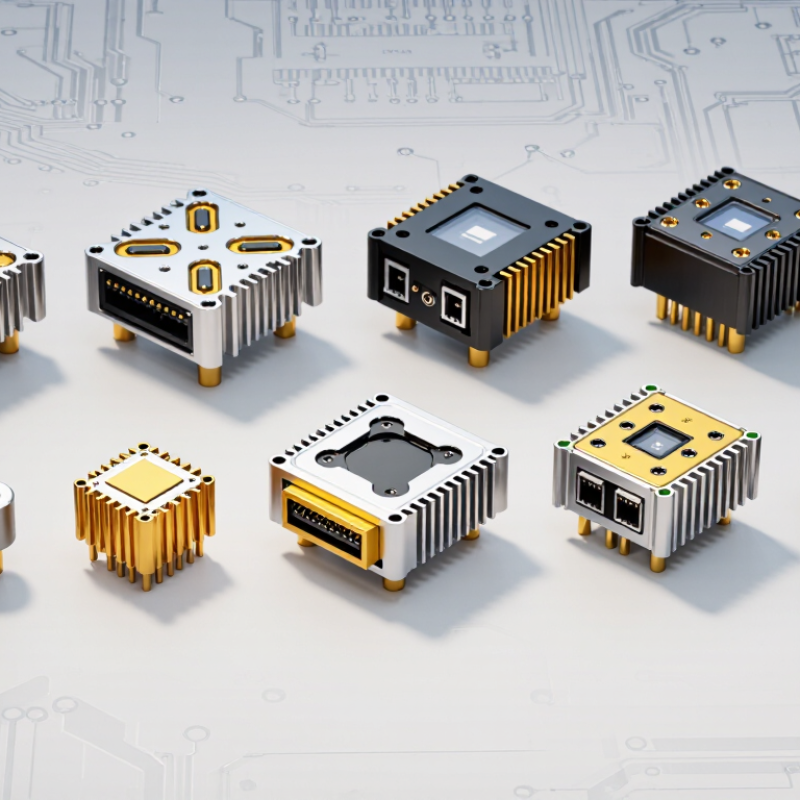
China Top 10 Laser Diode Package Manufacturers?
Laser diode packaging encloses and supports the active semiconductor chip. It is more than a protective shell. A package must guide light, remove heat, control electrical paths, and protect delicate surfaces from moisture. In a practical assembly, the die sits on a conductive submount, while a lens or fiber aligns within micrometer-level tolerances. Small errors can reduce coupling efficiency. That is costly.
MarketsandMarkets’ 2024 Laser Diode Market report estimates growth from about USD 10.1 billion in 2024 to USD 15.6 billion by 2029. Fortune Business Insights also expects sustained market expansion through the decade. These forecasts increase pressure on packaging suppliers to improve yield and reliability. Hermetic sealing, thermal cycling, vibration testing, and optical power monitoring are common evaluation steps. IEC 60825-1 addresses laser safety, while packaging qualification often follows established semiconductor reliability methods.
The package strongly influences operating life. A poor thermal path raises junction temperature and accelerates degradation. A misaligned lens may waste valuable output. In field work, contamination is another quiet problem. It can appear as gradual power loss rather than sudden failure. I would not treat every market forecast as certainty; definitions differ between reports. Still, the packaging role is clear. It connects chip performance with dependable equipment operation.
China Top 10 Laser Diode Package Manufacturers?
Key Criteria for Evaluating Chinese Package Manufacturers
Choosing a laser diode package manufacturer requires more than comparing price lists. Evaluate packaging experience, thermal design, optical alignment, and production consistency. Ask for sample records, not only polished brochures. A reliable supplier should explain its testing process clearly. Check thermal cycling, humidity exposure, hermetic sealing, and solder joint strength. These tests reveal weaknesses that ordinary visual inspection may miss. Request data from recent production lots, with batch numbers and measured tolerances.
Practical sourcing also depends on traceability. Confirm whether the manufacturer controls incoming materials, cleaning procedures, and final inspection. Review its quality system, equipment calibration, and corrective-action records. Communication matters too. Engineers should answer technical questions with drawings, limits, and evidence. Vague promises are warning signs. A low quoted price can hide higher failure risks. Still, even a strong factory may have inconsistent documentation, so do not assume capability equals reliability.
Tips: Compare at least three suppliers using identical specifications. Visit the facility when possible. Inspect alignment equipment, storage conditions, and operator training. Ask for pilot-run results before approving volume production. Keep a written checklist. It sounds simple, but teams often skip it under schedule pressure. Also examine failure analysis examples, including one unresolved case. Honest limitations can be more informative than perfect claims.
This neutral procurement scorecard shows suggested evaluation weights for comparing Chinese laser diode package manufacturers. Reliability and qualification evidence receive the highest weighting because package stability, thermal performance, optical consistency, and long-term field reliability are critical for telecom, industrial, medical, and sensing applications. The percentages are evaluation-planning weights rather than company rankings or supplier performance data.
China’s laser diode packaging sector is expanding with optical communications, sensing, medical equipment, and industrial processing. MarketsandMarkets estimates the global laser diode market will grow from about USD 9.7 billion in 2023 to USD 13.7 billion by 2028. This demand is increasing pressure on Chinese manufacturers to improve thermal control, alignment accuracy, and long-term reliability.
The leading ten manufacturers are best assessed through measurable capabilities, not advertising claims. Important indicators include hermetic sealing, automated die bonding, fiber-coupling accuracy, and operating-temperature testing. Qualified suppliers typically provide TO-can, butterfly, coaxial, and custom ceramic packages. Their production lines may also include nitrogen-controlled assembly areas and optical power inspection below one percent measurement variation.
Packaging quality decides field performance.
Yole Group’s photonics research continues to highlight advanced packaging as a major factor in reducing optical loss and improving device integration. Chinese manufacturers benefit from dense supply chains for ceramics, metals, precision machining, and testing equipment. However, public data remains uneven. Some companies disclose impressive capacity but limited failure-rate evidence. That gap deserves attention.
Buyers should request accelerated aging results, moisture resistance data, traceability records, and samples from consistent production batches. A lower unit price may hide alignment drift or weak thermal cycling performance. Experienced procurement teams should compare verified test records, not only catalog specifications.
China’s top laser diode package manufacturers compete through thermal control, optical alignment, and reliable sealing. Their core technologies support communication, sensing, medical equipment, and industrial measurement. Package design is not merely cosmetic. A small alignment error can reduce coupling efficiency and shorten operating life.
Common product types include TO-can packages, butterfly packages, C-mount packages, and chip-on-submount assemblies. TO-can designs suit compact transmitters and basic sensing modules. Butterfly packages often integrate thermoelectric coolers, thermistors, and fiber connections. They need careful temperature control. C-mount packages provide direct heat paths for high-power laser diodes. Chip-on-submount products offer flexible integration for custom optical systems.
Reliable manufacturers usually combine die bonding, wire bonding, precision welding, and active optical alignment. Automated inspection helps, but it cannot replace process knowledge. Engineers should review solder voids, fiber concentricity, leakage rates, and thermal resistance. Hermetic testing is also important for outdoor or industrial applications. Product data should include wavelength tolerance, output power, operating temperature, and lifetime testing conditions.
A practical supplier comparison should examine samples, not only catalog figures. Ask for cross-sectional images and batch traceability. Some specifications look impressive but lack test details. That is a warning. Packaging performance can also change after repeated thermal cycling. Engineers may need to adjust the package structure, even after an apparently successful prototype.
When comparing China’s top ten laser diode package manufacturers, the ranking should not drive the purchase. Your application should. Ask whether the supplier has built packages for your wavelength, optical power, operating temperature, and lifetime target. A telecom module may need a hermetic butterfly package, while a compact sensor may favor a TO-can design. These choices affect heat flow, alignment, and field reliability. I have seen attractive samples fail when the thermal path was treated as an afterthought.
Request measurable evidence, not broad claims. Review spectral data, coupling efficiency, junction-to-case resistance, aging curves, and inspection records. Confirm how the manufacturer controls die attach, wire bonding, window cleanliness, and fiber alignment. Ask for lot traceability and a clear failure-analysis process. Qualification should include temperature cycling, humidity exposure, vibration, and power aging under conditions close to your equipment. A small sample helps. Still, it cannot replace production audits. Check whether process engineers explain deviations honestly, rather than hiding behind perfect charts.
Supplier selection also depends on communication. During technical reviews, note response times, drawing control, change notification, and engineering support after delivery. Request a pilot lot with agreed acceptance limits and documented test methods. Compare actual results with the datasheet, including worst-case values. Some manufacturers offer lower prices, but inconsistent packaging can increase alignment labor and warranty risk. No shortlist is perfect. Recheck assumptions before signing a long-term agreement, especially when custom tooling, export documentation, or environmental compliance is involved. The right partner is the one whose process you can verify, repeat, and improve.
| Rank | Anonymized Manufacturer | Core Package Types | Typical Wavelength Coverage | Typical Optical Output Range | Thermal Management Options | Customization Capability | Quality & Compliance Indicators | Typical MOQ | Typical Lead Time | Best-Fit Applications | Selection Score |
|---|---|---|---|---|---|---|---|---|---|---|---|
| 1 | Manufacturer 01 | TO-canButterflyC-mount | 635–1550 nm | 5 mW–10 W | Integrated TEC; copper or CuW submount; optional thermistor | High: custom fiber coupling, pin configuration and optical window | ISO 9001; RoHS/REACH documentation; burn-in available | 100–500 units | 4–8 weeks | Telecom, sensing, laboratory instruments | 9.2/10 |
| 2 | Manufacturer 02 | TO-canC-mountCOS | 405–980 nm | 20 mW–25 W | AlN or copper heat spreader; conduction-cooled options | High: wavelength, beam-shaping and connector options | ISO 9001; optical and electrical inspection records | 200–1,000 units | 5–9 weeks | Industrial alignment, medical instruments, imaging | 9.0/10 |
| 3 | Manufacturer 03 | ButterflyDILTOSA | 1270–1610 nm | 10 mW–1 W | Integrated TEC and monitor photodiode; hermetic sealing | Medium–High: telecom-standard footprint customization | ISO 9001; Telcordia-style reliability testing available | 100–300 units | 6–10 weeks | Fiber communications, coherent optics, data links | 8.8/10 |
| 4 | Manufacturer 04 | C-mountF-mountStacked array | 635–980 nm | 1–80 W | Microchannel or macrochannel cooling; copper-tungsten base | High: array geometry, emitter count and cooling interface | ISO 9001; laser safety and lot traceability documentation | 50–200 units | 7–12 weeks | Material processing, pumping, high-power illumination | 8.7/10 |
| 5 | Manufacturer 05 | TO-canFiber-coupledButterfly | 520–1064 nm | 10 mW–8 W | TEC, thermistor and monitor photodiode options | Medium–High: fiber type, connector and coupling efficiency | ISO 9001; RoHS compliance; accelerated aging available | 100–500 units | 5–10 weeks | Fluorescence, spectroscopy, barcode and measurement systems | 8.5/10 |
| 6 | Manufacturer 06 | TO-canPD-integratedDIL | 635–1310 nm | 5 mW–500 mW | Passive heat sinking; optional TEC for temperature-sensitive designs | Medium: standard packages with custom electrical screening | ISO 9001; incoming and final inspection; RoHS/REACH support | 500–2,000 units | 4–7 weeks | Consumer electronics, low-power sensing, instrumentation | 8.3/10 |
| 7 | Manufacturer 07 | C-mountFiber-coupledLaser array | 780–1550 nm | 500 mW–40 W | TEC; copper submount; water-cooling interface for selected assemblies | High: fiber coupling, beam profile and mechanical interface | ISO 9001; power, spectrum and burn-in reports available | 50–300 units | 6–11 weeks | LiDAR, spectroscopy, 3D measurement and research equipment | 8.2/10 |
| 8 | Manufacturer 08 | ButterflyTO-canOptical subassembly | 1310–1550 nm | 10 mW–2 W | Integrated TEC, thermistor and monitor photodiode | Medium: telecom-compatible packaging and connector choices | ISO 9001; hermeticity and temperature-cycle testing | 100–500 units | 6–10 weeks | Access networks, fiber sensors and test equipment | 8.1/10 |
| 9 | Manufacturer 09 | TO-canC-mountSubmount | 405–940 nm | 5 mW–5 W | AlN, copper or copper-tungsten heat-spreading solutions | Medium: package dimensions and optical-axis adjustments | ISO 9001; RoHS support; standard reliability screening | 300–1,000 units | 5–9 weeks | Machine vision, positioning, displays and laboratory tools | 7.9/10 |
| 10 | Manufacturer 10 | TO-canFiber-coupledMini-DIL | 635–1064 nm | 5 mW–3 W | Passive cooling; optional TEC and monitor photodiode | Medium: standard customization for connectors and pin layouts | ISO 9001; production traceability; RoHS/REACH documentation | 500–2,000 units | 4–8 weeks | Pointing devices, sensors, educational and OEM equipment | 7.7/10 |
It supports the semiconductor chip and protects delicate surfaces from moisture. It also guides light, removes heat, and controls electrical paths. Small errors matter.
A weak thermal path raises junction temperature and speeds degradation. The package should transfer heat efficiently from the chip to the case. Heat is easy to underestimate.
Common options include TO-can, butterfly, coaxial, and custom ceramic packages. The correct choice depends on wavelength, optical power, temperature, and space limits.
Request evidence of hermetic sealing, automated die bonding, fiber alignment, and temperature testing. Review aging curves, inspection records, and failure-analysis procedures. Marketing claims are not enough.
Useful tests include temperature cycling, humidity exposure, vibration, and power aging. Ask for results under conditions close to your equipment. Test records matter.
A lens or fiber may require micrometer-level positioning. Small alignment errors reduce coupling efficiency and waste optical output. The loss may appear gradually.
Yes. Lower prices may conceal alignment drift, weak thermal cycling, or inconsistent production batches. These problems can increase labor and warranty costs. Cheap is not always efficient.
Samples help compare design and performance, but they cannot represent every production batch. Request traceability and consider a production audit. Samples can mislead.
Define acceptance limits, test methods, drawings, and change-notification rules before production. Compare actual results with datasheet values, including worst-case results. Recheck assumptions.
Treat forecasts as useful estimates, not guaranteed outcomes. Report definitions may differ, while packaging requirements remain practical and measurable. Verify the evidence yourself.
This guide presents a practical overview of the China Top 10 Laser Diode Package Manufacturers, focusing on how packaging supports laser diode protection, thermal management, optical alignment, and long-term operating stability. It explains the role of a Laser Diode Package in improving device reliability and performance, while introducing key evaluation criteria such as manufacturing capability, quality control, material selection, customization services, testing standards, production capacity, and technical support. The ranking is designed as a general industry reference rather than a definitive judgment, helping readers compare manufacturers according to their specific requirements.
The article also reviews common technologies and product types, including hermetic packages, high-power structures, fiber-coupled designs, and compact modules. It concludes with practical guidance for selecting the right supplier by considering wavelength, output power, operating temperature, package configuration, application environment, delivery needs, and after-sales support. This framework can assist researchers, engineers, and purchasers in making informed decisions for communications, sensing, medical, industrial, and research applications.

Xinyunyang Precision