2026 How to Choose the Right Fiber Optic Transceiver Housing?

Time:2026-06-07 Author:Sienna
0%

When selecting a Fiber Optic Transceiver Housing, several critical factors come into play. The housing is not merely a shell; it protects sensitive components and ensures optimal performance. A good choice enhances signal integrity and reduces the risk of damage. Not all housings are created equal.

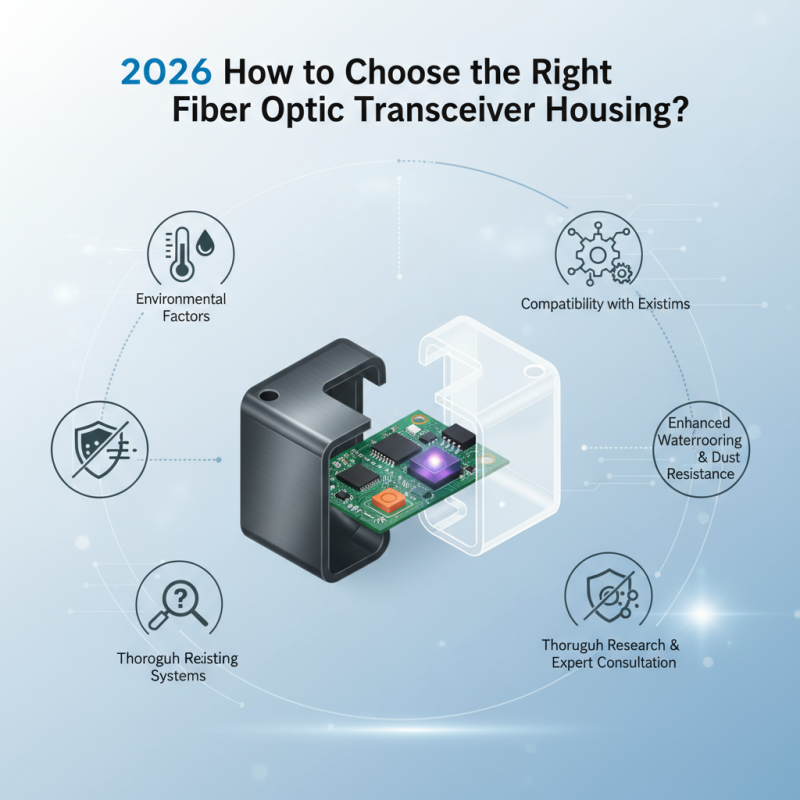
Material plays a significant role in durability and performance. Plastic housings are lighter but may be less resilient than metal. Consider environmental factors, such as temperature and humidity. This is vital for long-term reliability. Additionally, compatibility with existing systems can affect your choice.

Reflect on the specific requirements of your project. Do you need enhanced waterproofing or dust resistance? Sometimes, the perfect fit may not be the best option. Conduct thorough research, and consult with experts. Reliable suppliers can provide valuable insights and ensure you make an informed decision. Remember, investing time in selecting the right Fiber Optic Transceiver Housing pays off in the long run.
2026 How to Choose the Right Fiber Optic Transceiver Housing?

Understanding Fiber Optic Transceiver Housings and Their Importance

Understanding fiber optic transceiver housings is crucial in modern networking. A quality housing plays a significant role in ensuring the durability and reliability of transceivers. According to industry reports, up to 30% of device failures result from inadequate housing protection against environmental conditions. This underscores the importance of selecting the right material and design.

Transceiver housings are not one-size-fits-all. Factors like temperature fluctuations, humidity exposure, and mechanical stress must be considered. Many recommend enclosures made of robust materials, such as aluminum or high-grade plastic. These materials are not only lightweight but also provide excellent resistance to corrosion.

Tips: Always check the housing’s IP rating. A higher IP rating offers better protection against dust and moisture.

When assessing fiber optic transceiver housings, think about thermal management. Effective heat dissipation can enhance performance and longevity. The integration of ventilation features can alleviate overheating. However, users should acknowledge that complex designs might increase manufacturing costs, which raises the need for a well-thought-out cost-benefit analysis.

Tips: Monitor the housing's performance over time. Identify any signs of wear, ensuring proactive maintenance.

Understanding Fiber Optic Transceiver Housing Types

This chart shows the distribution of different types of fiber optic transceiver housings used in the industry. Understanding these types is crucial for selecting the right housing for specific applications.

Key Factors to Consider When Choosing a Fiber Optic Transceiver Housing

When selecting a fiber optic transceiver housing, several key factors play a crucial role. The material of the housing is significant. Options may include metal or plastic. Metal housings often offer better durability and thermal management. However, weight and cost should also be considered. A balance between robustness and budget is essential.

Thermal performance is another critical aspect. The housing must dissipate heat effectively to ensure optimal transceiver function. Overheating can lead to failures. This is particularly important in high-bandwidth applications. Airflow design can directly influence performance. Evaluate how your selected housing accommodates cooling.

Consider environmental factors as well. Will the transceiver be used outdoors or in harsh conditions? IP ratings are helpful in assessing environmental protection. Finally, ensure compatibility with existing equipment. Mismatched housings can create issues in communication reliability. Take time to analyze specifications and requirements for optimal selection. Reflection on past experiences may guide better choices.

Common Types of Fiber Optic Transceiver Housings and Their Applications

When selecting fiber optic transceiver housings, understanding the common types is crucial. There are several housing designs, each suited for specific applications. For instance, the SFP (Small Form-factor Pluggable) is prominent in datacenters, supporting high-density connections. The compact design makes it ideal for space-constrained environments. According to the Fiber Optic Association, SFP modules accounted for 30% of the market share in 2022, illustrating their widespread use.

Another popular option is the QSFP (Quad Small Form-factor Pluggable). It supports multiple channels, increasing bandwidth and minimizing cable requirements. This type has seen significant adoption in high-speed networks, with a noted increase of 50% in shipment from 2021 to 2022. Additionally, one should consider the durability of materials used in housing. Many technicians report issues with overheating in cheaper models.

While these types are versatile, not every housing fits every situation. Projects requiring outdoor installations should consider ruggedized housing for environmental resilience. The complexity of network requirements demands careful consideration of housing features, like thermal management. Reflecting on past selections can help improve future decisions regarding transceiver housings. Evaluating reliability and performance becomes essential in ensuring longevity and optimal functionality.

Evaluating Environmental and Performance Requirements for Housing Selection

When selecting a fiber optic transceiver housing, environmental and performance factors are crucial. Consider the operating conditions. Is it a dry or humid environment? Extreme temperatures can affect transceiver functionality. Various materials offer different levels of protection. Metal housings provide durability, while plastic is lighter and may be less resilient. Evaluate the protection rating, as this determines resistance to dust and moisture.

Performance requirements should align with your specific application. Look at the data rates needed. Higher speeds may require hoods that enhance cooling and signal integrity. Review the installation space. Some designs are compact, allowing for easier integration. Others may have larger heatsinks for better performance under stress. It's vital to match the housing design to your system's cooling needs and physical constraints.

Lastly, reflect on maintenance needs. Some housings may require more frequent checks and replacements. Understand your team's capabilities to handle such tasks. Choosing without proper evaluation may lead to issues down the line. An informed choice will ensure longevity and reliability in your fiber optic system.

Budgeting and Cost Considerations for Fiber Optic Transceiver Housings

Budgeting for fiber optic transceiver housings is crucial. The cost can vary significantly based on design, material, and specifications. Consider the project requirements carefully. Will you need standard or custom housings? Standard options may save money. Custom designs often come with higher costs and longer lead times.

When evaluating costs, think about long-term expenses. Choose durable materials to avoid frequent replacements. Fiber optic components should withstand environmental factors. If housings are inadequate, it can lead to failures. These failures may incur additional costs, both in repairs and downtime.

Price shouldn't be the only factor. Look for manufacturers with a proven track record. Research companies with positive reviews. A reliable housing may cost more upfront but can save money in the long run. Pay attention to warranties and support options. If issues arise, good customer service is invaluable. Every detail counts in your selection process.

2026 How to Choose the Right Fiber Optic Transceiver Housing? - Budgeting and Cost Considerations for Fiber Optic Transceiver Housings

Housing Material Cost (USD) Durability Compatibility Weight (g)
Aluminum $25 High Standard 150
Stainless Steel $40 Very High Advanced 200
Plastic $10 Medium Basic 75
Carbon Fiber $60 Very High Standard 100
Zinc Alloy $30 High Advanced 180

FAQS

: Why is the housing of fiber optic transceivers important?

: Housing affects durability and reliability. Poor housing leads to device failures. Up to 30% of failures are due to inadequate protection.

What materials are best for transceiver housings?

Aluminum and high-grade plastic are recommended. They are lightweight and resist corrosion effectively.

How can I determine the protection level of a housing?

Check the housing's IP rating. A higher IP rating indicates better dust and moisture protection.

Why is thermal management crucial in transceiver housings?

Effective heat dissipation enhances performance. Overheating can cause failures, especially in high-bandwidth applications.

What should I consider for environmental factors?

Assess if the transceiver will be used outdoors or in harsh conditions. This influences the choice of housing.

How do costs vary for fiber optic transceiver housings?

Costs depend on design and material. Custom housings are often more expensive and take longer to produce.

What long-term costs should I think about?

Durable housings reduce the need for replacements. Inadequate housings can lead to costly failures and downtime.

Should price be the only factor in choosing housings?

No, reliability and manufacturer reputation are vital. A reliable housing can save money over time.

What role does airflow design play in performance?

Proper airflow enhances cooling. Evaluate how your housing design supports effective thermal management.

How can past experiences help in selecting housings?

Reflecting on previous selections can guide better choices. Consider lessons learned to make informed decisions.

Conclusion

Choosing the right Fiber Optic Transceiver Housing is essential for ensuring optimal performance and durability in various applications. Understanding the significance of these housings involves recognizing their role in protecting sensitive components from environmental factors and mechanical stresses. When selecting a housing, it's crucial to consider key factors such as compatibility with existing systems, specific environmental conditions, and the performance requirements of the intended application.

Additionally, evaluating the common types of Fiber Optic Transceiver Housings available can help users identify the best fit for their needs. Factors such as budgeting and cost considerations should also be taken into account, as these can significantly influence the selection process. By carefully analyzing these aspects, individuals and organizations can make informed decisions that enhance the efficacy and longevity of their fiber optic systems.


Sienna

Sienna

Sienna is a skilled marketing professional with a deep expertise in our company’s core products and services. With a passion for innovation and detail, she plays a pivotal role in crafting insightful blog posts that not only highlight the unique features of our offerings but also provide valuable......