How to Choose the Right Casting Metals for Your Project

Time:2026-11-10 Author:Ethan
0%

Choosing Casting Metals is not a catalog exercise. It is a decision about heat, load, wear, corrosion, weight, and production cost. A thin pump housing faces different demands from a heavy machine base. The wrong alloy may still fill the mold, yet fail after months of vibration or exposure.

Industry data shows why these choices matter at scale. World Steel Association’s World Steel in Figures 2025 reports global crude steel production of approximately 1.88 billion tonnes in 2024. That figure describes steelmaking, not castings alone, but it highlights the breadth of the material supply chain. For casting-specific guidance, compare alloy properties with process requirements and consult standards, foundry data, and supplier test results. Numbers on a datasheet are useful. They are not the whole story.

John Campbell, casting researcher and author of Complete Casting Handbook, wrote, “The quality of a casting is determined by the quality of the liquid metal.” His point is practical: alloy selection and melt control belong in the same conversation. Aluminum can reduce component weight; cast iron can offer damping and wear resistance; steel may suit demanding strength needs. Each brings trade-offs in cost, machinability, and casting complexity. No alloy wins everywhere. A lower material price can become an expensive mistake if scrap rates rise or machining takes longer than expected. I have to admit, early estimates often overlook those shop-floor realities. This guide will help you compare common Casting Metals against your project’s real operating conditions, then ask better questions before committing to a design.
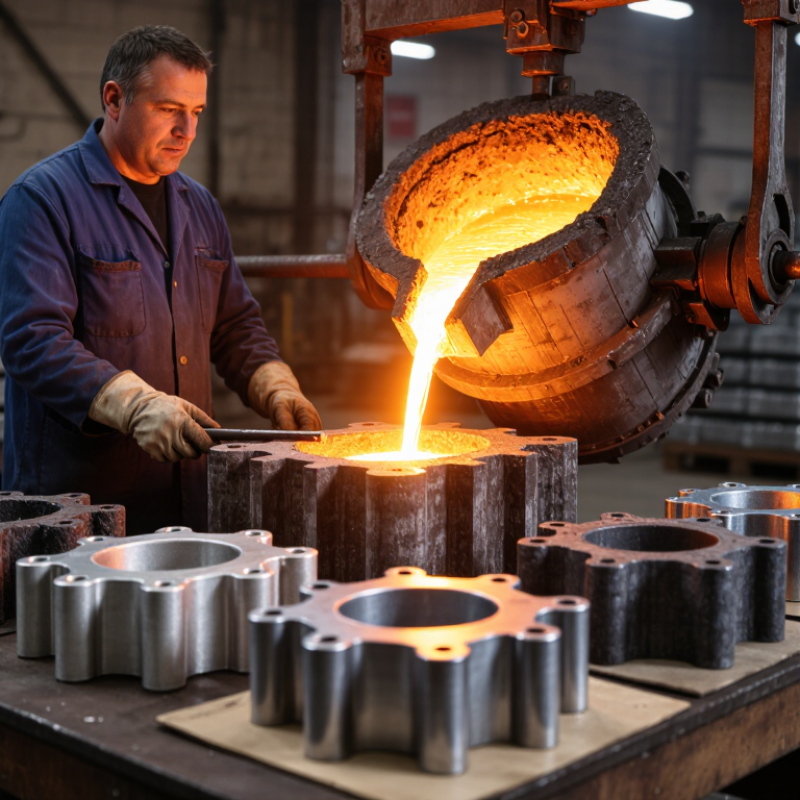
How to Choose the Right Casting Metals for Your Project

Define the Project’s Functional and Environmental Requirements

Start with the part’s actual job, not a preferred alloy. List loads, impact, stiffness, wear, and expected service life. A pump housing may face pressure and vibration; a bracket may need low weight and precise mounting faces. Specify operating temperatures and any thermal cycling, since repeated heating and cooling can change dimensions or accelerate fatigue. Where failure would be costly, ask an engineer to confirm the required strength and safety margin.

Then map the environment. Salt spray, moisture, cleaning chemicals, and soil can all change corrosion risk. Also note exposure time and maintenance access: a sheltered component has different needs from one outdoors. Match these conditions to candidate metals, such as aluminum for lower weight or cast iron for stiffness and wear resistance, then verify performance with relevant test data. The International Aluminium Institute reports that recycling aluminum uses about 5% of the energy needed for primary production. That can inform material selection, but recycled content alone does not prove a casting meets its service requirements. Specifications can miss real-world details; check them against the installation.

Tips: Write down the load, temperature range, and corrosive exposures before requesting quotes. Ask for the alloy designation, mechanical-property data, and corrosion-test conditions. Test a representative casting when dimensions or service conditions are uncertain. Small details matter.

Compare Common Casting Metal Families

Choosing a casting metal starts with the part’s job, not a favorite material. Aluminum alloys are light and conduct heat well, making them common choices for housings and brackets. They can also fill thin sections, though alloy and mold design affect the result. Zinc alloys suit small, detailed components and often produce a smooth surface. Their lower melting temperatures can help with production, but they are not ideal when service temperatures run high.

Steel castings handle demanding loads and offer a wide range of strength and wear properties. The trade-off is weight, plus machining and finishing needs that can raise costs. Cast iron dampens vibration and performs well in many heavy machine bases. It is less forgiving under impact. A casting’s geometry matters, too; a thick corner may cool differently from a thin wall. Small details count.

Copper-based alloys, including bronze, can resist corrosion and conduct heat or electricity effectively. They may cost more, so reserve them for properties the application truly needs. These comparisons are useful, but not perfect: specific grades, casting methods, and heat treatment can change performance substantially. Check the part’s load, operating temperature, corrosion exposure, and finish requirements with a qualified foundry before settling on a family. One overlooked constraint can steer the choice in the wrong direction.

Match Metal Properties to Part Performance Needs

How to Choose the Right Casting Metals for Your Project

Match the metal to the part’s actual job, not just its drawing. A pump housing may need corrosion resistance and stable dimensions more than maximum strength. Aluminum alloys are often useful when low weight and heat transfer matter. For a heavy machine base, cast iron can offer useful vibration damping. Steel castings may suit parts facing higher loads or impact, though their added weight and finishing needs should be considered. Small details matter.

Check the conditions around the part. Will it touch salt water, run hot, or rub against another surface? Copper alloys can support electrical or thermal conductivity, while zinc alloys can capture fine features in smaller components. These are starting points, not guarantees. A property table cannot predict every casting defect or service condition. I would question any choice made from strength figures alone. Think about wall thickness, joining, machining, production volume, and inspection requirements, too. A simple prototype test under realistic loads may reveal a weakness that calculations miss. Sometimes the first material choice is wrong; that is useful information, not a failure.

Evaluate Casting Process, Cost, and Production Constraints

Choosing a casting metal starts with the process your part can realistically use. Sand casting handles large shapes and modest tooling budgets, but its surface may need extra machining. Die casting can produce many detailed aluminum parts quickly, though its tooling cost is harder to justify for small runs. Investment casting suits intricate forms, yet each part may cost more and take longer to produce. Ask the foundry about minimum order quantities, achievable tolerances, and typical lead times. Get those figures before settling on a metal.

Cost includes more than the price per kilogram. A lighter aluminum casting may reduce shipping weight, while an iron part can offer useful stiffness at a lower material cost. Steel may need more machining, which adds time and expense. Heat treatment, scrap rates, inspection, and finishing also affect the final quote. Small details matter. A thin wall or deep pocket can make a design difficult to fill consistently. Share a drawing and expected annual volume with the casting supplier, then compare quotes on the same assumptions. I would treat early estimates cautiously; they can miss rework or tooling changes. Real production data may shift the decision.

How to Choose the Right Casting Metals for Your Project - Evaluate Casting Process, Cost, and Production Constraints
Casting Metal Typical Casting Processes Approx. Density (g/cm³) Typical Melting Range (°C) Relative Material Cost Key Advantages Production Constraints Good Fit For
Aluminum alloys Sand, permanent mold, and high- or low-pressure die casting 2.65–2.85 Approx. 560–660 Low to medium Low weight, good corrosion resistance, and good thermal and electrical conductivity Some alloys can be prone to gas porosity; pressure die casting may limit heat treatment because trapped gas can expand. Alloy and process selection affect strength and weldability. Lightweight housings, automotive components, heat sinks, and general-purpose cast parts
Magnesium alloys Sand, permanent mold, and die casting 1.74–1.85 Approx. 540–650 Medium to high Very low density and good machinability; useful where mass reduction is a priority Requires careful melt handling and fire-safety controls. Corrosion protection may be needed, and material availability can affect cost and lead time. Weight-sensitive housings, portable equipment, and selected vehicle or aerospace components
Zinc alloys Primarily hot-chamber die casting; some sand and gravity casting 6.6–7.2 Approx. 380–430 Low to medium Excellent detail and surface finish, good dimensional repeatability, and relatively low melting temperature High density compared with aluminum and magnesium; hot-chamber tooling and process are generally best suited to high-volume production and suitable part sizes. Small, detailed parts such as hardware, connectors, and precision housings
Gray cast iron Primarily sand casting; also shell molding and other expendable-mold processes 6.9–7.3 Approx. 1,140–1,260 Low Good vibration damping, castability, machinability, and compressive strength Generally brittle and has lower tensile strength than ductile iron or steel. Its graphite structure makes it unsuitable where substantial ductility is required. Machine bases, pump bodies, housings, and brake components where damping is valuable
Ductile (nodular) cast iron Primarily sand casting; also shell molding and other expendable-mold processes 7.0–7.4 Approx. 1,150–1,250 Low to medium Higher ductility and impact resistance than gray iron, with useful strength and good castability Requires controlled melt treatment and quality checks to achieve the intended graphite structure and properties. Section thickness can affect performance. Pipes, valve bodies, gears, brackets, and structural or pressure-containing castings
Carbon steel Sand, investment, and other expendable-mold processes 7.7–8.0 Approx. 1,370–1,530 Low to medium Good strength and toughness; heat treatment can be used to tailor properties High pouring temperatures increase mold and process demands. Cast steel can require careful feeding and may need heat treatment or machining. Heavy-duty components, structural parts, and castings requiring strength or toughness
Stainless steel Investment and sand casting 7.7–8.0 Approx. 1,370–1,530 High Corrosion resistance, strength, and suitability for demanding service environments Higher alloy and processing costs; high melting temperatures and alloy-specific solidification behavior can make casting and finishing more demanding. Corrosive, hygienic, or high-temperature service components, including pump and valve parts
Copper alloys (bronze and brass) Sand, permanent mold, investment, and centrifugal casting, depending on alloy 8.3–8.9 Approx. 850–1,080 High to very high Good corrosion resistance and conductivity; some grades offer good bearing or wear properties Material cost and density are relatively high. Alloy composition and melt practice matter; some copper alloys require careful control to limit oxidation or casting defects. Bearings, marine fittings, plumbing components, electrical parts, and wear-resistant components
Selection note: Melting ranges and densities are approximate and vary by alloy. Relative material cost is a broad comparison, not a quotation; actual part cost also depends on casting process, tooling, production volume, design complexity, yield, finishing, and quality requirements. Confirm alloy-specific properties and process limits with a qualified foundry before final selection.

Validate the Alloy Choice with Testing and Supplier Input

An alloy data sheet is a starting point, not proof that a casting will work in your part. Ask the supplier which properties were measured and under what casting conditions. A tensile value from a controlled test bar may not match a thin wall or a heavy junction. Check the actual geometry. For a pump housing, section thickness and cooling rate can affect porosity, strength, and dimensional stability. Request test coupons produced with a process close to production, then compare results with expected loads, temperatures, and corrosion exposure. Small details matter.

Work with the supplier’s metallurgist to review process limits, heat treatment, and likely defects before choosing an alloy. Ask for inspection records, sample reports, and clear acceptance criteria; vague assurances are not enough. If a trial misses, adjust one variable at a time, such as pouring temperature or gate layout. Retest parts from multiple locations, especially near thick-to-thin transitions. A single successful sample can mislead. It is tempting to focus on peak strength and overlook machinability, then discover extra tool wear or scrap. That is an easy mistake. Document why the alloy passed each test, but leave room for uncertainty: production variation is real. Supplier input should guide, not replace, your own validation.

FAQS

Which casting metal is suitable for lightweight housings?

Aluminum alloys are light and conduct heat well. They can fill thin sections, depending on alloy and mold design. Check the actual geometry.

When are zinc alloys a practical choice?

Zinc alloys suit small, detailed parts that need smooth surfaces. Their lower melting temperatures can help production. They are less suitable for high-temperature service.

What are the main trade-offs between steel and cast iron?

Steel handles demanding loads, but its weight and machining needs can raise costs. Cast iron dampens vibration and suits heavy machine bases. It is less forgiving under impact.

When should a copper-based alloy be considered?

Consider one when corrosion resistance or heat and electrical conductivity matter. These alloys may cost more. The added properties should serve a real need.

How does the casting process affect cost and lead time?

Sand casting can suit large parts and modest tooling budgets, but surfaces may need machining. Die casting can make detailed aluminum parts quickly, though tooling costs more. Investment casting handles intricate shapes, often at higher cost and longer lead times.

What costs should be included beyond the metal price?

Include tooling, machining, heat treatment, inspection, finishing, and scrap. Thin walls or deep pockets can complicate production. Ask for quotes using the same drawing and annual volume.

How can a team check whether an alloy will work in a real part?

Compare test coupons made under production-like conditions with expected loads, temperatures, and corrosion exposure. A data-sheet value may not match a thin wall or thick junction. Geometry matters.

What should buyers ask a casting supplier before approving an alloy?

Request process limits, inspection records, sample reports, and clear acceptance criteria. Test several locations, especially where thick sections meet thin ones. One successful sample is not enough.

Why should machinability and production variation be considered?

An alloy may meet strength targets but cause extra tool wear or scrap. Record why it passed each test, and allow for variation. Early estimates can miss rework.

Conclusion

Choosing the right Casting Metals begins with a clear understanding of what the part must do and the conditions it will face. Consider factors such as expected loads, operating temperatures, exposure to moisture or chemicals, and the required service life. Then compare common metal families, including their strengths, weight, corrosion resistance, and other relevant characteristics. The best option is the one whose properties support the part’s performance needs without adding unnecessary complexity or expense.

The choice also depends on how the part will be produced. Evaluate the casting process, design limitations, production volume, finishing requirements, and overall cost. Before committing to an alloy, review the decision with a qualified supplier and, where practical, test representative parts under realistic conditions. This step can reveal whether the selected metal and process meet the project’s requirements and help identify adjustments before full production begins.


Ethan

Ethan

Ethan is a seasoned marketing professional with a deep expertise in our company's innovative product line. With a passion for sharing knowledge and insights, he takes the lead in regularly updating our corporate blog, where he explores industry trends, product features, and effective marketing......