Buying the right Cnc Machine is not simply a matter of comparing prices or spindle speeds. It is a production decision that affects accuracy, safety, training, maintenance, and future capacity. A compact three-axis router may suit plastic panels, while a rigid five-axis mill handles complex aluminum parts more effectively. The difference becomes visible on the shop floor: vibration, tool wear, chip control, and setup time. Small details matter. Experienced machinists also examine work envelope, repeatability, controller usability, power requirements, and local service support. A machine that looks impressive in a brochure can disappoint when replacement parts take weeks to arrive. That risk deserves honest attention.
This guide presents ten practical tips for selecting equipment with clearer judgment. It considers material, tolerances, batch size, automation needs, software compatibility, operator skill, and total ownership cost. Purchase records, trial cuts, and references from comparable workshops can provide stronger evidence than promotional claims. Ask suppliers to demonstrate the exact material and tooling used in your work. Request documented accuracy results, warranty terms, training details, and maintenance schedules. An independent technician or experienced production engineer can challenge optimistic assumptions before money is committed. No checklist removes every uncertainty. I have seen buyers focus on maximum speed, then struggle with unstable finishes and expensive tooling. A slower, better-supported Cnc Machine may deliver more dependable output. The right choice should fit today’s work without blocking tomorrow’s growth.
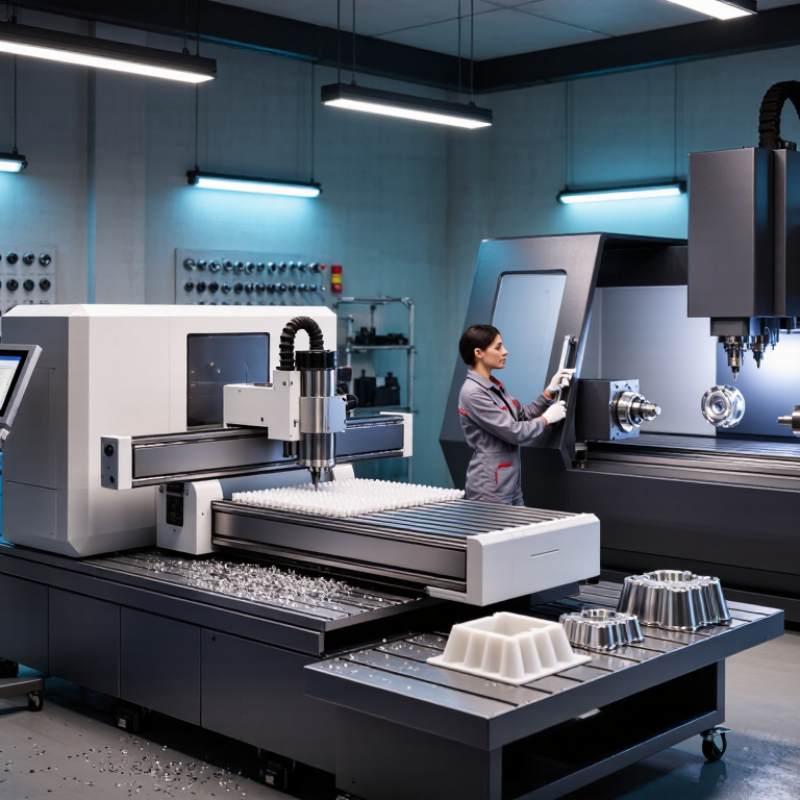
Choosing the right CNC machine begins with a production reality check. Record the material, part dimensions, tolerances, monthly volume, and expected growth. A small aluminum bracket needs different capabilities than a heavy steel housing. Measure the largest workpiece on your shop floor, including door clearance and tool-change space. These details often expose purchasing assumptions.
The Grand View Research CNC machine market report projects strong growth through 2030, driven partly by automation and higher manufacturing precision. However, market growth does not justify buying the most advanced machine. Calculate spindle utilization, cycle time, setup time, labor cost, and maintenance downtime. The International Federation of Robotics reported 541,302 industrial robots installed globally in 2023, showing how quickly automation is entering production environments. Your machine may need robot access, pallet handling, or simple loading ergonomics.
Keep the objective measurable. For example, reduce cycle time from twelve minutes to eight, or hold a 0.02-millimeter tolerance across 500 parts. Ask for documented cutting tests using your material and tooling. Do not rely only on demonstrations. They can be staged. I have seen impressive sample parts hide slow setups and difficult programming. A quieter spindle is useful, but predictable uptime matters more. Leave room for uncertainty. Your forecast may be wrong. A flexible machine can protect the investment when orders, materials, or staffing change.
10 Tips for Buying the Right CNC Machine
Compare CNC machine types before comparing prices. A CNC mill suits metal blocks, pockets, and drilled holes. A CNC lathe handles rotating bars and produces shafts, threads, and precise diameters. Routers usually process wood, plastics, or composite sheets with high-speed cutting. Hybrid machines offer flexibility, but their shared functions may reduce productivity. More capability is not always better.
Review operating capabilities against your actual parts. Check work envelope, spindle speed, motor power, axis travel, tool capacity, and positioning accuracy. A five-axis machine can reach complex surfaces, while a three-axis model may produce simpler parts more economically. Confirm material compatibility through the technical datasheet. Then request a sample test cut using your drawings, cutting tools, and preferred material.
Think beyond the machine itself. Measure the installation area, electrical supply, ventilation, chip removal, and operator access. Software compatibility matters too. A powerful machine can still create delays if programming is difficult or training is limited. Ask about maintenance intervals, replacement components, calibration procedures, and service response times. These details affect long-term reliability.
I have seen buyers focus too heavily on maximum speed. That choice can backfire when rigidity, cooling, or operator skill becomes the real limit. My own comparisons would now include cycle-time records, surface-finish samples, and noise levels. Small oversights matter. Leave room for future fixtures and tooling, but avoid paying for functions your workflow will rarely use.
Use axis count and typical maximum spindle speed as two practical starting points when matching a CNC machine to part complexity, material, and production requirements.
The figures show representative specifications for commonly configured industrial machines. Actual capabilities vary with machine size, spindle design, tooling, workholding, material, and cutting conditions. Axis count indicates the number of controlled linear and rotary axes; spindle speed is shown in thousands of revolutions per minute.
Check the work envelope carefully. Measure your largest planned part, then add room for fixtures, clamps, tools, and safe movement. A tight enclosure creates awkward setups. Leave space for future projects, but do not purchase capacity you will rarely use. I once underestimated fixture height, and the available travel became useless. That mistake still influences my buying decisions.
Material compatibility requires more than checking spindle power. Confirm the machine’s rigidity, cooling options, tooling range, chip control, and table strength. Wood, plastics, aluminum, and harder metals create different cutting loads. Ask whether the machine can maintain accuracy at your intended feed rates. Review maintenance access and operator training requirements, too. A machine that cuts beautifully for one material may struggle with another. The quietest test cut is not always the most honest one. Look for consistent results across several trials, and document what changed between them.
When buying a CNC machine, assess the software before admiring its cutting speed. A clear interface should support tool libraries, simulation, alarms, and production records. Test one real part, not a showroom demo. Can operators edit offsets without hunting through menus? Can managers export usable data?
Deloitte’s 2024 Smart Manufacturing Survey found that 86% of manufacturers expect smart manufacturing to become a major competitiveness driver within five years.
That makes software a production asset, not an optional screen.
Automation should fit your workflow, not create another problem. Check probing, pallet changing, bar feeding, robotic loading, and program transfer. Ask how quickly the system handles a small batch with different components.
The International Federation of Robotics reported 541,302 industrial robots were installed worldwide in 2023.
Yet automation without reliable setup procedures can increase interruptions. I have seen impressive cells lose time because operators lacked simple recovery instructions. That weakness is easy to miss.
Maintenance planning deserves equal attention. Require access to service manuals, spare-part lead times, remote diagnostics, and technician training.
The U.S. Department of Energy reports that predictive maintenance can reduce maintenance costs by 25–30% and downtime by 35–45%.
Treat those figures as planning targets, not promises. Ask for maintenance records from comparable installations. Also, measure operator support during a trial shift. Is help available at 7 a.m.? Are lessons documented? A machine may be technically advanced, yet poorly supported. That is not a minor inconvenience.
10 Tips for Buying the Right CNC Machine?
A low purchase price can hide expensive ownership costs. Build a five-year cost model before comparing machines. Include installation, shipping, tooling, software, training, energy, maintenance, and coolant. Add the cost of floor preparation and electrical upgrades. Downtime deserves its own line. One idle machine can delay several customer orders. Ask how often similar machines require service. Request realistic figures, not optimistic estimates. Calculate cost per productive hour, then test different production volumes. The spreadsheet may still be wrong. Electricity rates, staffing changes, and unexpected repairs can quickly change the result.
Supplier reliability matters just as much as machine specifications. Speak with three current users in similar applications. Ask about service response times, spare-part availability, and recurring faults. Request a written warranty with clear exclusions. Check whether technicians are trained for your machine configuration. Review manuals before signing; poor documentation creates costly confusion. Require a factory acceptance test using your material, tooling, and program. Record cutting time, surface finish, dimensional accuracy, and alarm history. A supplier that avoids measurable tests deserves caution. Small warning signs matter.
Do not judge reliability from polished demonstrations alone. Visit a working installation if possible. Inspect maintenance records and operator feedback. Confirm remote support procedures and local service coverage. Also check how software updates affect production and data security. I would leave a contingency reserve in the budget, even after careful research. It feels excessive until the first unplanned failure. A dependable supplier communicates difficult facts early, including lead-time risks and limitations. That honesty can protect both production schedules and long-term operating costs.
| Tip | Buying Dimension | Planning Data and Recommended Target | Cost or Performance Consideration | Supplier Reliability Check |
|---|---|---|---|---|
| 1 | Define the machining envelope | Specify maximum workpiece length, width, height, weight, and required tool access. Select travel that provides approximately 10–20% more usable capacity than the largest recurring job. | An undersized machine can require additional setups, while an oversized machine increases purchase price, floor space, power demand, and tooling costs. | Request a dimensional drawing, work-envelope diagram, table-load rating, spindle-to-table clearance, and a sample machining demonstration using a comparable workpiece. |
| 2 | Match spindle and axis performance | Compare spindle speed, torque curve, rated power, axis travel, rapid traverse, cutting feed rate, positioning accuracy, and repeatability. For many general metalworking applications, a 7.5–22 kW spindle range is a common planning band. | Higher spindle power may improve material-removal capacity but can increase electrical demand, cooling requirements, tooling wear, and maintenance cost. | Ask for test certificates based on recognized machine-tool accuracy standards, plus measured positioning and repeatability results rather than catalogue claims alone. |
| 3 | Check automation and control fit | Evaluate tool capacity, chip evacuation, probing options, workholding, pallet changes, bar feeding, robot interfaces, program transfer, and data-collection compatibility. | Automation can reduce labor and setup time, but it adds capital cost, integration work, guarding, programming, and maintenance. Calculate savings from realistic annual production hours. | Require a complete interface list, integration responsibilities, software licenses, backup procedures, training scope, and acceptance criteria for every automated function. |
| 4 | Calculate total ownership cost | Use: 5-year TCO = purchase price + installation + training + tooling + maintenance + utilities + labor impact + financing − resale value. | A practical planning allowance for installation, delivery, commissioning, and initial training is often 5–15% of machine price. Planned maintenance and consumables should be budgeted separately. | Request a five-year cost schedule covering service rates, travel charges, recommended spare parts, software renewals, warranty exclusions, consumables, and expected response times. |
| 5 | Estimate energy and facility requirements | Confirm voltage, phase, peak amperage, compressed-air quality and pressure, coolant requirements, foundation needs, ambient temperature, and minimum floor area. | Electricity consumption depends on spindle load, idle time, pumps, chip conveyors, cooling systems, and operating hours. Use measured or declared kWh-per-hour data for comparisons. | Obtain a utility-load sheet, foundation plan, installation checklist, and written confirmation of who pays for electrical upgrades, rigging, leveling, and commissioning. |
| 6 | Compare maintenance and spare parts | Review lubrication intervals, filter replacement, coolant management, ball-screw protection, spindle service intervals, battery backup, and preventive-maintenance requirements. | Keep a budget for routine lubricants, filters, belts, seals, sensors, batteries, tooling, coolant, and wear components. Critical spare-parts availability directly affects downtime risk. | Ask for preventive-maintenance schedules, spare-parts lead times, parts pricing, service manuals, troubleshooting procedures, and an escalation route for unresolved failures. |
| 7 | Verify supplier track record | Assess years of relevant manufacturing experience, installed base in similar applications, engineering capability, technical staffing, financial stability, and local service coverage. | A lower purchase price may be offset by longer downtime, repeated service visits, unavailable parts, or costly modifications. Include expected downtime in the TCO model. | Request independently verifiable customer references, service-region details, technician qualifications, audited quality certifications where relevant, and evidence of completed installations with similar requirements. |
| 8 | Set acceptance and reliability targets | Define measurable targets for dimensional accuracy, repeatability, cycle time, surface finish, first-pass yield, availability, and successful completion of representative test parts. | A documented acceptance test reduces the risk of paying for a machine that needs major correction after delivery. Include rework, delay, and return-shipping exposure in the risk calculation. | Include factory and site acceptance tests, test-part drawings, inspection methods, calibration requirements, correction deadlines, retention terms, and remedies for failed acceptance criteria. |
| 9 | Review warranty and service terms | Compare warranty duration, coverage for mechanical, electrical, control, and spindle components, remote-support hours, on-site response targets, and exclusions. | Warranty coverage is only valuable when response times and responsibilities are clear. Separate included services from chargeable travel, labor, software, and consumables. | Obtain the complete warranty document before signing. Confirm parts availability, labor coverage, escalation procedures, response-time commitments, and whether warranty work extends the warranty period. |
| 10 | Evaluate training and long-term support | Plan operator, programmer, maintenance, safety, and setup training. A useful starting point is 2–5 training days for operators and programmers, adjusted for machine complexity and automation. | Insufficient training can increase setup time, scrap, tool breakage, crashes, and dependence on external support. Include refresher training and onboarding for future employees. | Verify training agenda, instructor qualifications, documentation language, remote-support tools, software backup ownership, refresher options, and the supplier’s process for technical updates. |
A CNC mill suits metal blocks, pockets, and drilled holes. It offers controlled cutting from fixed workpieces.
Choose a CNC lathe for rotating bars, shafts, threads, and precise diameters. The workpiece spins while tools remove material.
No. Hybrid machines add flexibility, but shared functions may reduce productivity. Extra capability can become unused expense.
Request repeatability data, positioning results, and test-cut samples. Inspect holes, pockets, and thin walls with a micrometer.
Measure the largest part, fixtures, clamps, tools, and safety clearance. Leave future space, but avoid oversized capacity.
Use your drawing, material, and preferred tools during testing. A real sample reveals accuracy, surface finish, cooling, and chip-control issues.
Not always. Rigidity, cooling, tooling, and operator skill may limit production speed. Faster is not automatically better.
Check floor space, electrical supply, ventilation, chip removal, and operator access. A cramped setup creates daily delays.
Difficult programming can slow a powerful machine. Confirm software compatibility, training needs, and operator confidence before buying.
Confirm rigidity, cooling, tooling range, chip control, and table strength. Different materials create different cutting loads.
Ask about maintenance intervals, replacement components, calibration, and service response times. Small omissions can become expensive delays.
I once underestimated fixture height, and useful travel disappeared. Recheck every measurement. My checklist is still imperfect.
Choosing the right Cnc Machine begins with clearly defining your production requirements, target materials, expected part sizes, output volume, and machining objectives. Compare machine types by their cutting methods, spindle performance, axis configuration, speed, and operating capabilities. Then evaluate positioning accuracy, repeatability, work envelope, tooling options, and compatibility with the materials you plan to process. A machine that appears powerful may not be suitable if its workspace or cutting capacity does not match your actual needs.
You should also assess the control software, automation features, ease of programming, maintenance requirements, safety support, and operator training available from the supplier. Calculate the total ownership cost, including installation, tooling, energy use, repairs, consumables, and downtime—not just the initial purchase price. Finally, verify the supplier’s technical reliability, spare-parts availability, warranty terms, service response, and long-term support. A careful comparison of these factors will help you select a dependable machine that improves productivity and delivers consistent results.

Xinyunyang Precision