China’s CNC industry has moved far beyond low-cost production. Today, manufacturers compete through accuracy, automation, software, service, and long-term stability. This article examines the top CNC machine manufacturers in China, including established names such as Dalian Machine Tool, SMTCL, BYJC, Haitian Precision, and RIFA Precision.
The comparison focuses on practical evidence. We consider machine structure, spindle performance, positioning accuracy, control systems, customization, delivery capacity, and after-sales support. A modern Cnc Cnc Machine may look impressive in a showroom, yet its real value appears on the factory floor. Operators notice vibration, tool-change speed, thermal drift, and maintenance access. These small details often decide whether production remains profitable.
Dr. Y. Lawrence Yao, a recognized researcher in manufacturing automation, offers a useful principle: “Performance must be measured at the process, not merely at the machine.” That idea matters when comparing Chinese suppliers. A strong brochure is not enough. Buyers should request sample cuts, inspect inspection records, and speak with existing customers. Regional service coverage also deserves attention, especially for overseas factories.
No ranking is perfect. Buyer priorities differ. A large automotive plant may need integrated automation, while a small workshop may value simple controls and affordable repairs. Some manufacturers still show uneven documentation or inconsistent international support. That weakness should not be ignored. Careful evaluation creates a clearer, more reliable path toward selecting the right Chinese CNC partner.
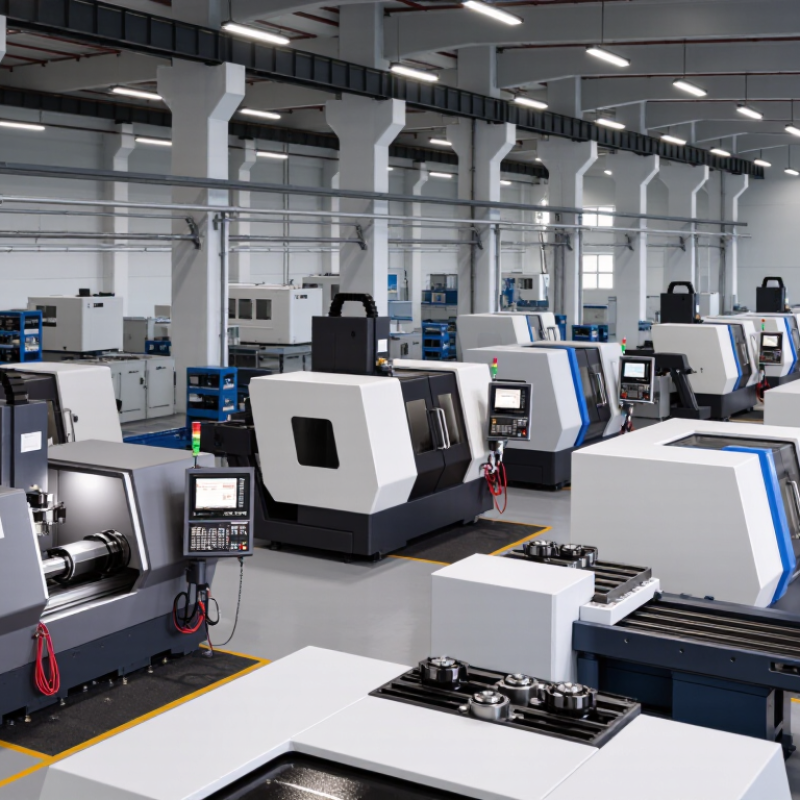
A top CNC machine manufacturer in China is defined by measurable performance, not a polished catalog. According to Grand View Research, the global CNC machine market was valued at approximately USD 83 billion in 2023. This expanding market increases competition, but size alone proves little. A reliable manufacturer should provide verified positioning accuracy, repeatability data, spindle performance, and test-cut records. These details reveal how a machine behaves beside real metal chips, coolant, vibration, and heat.
Technical depth matters. China’s machine tool industry reports continue to emphasize numerical-control upgrades, domestic supply chains, and higher-end equipment development. A capable manufacturer should therefore show in-house engineering, software integration, inspection procedures, and documented quality control. Service is equally important. The International Federation of Robotics reported 4.28 million industrial robots operating worldwide in 2023. This reflects stronger demand for connected production, where CNC equipment must communicate with robots, sensors, and factory systems. Still, a report cannot replace a factory visit. No factory is perfect. I would question any supplier promising zero downtime.
Tips: Request a sample machining test using your material and tolerances. Check calibration certificates, operator training, spare-part availability, and response times. Ask for three comparable customer references, preferably from similar production environments. A top manufacturer should explain limitations clearly, not hide them behind technical language. A cheaper quotation may become expensive when installation, training, tooling, and maintenance are excluded. The best choice balances accuracy, uptime, engineering support, and honest communication.
| Evaluation Dimension | Typical Benchmark for a Top Manufacturer | What Should Be Verified | Why It Matters |
|---|---|---|---|
| Manufacturing Experience | A stable operating history, documented production processes, and experience serving multiple industrial sectors. | Company history, production records, sector references, and audited quality procedures. | Long-term experience generally indicates stronger process control and problem-solving capability. |
| Machine Accuracy | Positioning accuracy and repeatability should be clearly stated according to an accepted testing method, with high-precision models commonly specified in the micrometer range. | Machine test reports, laser interferometer results, ball-bar testing, and inspection records. | Accuracy directly affects dimensional consistency, scrap rates, and suitability for precision components. |
| Product Range | A coherent range covering relevant machine categories, such as turning centers, machining centers, multi-axis systems, and application-specific equipment. | Technical catalogues, machine specifications, available configurations, and application case studies. | A broader but technically consistent range makes it easier to match equipment to production requirements. |
| Structural Quality | Stress-relieved, rigid machine structures designed to control vibration, thermal deformation, and long-term geometric drift. | Material specifications, casting treatment records, finite-element analysis, and factory acceptance tests. | Structural rigidity supports surface finish, cutting stability, tool life, and machine durability. |
| Core Components | Critical components should be selected for compatibility, serviceability, and documented performance rather than price alone. | Spindle specifications, drive-system data, guideway type, ballscrew grade, control-system compatibility, and component traceability. | Reliable core components improve uptime, accuracy retention, and maintenance predictability. |
| Production Capacity | Adequate factory space, dedicated assembly areas, calibrated inspection equipment, and capacity that can support repeat orders. | Factory audit, equipment list, assembly workflow, staffing, lead-time records, and capacity planning documents. | Production capability reduces delivery risk and helps maintain consistent machine quality at scale. |
| Quality Management | A documented quality management system supported by incoming inspection, in-process checks, final testing, and corrective-action procedures. | Quality certificates, inspection plans, nonconformance records, calibration certificates, and final acceptance reports. | Systematic quality control is more reliable than relying only on final visual inspection. |
| Customization Capability | Ability to configure work envelopes, tooling, automation, fixturing, software, and safety features for defined applications. | Engineering workflow, application assessments, custom-machine references, and commissioning procedures. | Proper customization can improve cycle time, operator safety, and process integration. |
| Automation and Digital Integration | Support for probing, tool management, bar feeding, robotic loading, production monitoring, and compatible data interfaces where required. | Integration diagrams, communication protocols, automation test results, and software documentation. | Digital and automated functions can increase utilization and reduce repetitive manual work. |
| Energy Efficiency | Use of efficient drives, standby modes, optimized coolant systems, LED work lighting, and measurable power-consumption data. | Power-consumption tests, environmental specifications, operating modes, and sustainability documentation. | Lower energy use can reduce operating costs and support environmental targets. |
| After-Sales Service | Clearly defined warranty coverage, installation support, commissioning, troubleshooting, and access to replacement parts. | Service network, response-time policy, spare-parts list, training plan, and warranty terms. | Responsive support limits downtime and protects the machine’s total cost of ownership. |
| Export and Compliance Readiness | Experience preparing export documentation, electrical configurations, safety files, manuals, and region-specific compliance materials. | Export references, conformity documents, translated manuals, packing standards, and shipping records. | Compliance and documentation reduce customs, installation, and workplace-safety risks. |
| Total Cost of Ownership | A transparent assessment of purchase price, installation, tooling, energy, maintenance, consumables, training, and expected service life. | Detailed quotations, maintenance schedules, consumable requirements, operating-cost estimates, and lifecycle assumptions. | The lowest initial price does not always provide the lowest long-term production cost. |
Note: Performance benchmarks vary by machine type, configuration, material, tooling, testing method, and application. Buyers should compare independently verified specifications under equivalent conditions.
Many combine machining, assembly, testing, and inspection in one facility. This can shorten production cycles. Practical engineering matters more than showroom size.
Common options include three-axis machining centers, five-axis machines, turning centers, mill-turn systems, gear-cutting machines, wire EDM, and laser equipment. Choose according to material, part shape, and production volume.
Five-axis machining suits curved aerospace parts, medical components, and complex molds. It can reduce repeated setups. That may improve access and consistency.
Request test-cut data using your actual material. Check positioning accuracy under realistic workloads. Inspect finished parts, calibration records, and thermal drift. Laboratory figures alone are not enough.
Include shipping, installation, training, software, tooling, energy, maintenance, and spare parts. A cheaper machine may create higher downtime costs. The final calculation can be uncomfortable.
Ask about response times, technician availability, language support, and remote diagnostics. Confirm spare-part locations and delivery estimates. Written service terms are safer than friendly promises.
Observe final assembly, calibration, machine testing, and inspection procedures. Look for calibrated measuring equipment and organized records. Small details matter. A polished showroom proves little.
A trial machine can expose problems early. Test repeatability, spindle stability, chip removal, and operator training. It feels slower, but caution may prevent expensive mistakes. Even experienced teams can misjudge.
China has become a major center for CNC machine manufacturing, offering a broad range of equipment for machining, turning, milling, grinding, cutting, and automated production. A top manufacturer is defined not only by advanced engineering, but also by consistent accuracy, stable performance, durable construction, effective quality control, and the ability to customize machines for different industries. Many Chinese manufacturers combine modern control systems, multi-axis technology, robotics, and smart production features with competitive pricing.
When comparing suppliers, buyers should evaluate machine quality, processing capacity, delivery reliability, technical support, spare-parts availability, warranty terms, and operator training. The best choice depends on the required materials, production volume, precision level, workspace, and budget. Customers should also confirm testing standards, communication efficiency, installation services, and long-term maintenance support before placing an order. Whether selecting a compact unit or a fully automated Cnc Cnc Machine, careful assessment of technology, service, and total operating cost can help ensure dependable performance and a strong return on investment.

 Xinyunyang Precision