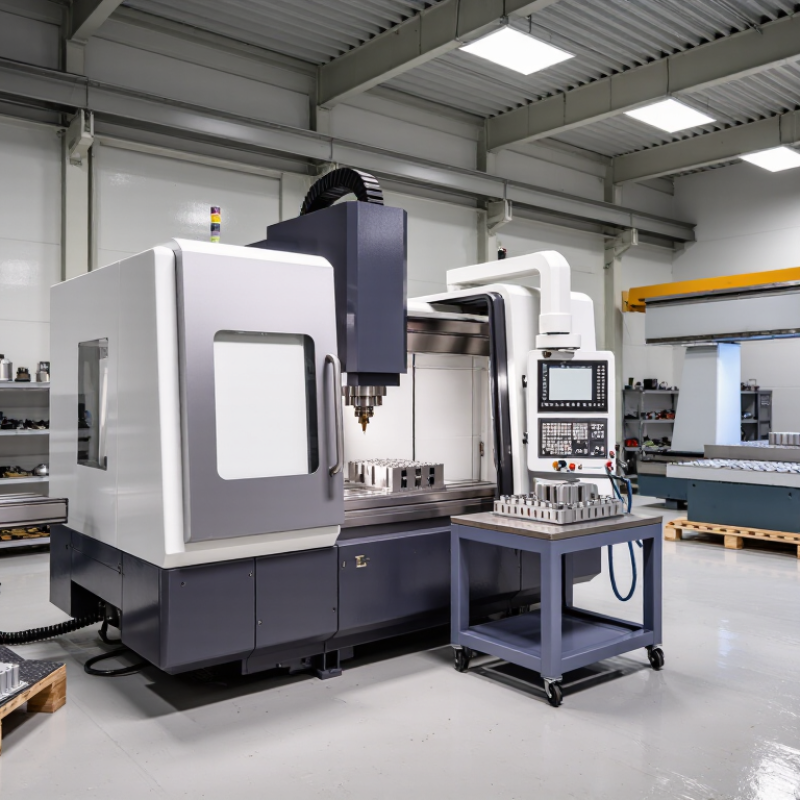
Choosing among the top CNC milling machine types in 2026 starts with the workpiece, not a product label. A Cnc Milling Machine can cut steel brackets, aluminum housings, or precision molds, but each configuration handles these jobs differently. Vertical mills offer clear access and suit many general-purpose tasks. Horizontal machines can support efficient cutting on multiple sides of a part. Five-axis models reach complex surfaces with fewer setups, while bed mills and gantry mills accommodate larger or heavier workpieces.
The differences show up on the shop floor. A vertical mill may fit beside a workbench; a gantry machine can span a large fixture. Tool changes, axis travel, spindle power, and control software all affect production. So do floor space, operator experience, maintenance access, and the parts you expect to make next year. More axes do not automatically mean better results. Details matter.
This guide compares the main milling machine types and explains where each one tends to perform well. It also considers practical trade-offs, from setup time to machining flexibility. Specifications can look convincing on a screen, yet real performance depends on tooling, workholding, programming, and material. That point is easy to overlook. Use the comparisons as a starting point, then confirm machine capabilities with manufacturers and sample cuts before making a purchase decision.
What Are the Top CNC Milling Machine Types in 2026?
How CNC Milling Machines Remove Material
A CNC milling machine removes material with a rotating, multi-edge cutting tool. The workpiece is clamped to a table, while programmed movements guide the tool or table along selected axes. Each cutting edge shears off a small chip. The cutter spins. Repeated passes gradually create pockets, slots, flat faces, and curved profiles. Chips carry heat away, but poor chip clearance can leave rough surfaces or mark the part.
Cutting results depend on more than machine type. Tool geometry, material hardness, spindle speed, feed rate, and cut depth all affect the process. For example, a deep pocket in aluminum may need different settings from a shallow pass across steel. Coolant or air can help manage heat and clear chips, depending on the material and operation. A toolpath also matters: abrupt direction changes may leave visible marks. In practice, even a sound setup can need adjustment after a test cut. That is not a failure; it is useful feedback.
Tips: Secure the stock firmly, check tool condition, and confirm the programmed toolpath before cutting. Start with conservative settings when material behavior is uncertain. Watch for unusual vibration, heat, or chip shapes. Small details matter. A short test pass can reveal problems before they affect the full workpiece.
Typical axis configurations show how milling machines move the rotating cutting tool and workpiece to remove material.
A rotating cutter removes material as it moves relative to the workpiece, producing chips. Three-axis vertical and horizontal mills move along the X, Y, and Z axes; 4-axis configurations add a rotary axis, while 5-axis configurations add two rotary axes for machining from more angles. These are typical configurations, not limits—machines can vary.
CNC milling configurations differ in spindle direction, workpiece access, and axis movement. Vertical machining centers place the spindle above the table, making them practical for plates, pockets, and visible setup checks. Horizontal machines direct chips away from many cutting areas and suit parts needing several side faces machined. That advantage depends on fixtures and part geometry. A five-axis machine adds rotary movement, allowing angled surfaces and fewer repositionings. Gantry machines provide a wide working envelope for large panels or molds.
These categories can overlap: five-axis describes motion, while vertical and horizontal describe spindle orientation. Grand View Research valued the global CNC machine market at USD 83.99 billion in 2023, reflecting the scale of investment in automated machining. That figure covers CNC machines broadly, not milling configurations alone. It should not be treated as proof that one layout fits every shop. A compact vertical machine may outperform a larger system when floor space, operator access, and part size are the real constraints. Trade-offs are rarely tidy.
Tips: Match the machine to the part’s longest dimension, required faces, and typical batch size. Check tool reach and fixture clearance with a sample setup, not just the brochure envelope. For complex parts, fewer setups can reduce alignment errors—but programming and inspection may become harder. A small detail, often missed.
CNC milling machines in 2026 are best compared by spindle orientation, number of axes, and workpiece size.
Vertical mills suit compact components, repair work, and general-purpose production. Their downward-facing spindle gives operators a clear view of the cutter.
Horizontal mills handle heavier cuts and repeated production well; a pallet changer can reduce idle time between jobs.
For angled features and complex contours, 5-axis machines move the tool or part across multiple axes.
Large gantry mills, meanwhile, support oversized panels and structural parts.
Small parts? Vertical often works. Complex geometry? Consider 5-axis.
Tips: Match the machine to your most common part, not your most impressive one. Check the usable travel, spindle speed, and tool-change time against an actual job. A 5-axis machine can still disappoint if programming skills or fixturing are weak. That trade-off is easy to underestimate.
Grand View Research estimated the global CNC machine market at USD 101.22 billion in 2023 and projected a 9.3% compound annual growth rate from 2024 to 2030. This broad market figure includes more than milling machines, so it should not be read as a milling-only forecast. It does show why flexible automation is drawing attention. Yet a newer machine is not automatically a better fit: floor space, operator experience, and chip removal can matter more than an extra axis.
In 2026, CNC milling machines are often grouped by spindle orientation and axis count. Vertical mills suit many flat plates, pockets, and mold features because the work area is easy to inspect. Horizontal machines direct chips away from some cutting zones and can support efficient work on multiple faces. Three-axis mills move along X, Y, and Z; they handle many prismatic parts with straightforward setups. Five-axis machines add rotation, letting the tool reach angled surfaces with fewer repositioning steps.
More axes are not automatically better.
Axis choice only tells part of the story. A stiff spindle, well-supported workholding, and suitable cutters influence accuracy, finish, and cycle time. For example, a long, narrow end mill may chatter when cutting a deep aluminum pocket, even on a capable machine. Shorter tools are usually more rigid, while ball-nose cutters can leave smoother transitions on curved surfaces. Tool material, flute geometry, and coating should match the workpiece and cutting conditions. Small details matter. In practice, setup errors and tool wear can erase the advantage of extra axes. I would compare machines using the part’s tightest tolerance, deepest feature, and expected production volume—not the axis count alone.
Vertical milling machines suit general-purpose shops that make brackets, plates, and housings. Their spindle points downward, so operators can see the cutting area and change setups without much fuss. A vise holds a steel block while an end mill cuts a pocket. This is a practical fit for short runs and varied parts. Setup still takes time.
Horizontal mills handle heavier cuts and repeated production more efficiently. Their spindle sits sideways, and a pallet or fixture can support several faces of a part. This arrangement helps when a component needs multiple surfaces machined with fewer manual repositioning steps. Chips also tend to fall away from the cutting zone. For large, awkward parts, fixturing can still become the real bottleneck.
Five-axis machines reach angled surfaces and complex contours with fewer setups. They are useful for aerospace-shaped components, medical parts, and precision molds, where tool access matters. But extra axes do not automatically improve a job. Programming, workholding, and inspection all need careful planning. A simpler three-axis machine may be more reliable for flat features and steady production. That distinction is easy to overlook. A machine should fit the part mix, tolerance needs, and operator experience—not just the most demanding part on the drawing.
A vertical machine has a spindle above the table, making plates and pockets easy to inspect. A horizontal spindle can help machine several faces and move chips away from some cutting areas.
It suits varied, short-run work such as brackets, plates, and housings. Operators can see the cutting area and check a setup. Setup still takes time.
Horizontal machines can suit repeated production and parts needing several machined faces. A pallet or fixture may hold a steel component steady, though awkward parts can make fixturing difficult.
It adds rotary movement, allowing tools to reach angled surfaces and complex contours with fewer repositioning steps. Programming and inspection can become harder, so extra axes are not always an advantage.
No. Three-axis machines handle many prismatic parts and flat features with straightforward setups. For simple, steady production, fewer axes may be easier to manage.
Compare the part’s longest dimension, required faces, tightest tolerance, and typical batch size. Check tool reach and fixture clearance using a sample setup, not only the machine’s stated working envelope.
A long, narrow end mill can chatter in a deep aluminum pocket. Shorter tools are usually more rigid, while ball-nose cutters can produce smoother transitions on curved surfaces.
Setup errors, tool wear, weak workholding, and a flexible spindle can affect accuracy and finish. I would not assume more axes will fix a poor setup.
A Cnc Milling Machine removes material by rotating a cutting tool against a secured workpiece, following programmed instructions to create precise shapes, slots, holes, and surfaces. Machines come in several configurations, including vertical and horizontal designs, each suited to different workpiece geometries, cutting directions, and production needs. The right setup can influence access to the material, chip removal, accuracy, and how efficiently a part can be completed.
In 2026, common types include vertical, horizontal, bed-type, turret, and multi-axis milling machines. Their capabilities depend on factors such as the number of controlled axes, spindle arrangement, tool selection, and workholding method. Simple jobs may require only basic movement, while complex contours benefit from additional axes and suitable tooling. Understanding these differences helps manufacturers match a machine to the material, part design, required precision, batch size, and workflow, supporting consistent results across a wide range of production applications.

Xinyunyang Precision