High-Quality Precision gold-plated metal components Manufacturer, Factories

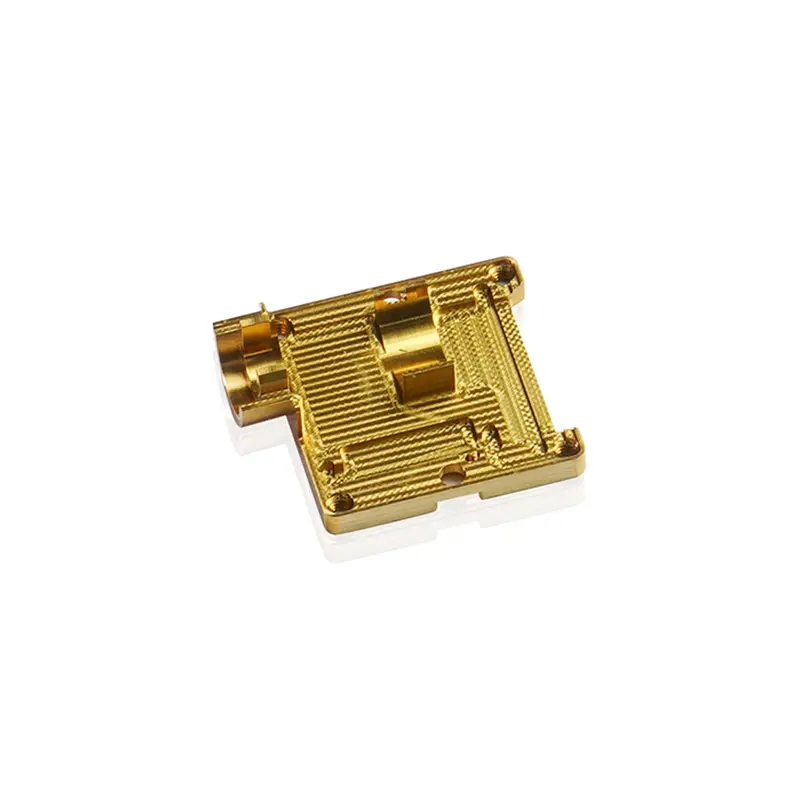
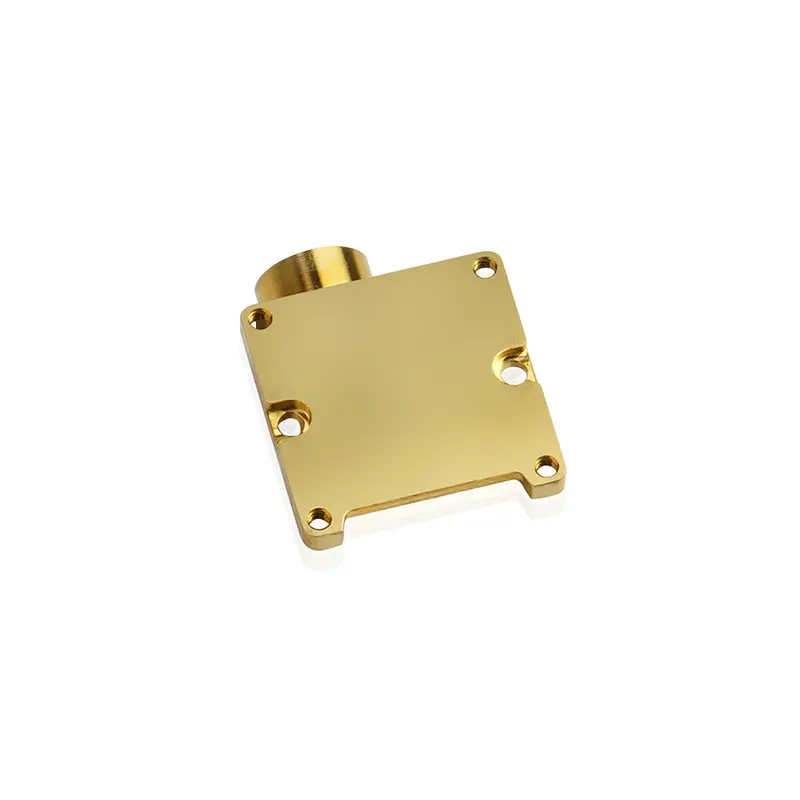
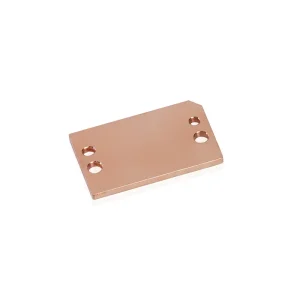
※ The copper metal plate has excellent electrical conductivity.

※ As a high-quality conductive material, it can efficiently transmit current and is suitable for scenes with extremely high electrical conductivity requirements such as power transmission and electronic component connection.

※ Its excellent thermal conductivity makes it an ideal choice for the heat dissipation field, which can quickly conduct and diffuse heat, such as in heat sinks, thermal management components, etc.

Product Description

Product Introduction

Its excellent corrosion resistance can maintain stable physical properties in humid environments or when facing slight acidic and alkaline substances, and it is not easy to rust or corrode, thus extending its service life.

Product Features

Its moderate mechanical strength and good processing performance make it easy to perform processing operations such as drilling, cutting, and bending, and it is not easy to deform after processing, and can accurately adapt to various industrial assembly requirements.

Compared with aluminum, it has more advantages in corrosion resistance and electrical conductivity; compared with iron, its electrical and thermal conductivity performance is far superior, and its weight is lighter.

The smooth surface treatment not only improves the aesthetics, but also further reduces the resistance and oxidation probability, and enhances the overall performance.


Design
Design
Engineered
Engineered
Manufactured
Manufactured
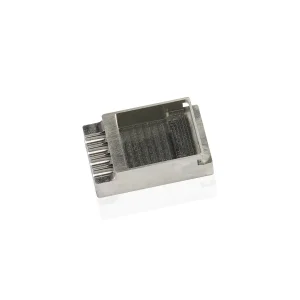
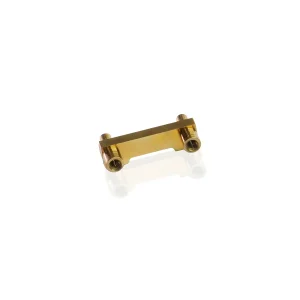
Precision gold-plated metal components 2
Precision gold-plated metal components 1

Product Advantages

These characteristics make it widely used in industrial fields such as electronics, electrical, and heat dissipation systems, perfectly integrating practicality and functionality, and highlighting its distinct industrial application value.

Ultra-Precision Machining

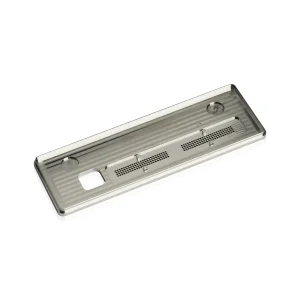
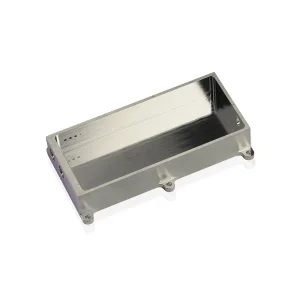
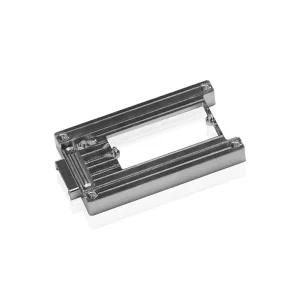
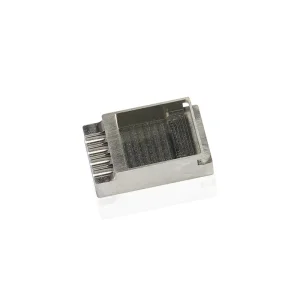
The overall structure of the component is a smooth long strip, with straight edges like laser cutting. After repeated milling by a five-axis linkage machining center, the error of the edges and corners is controlled within ±0.01mm.

Advanced Composite Surface Treatment

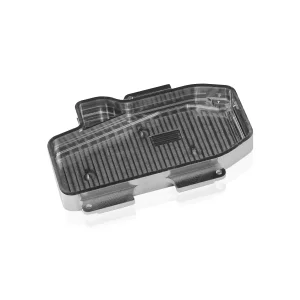
The metal surface adopts a composite treatment process: first, it is electrochemically polished to form a mirror base, and then a nano-scale ceramic film layer is grown on the surface through micro-arc oxidation technology, which combines the high strength of metal with the wear resistance of ceramic. At a certain angle, the film layer reflects a deep blue-gray color, and the micron-level pits densely distributed on the surface are not flaws - these array-type guide grooves etched by laser can guide the lubricating oil to form a stable oil film during high-speed operation, reducing the friction coefficient to 0.08 and significantly improving the service life of the components.

Military-Grade Structural Design

The structural design is a model of engineering. The staggered concave and convex structures on the surface adopt military-grade mortise and tenon joint standards. The trapezoidal tenon of the convex part and the dovetail groove of the concave part form a three-dimensional locking structure. With an interference tolerance of 0.005mm, it can maintain zero-gap fit under extreme temperature differences of -40℃ to 200℃, and the displacement is less than 0.003mm when subjected to a torque of 1500N·m.
Frequently Asked Questions

Q1: How durable is the component in humid or mildly acidic environments?
A1: It exhibits exceptional corrosion resistance. This allows the component to maintain stable physical properties and resist rust effectively in humid environments or when exposed to mild acidic and alkaline substances.
Q2: What advantages does this material hold over aluminum and iron?
A2: Compared to aluminum, it offers far superior corrosion resistance and electrical conductivity. Compared to iron, it features outstanding electrical and thermal conductivity performance while maintaining a much lighter weight profile.
Q3: Can this component handle high-precision mechanical processing?
A3: Yes. With moderate mechanical strength and excellent processing performance, the component easily adapts to processing operations such as drilling, cutting, and bending without deformation post-processing.
Q4: What is the benefit of the laser-etched micro-pits on the surface?
A4: The micron-level pits are array-type guide grooves etched by laser. They guide lubricating oil to form a stable oil film during high-speed operations, reducing the friction coefficient to 0.08 and significantly extending the service life.
Q5: How does the component perform under extreme temperature variations?
A5: Thanks to its military-grade mortise and tenon joint standards with a 0.005mm interference tolerance, it maintains a zero-gap fit under extreme temperatures ranging from -40℃ to 200℃.
Q6: What level of dimensional precision does the manufacturing process guarantee?
A6: After repeated milling by a five-axis linkage machining center, the edge and corner error is strictly controlled within ±0.01mm, ensuring precise integration into complex industrial assemblies.

Related Products