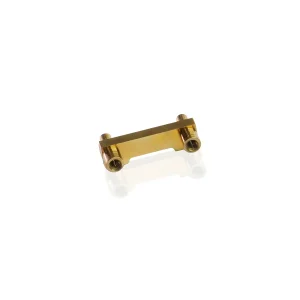
In the modern industrial ecosystem, the division between basic fabrication and advanced precision subtraction machining has expanded significantly. Driven by structural shifts in aerospace engineering, telecom network rollouts, optoelectronic packaging, and semiconductor manufacturing, multinational enterprises are facing an unprecedented challenge: sourcing highly reliable, micro-tolerant CNC turned and milled components that comply with stringent global regulations.
Critical engineering applications no longer tolerate nominal variations. Today's components must function in high-pressure, hyper-thermal, and corrosive environments. From satellite communication assemblies needing matching low-thermal-expansion coefficients to optoelectronic subsystems requiring micron-level hermeticity, the reliance on high-precision components is absolute. Advanced CNC processing—combining both horizontal and vertical machining, multiaxis turning, and rapid-spindle milling—lies at the heart of this global industrial supply chain.
For global procurement teams, the decision matrix for choosing a manufacturing facility has evolved past basic unit cost. Total Cost of Ownership (TCO) analysis now factors in structural raw material authentication, ESG validation, conflict-free mineral traceability, complex tooling agility, and long-term geometric reliability. Industrial buyers look for key strategic partners that offer a complete technological solution rather than simple machine shop activities.
"Operational excellence in precision CNC machining is determined by the intersection of metallurgic science and machining physics. Sub-micron tolerance is not just a dimensional metric—it is a performance pledge that determines the absolute reliability of mission-critical systems."
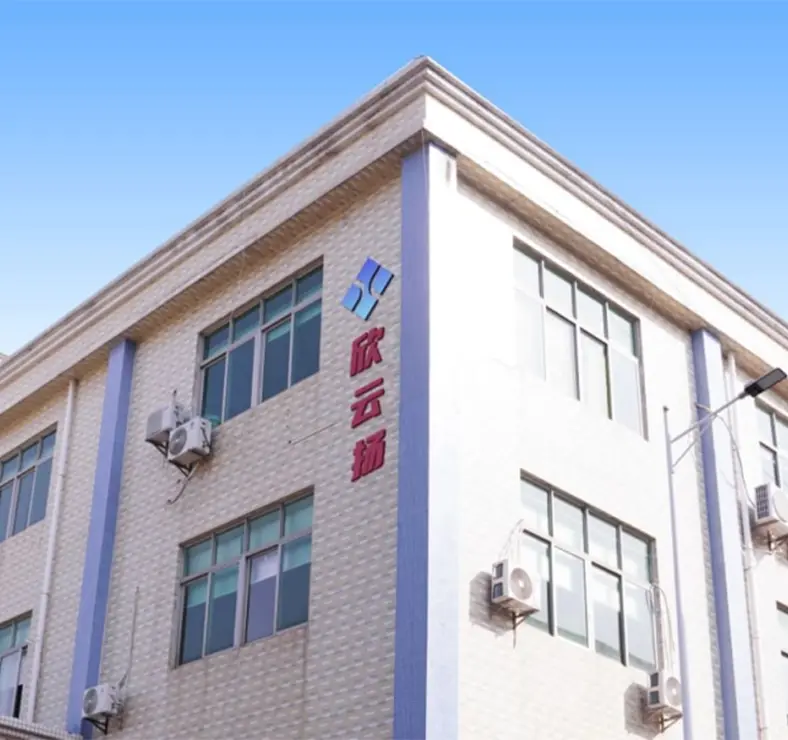
Established in November 2014, Xinyunyang Precision Technology has advanced from an industry-focused workshop to a global supplier of micro-machined specialized alloys and precision components. Our corporate core has always rested on four foundational principles: Integrity, Innovation, Cooperation, and Sharing.
We focus on Kovar precision processing technology as our core competence. Xinyunyang serves advanced industries including semiconductors, optoelectronics, aerospace, medical devices, defense, and green energy infrastructure. We design and deliver custom, highly reliable metal packaging solutions and hermetic lids to customers across multiple continents.
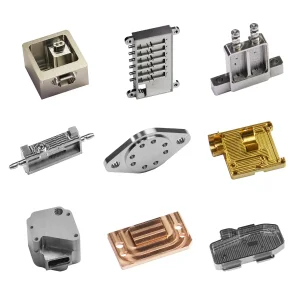
Industry-leading expertise in high-difficulty alloy micro-machining (Kovar, 4J29, Invar, Titanium, and heavy copper).
Flexible tooling systems that adapt to complex geometric prototypes as easily as high-volume serial runs.
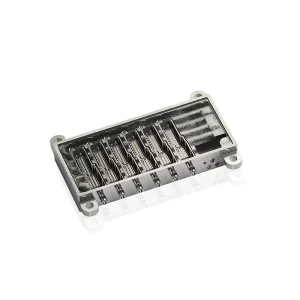
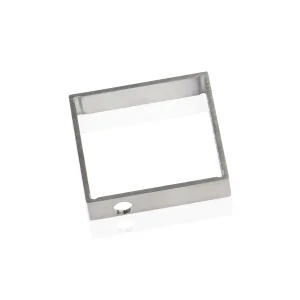
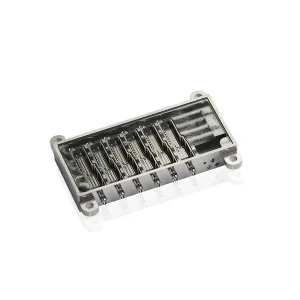
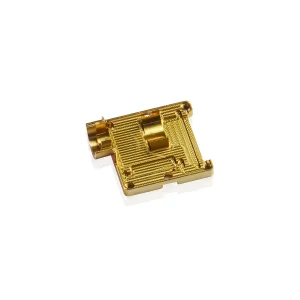
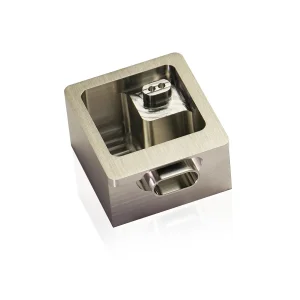
Producing precision-milled housings that maintain strict vacuum hermeticity in harsh operating environments.
Understanding the mechanical kinematics, toolpaths, and applications of CNC Turning and CNC Milling helps design engineers choose the most cost-effective and structurally sound approach for custom parts.
| Feature Parameter | CNC Turning Processing | CNC Milling Processing | Hybrid Turn-Mill Multiaxis |
|---|---|---|---|
| Mechanical Kinematics | Workpiece rotates at high speeds; static tool shears metal | Workpiece is secured; cutting tools rotate on multiple axes | Both workpiece and multi-point cutters rotate simultaneously |
| Primary Geometry | Symmetrical, cylindrical, conical, and tubular profiles | Prismatic, asymmetric, complex 3D surfaces and cavities | Ultra-complex, highly asymmetric parts with cylindrical elements |
| Optimal Alloys | Kovar, Titanium, Brass, Steel, Aluminum | Kovar, Titanium, Stainless Steel (316L/304), Alum-Alloys | All exotic aerospace alloys, 4J29 Kovar, heavy metals |
| Dimensional Tolerance | Achieves down to ±0.002 mm (linear precision) | Achieves down to ±0.005 mm (geometric profile) | Achieves down to ±0.003 mm (integrated form factor) |
| Typical Parts | Seals, feedthroughs, pins, shafts, connectors | Microwave cavities, optical module housings, brackets | Hermetic defense shells, complex aerospace manifolds |
CNC Turning holds the workpiece in a dynamic, high-speed chuck while a stationary single-point cutting tool shapes the profile. This method is highly efficient for producing concentric components like precision connector pins, sleeves, and aerospace feedthroughs. The continuous contact between the cutting tool and the rotating workpiece ensures smooth finishes and high roundness tolerance. This process is key when working with alloys like Kovar (4J29) to make sure there are no microscopic micro-fractures along the sealing surface.
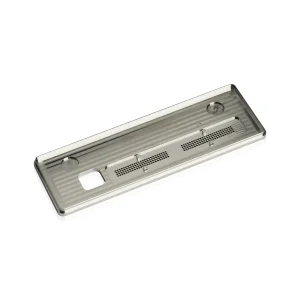
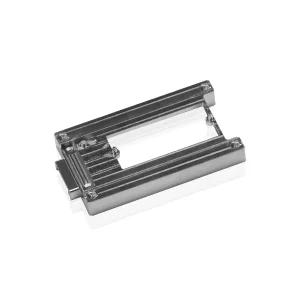
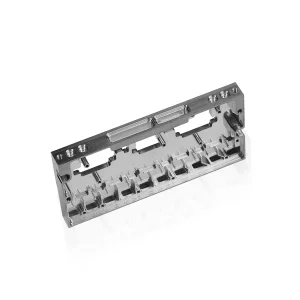
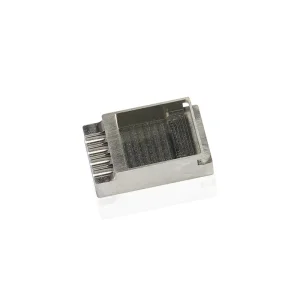
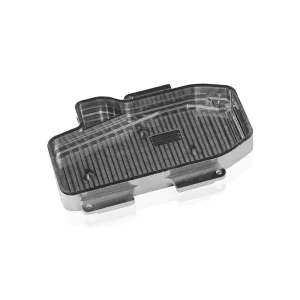
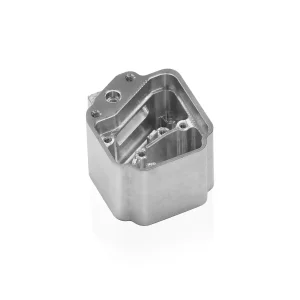
Unlike turning, CNC Milling uses rotary cutters to remove material from a secured workpiece. With modern 3-axis, 4-axis, and 5-axis vertical/horizontal milling machines, factories can construct intricate non-symmetric parts like custom housings, RF filter cavities, and heat dissipation plates. The high-speed spindles and advanced toolpaths reduce structural resonance, preventing stress build-up in delicate alloys and keeping high-precision components flat.
For advanced designs like hermetically-sealed military connectors or 5G optical housing assemblies, separate turning and milling processes can introduce alignment errors during setup changes. Hybrid turn-mill machining centers solve this by completing complex turning and multi-axis milling operations in a single cycle. This integration maintains strict concentricity and positioning tolerances between internal bores and external milled pockets.
Kovar (an iron-nickel-cobalt alloy structurally identical to ASTM F15 / Chinese 4J29) is a vital material for microelectronic packaging, optoelectronics, and vacuum-sealed instruments. The primary engineering value of Kovar is its Coefficient of Thermal Expansion (CTE), which matches borosilicate glasses and ceramic substrates over a wide temperature range (-70°C to 450°C).
This CTE matching is essential. When electronic assemblies operate in high-temperature or extreme environments, components expand and contract. If the metal packaging expansions do not match the glass feedthroughs, the hermetic seal will crack, causing catastrophic failure.
However, Kovar's tough, gummy nature and low thermal conductivity make it challenging to machine. It work-hardens rapidly during cutting, which causes tool wear and can warp thin-walled parts.
Xinyunyang’s engineering strategy balances advanced physical manufacturing with digital quality control systems.
Our facility houses over 100 dedicated manufacturing professionals, with engineering and technical design staff making up 30% of the team. This high technical ratio ensures every project receives expert oversight, from initial tool design to finished part verification.
With over a decade of hands-on experience in precision metal processing, our core team develops and refines advanced machining methods for tough alloys. We proactively adapt to emerging trends in 5G infrastructure, AI compute hardware, and new energy military-grade packaging.
Using an ISO 9001 certified quality management system alongside smart production scheduling, Xinyunyang has improved delivery efficiency for custom orders by 15% to 20%. We provide a dependable, highly tracked supply chain for global OEMs.
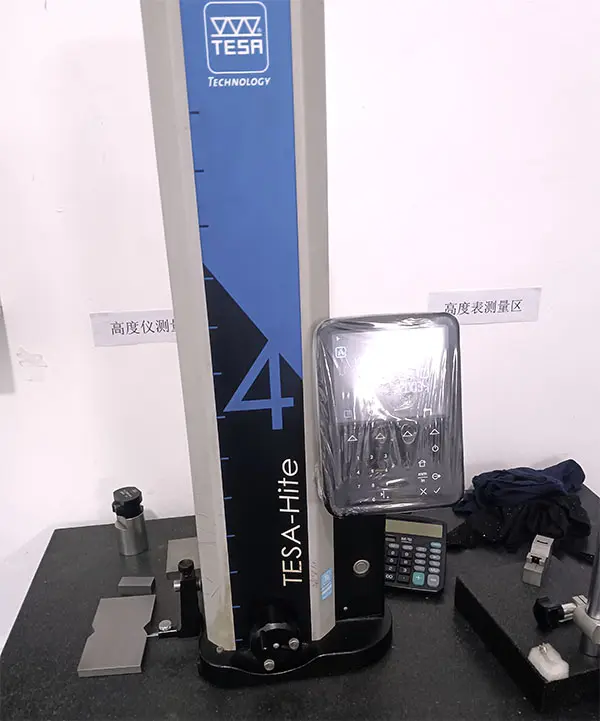
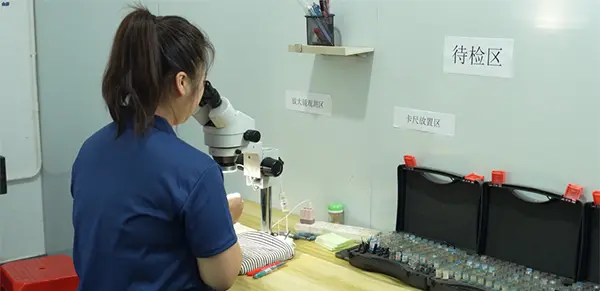
A look inside our manufacturing floor, showcasing our clean environments, advanced machine tools, and dynamic quality inspection spaces.
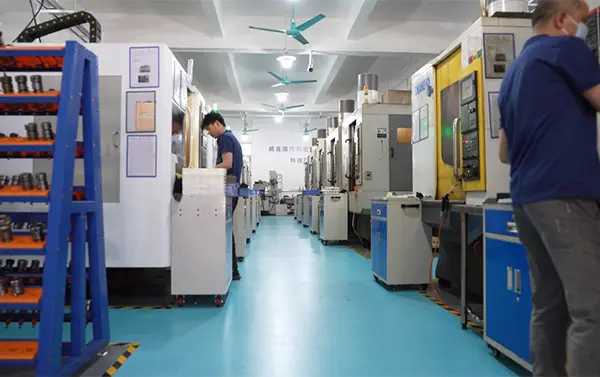
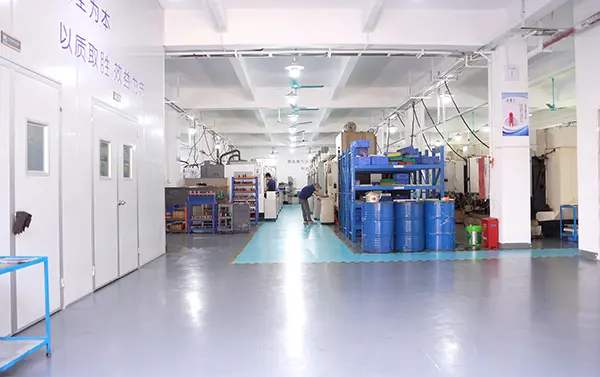
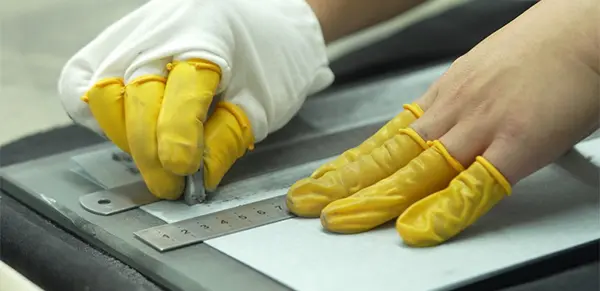
Modern procurement teams prioritize supply chain integrity. Xinyunyang uses strictly certified conflict-free metals (such as 4J29 Kovar and premium electrolytic copper). Our processes comply fully with current RoHS and REACH regulations, eliminating environmental and regulatory liabilities for your brand.
To address the complexities of international trade, tariffs, and shipping delays, we maintain dedicated logistics channels and secure buffer stock strategies. This dual approach helps protect production timelines against sudden market movements or transport disruptions.
We assign dedicated project managers and metallurgical engineers to every accounts. This single-point-of-contact approach ensures clear communication during tool design reviews, custom modification runs, and quality auditing processes.
As industrial designs grow more complex and compact, precision manufacturing must evolve to meet new performance standards. Subtraction-based CNC machining is integrating smart digital technologies to create highly automated, adaptive production lines. At Xinyunyang, our research and development focuses on four main technological initiatives:
By training machine learning models on cutting physics, spindle harmonics, and thermal sensor data, we can dynamically predict tool wear and surface stress. Real-time adjustments during high-speed milling cycles prevent microscopic subsurface defects in tough alloys like titanium and Kovar (4J29).
Next-generation semiconductor equipment and optoelectronic housings require tolerances tight enough to prevent even single-atom leak rates. We are upgrading our tooling systems, cleanroom-grade metrology, and environmental control systems to offer repeatable tolerances of ±0.001 mm on complex assemblies.
Combining 3D powder-bed fusion with precision CNC multi-axis milling allows us to create components with complex internal coolant channels and fine, high-tolerance sealing surfaces. This technique is valuable for space-constrained aerospace and advanced cooling applications.
 Xinyunyang Precision