Buy Precision Metal Connector Assembly for Reliable Signal Transmission Suppliers, Manufacturer

The manufacturing process for this metal connector assembly requires multiple precision steps. First, raw material preparation involves selecting high-quality metal materials, such as copper alloy or aluminum alloy. After inspection to ensure that the material properties meet the requirements, the cutting process begins. Using CNC cutting machines and other equipment, the raw materials are cut into initial blanks according to the designed dimensions, laying the foundation for subsequent processing.

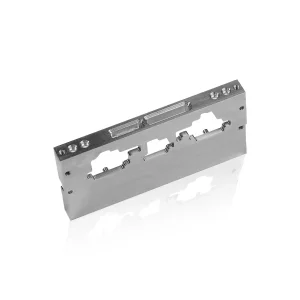
Next, the housing is processed. The blanks are milled and drilled on a CNC machining center to precisely define the housing shape, mounting holes, and internal cavities for the contacts. Dimensional tolerances are strictly controlled to ensure the housing's accuracy and regularity. Surface treatment, which may involve electroplating, coats the housing with a layer of metal, such as nickel or chromium, to enhance wear and corrosion resistance while also enhancing the metallic appearance.

Next, the contacts are processed. Metal materials with excellent electrical conductivity are selected and stamped into the desired contact shape. The stamping process requires precise control of the mold to ensure consistent size and shape. After stamping, the contacts undergo subsequent finishing processes, such as grinding and polishing, to remove burrs and ensure a smooth surface that facilitates signal or power transmission.

Finally, assembly occurs. The processed contacts are precisely installed into the housing cavity according to the designed arrangement and secured using welding or precision snap fasteners to ensure accurate contact positioning and a secure connection. After assembly, comprehensive testing, including dimensional and conductivity testing, is conducted to identify any processing or assembly defects. Only products that pass these tests are put into use, ensuring stable connection and signal transmission in various electronic and industrial scenarios.

Product Description

This is a precision metal connector assembly. Connectors play a vital role in modern industry and electronics, serving as key components for connecting and disconnecting circuits or signal pathways, as well as transmitting signals. They are widely used in numerous industries, including communications equipment, automotive electronics, industrial control, and aerospace.

Exterior Structure & Design

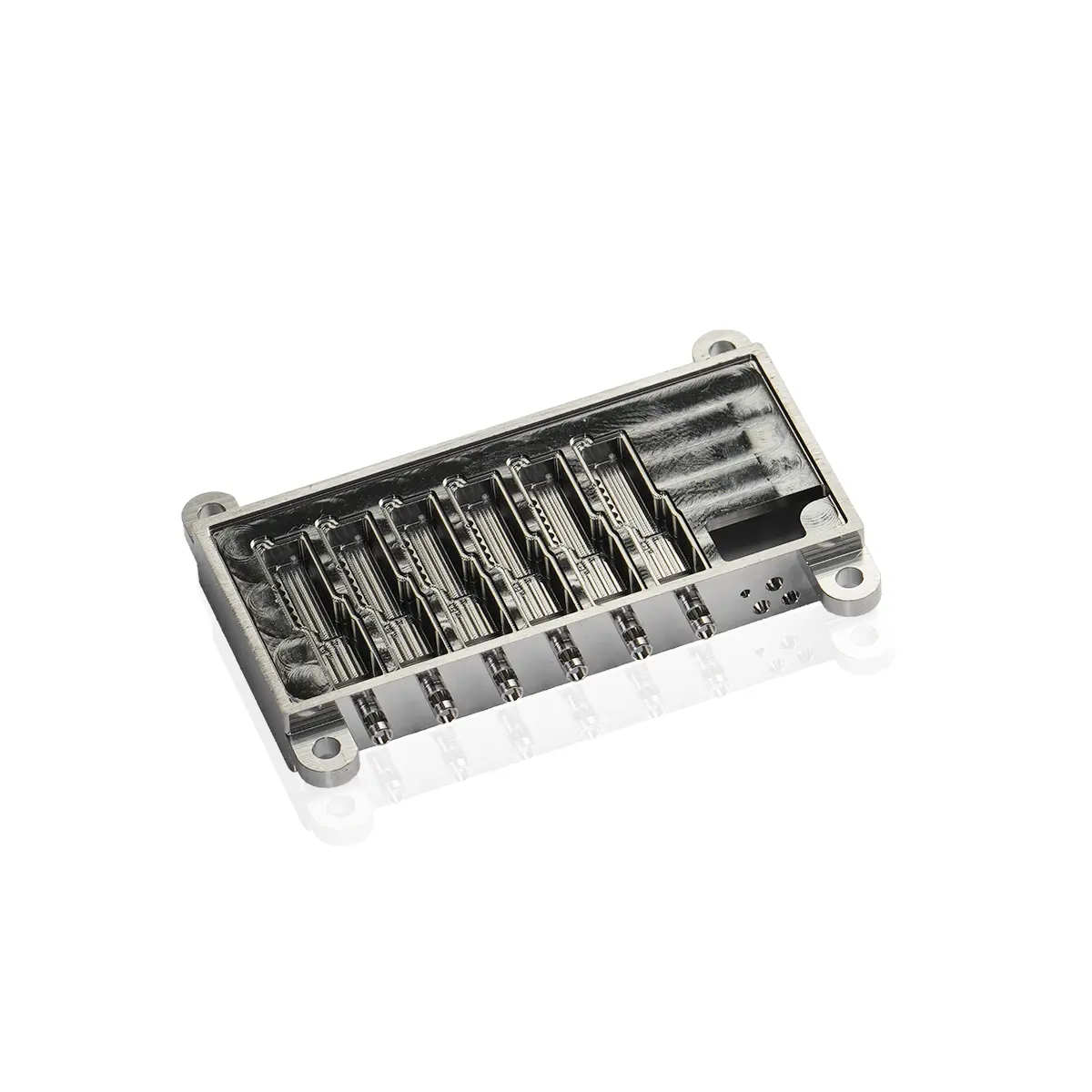
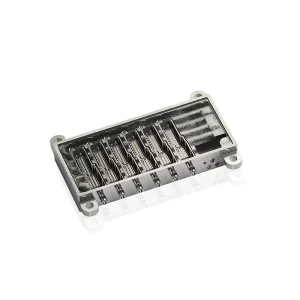
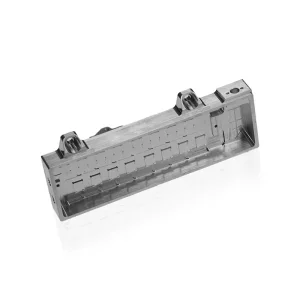
From its exterior, this connector assembly exhibits an overall metallic texture, with a neat and refined structure. Its main body consists of a metal housing designed with mounting and securement in mind. Mounting holes on both sides ensure secure attachment to the device or circuit board, preventing movement or loosening during use and providing stable physical support for the entire connection system.

Internal Contacts & Signal Integrity

Internally, multiple neatly arranged contacts can be seen. These contacts are the core components for electrical connection or signal transmission. They are typically constructed from highly conductive metals, such as copper alloys, to minimize current or signal loss during transmission. The shape and arrangement of the contacts are carefully designed, allowing different contacts to correspond to different circuits or signal channels, enabling simultaneous connection and transmission of multiple channels.

High-Precision Manufacturing

In terms of manufacturing, such connector assemblies necessarily utilize high-precision processing technology. From the molding of the metal housing to the processing and assembly of the internal contacts, every step requires stringent precision control. Dimensional tolerances of the housing and contact spacing must meet extremely high standards to ensure accuracy and reliability when mating, preventing poor connections or power transmission failures.

Versatile Applications

Communications: Connects different circuit boards, ensuring stable signal transmission for data processing.
Automotive Electronics: Used in engine control units and in-car entertainment systems for stability in complex environments.
Industrial Control: Connects sensors, actuators, and control units to improve automation precision.

Environmental Adaptability

Given diverse application scenarios, this connector assembly possesses high environmental adaptability. Its design is engineered to withstand dust, moisture, and vibrations common in harsh industrial environments, ensuring long-term connection stability and operational longevity.
Frequently Asked Questions

1. What materials are used for the connector contacts?
The internal contacts are typically made from highly conductive metals like copper alloys to minimize signal loss and ensure efficient electrical conductivity.
2. How is the connector secured to a device?
The metal housing features integrated mounting holes on both sides, allowing it to be securely bolted or fastened to circuit boards or device frames to prevent loosening.
3. Can these connectors be used in automotive applications?
Yes, they are ideal for automotive electronics, including engine control units and entertainment systems, due to their ability to withstand vibrations and complex environments.
4. Does the manufacturing process require high precision?
Absolutely. High-precision processing is required for molding the housing and assembling contacts to meet strict dimensional tolerances for reliable mating.
5. How does the connector handle harsh industrial environments?
The design incorporates features to resist dust, moisture, and physical vibrations, ensuring that the connection remains stable even in challenging industrial settings.
6. Is multi-channel signal transmission supported?
Yes, the carefully arranged multiple contacts allow the connector to handle several independent circuits or signal channels simultaneously.

Related Products