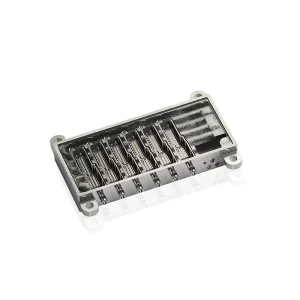
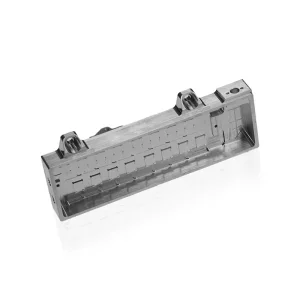
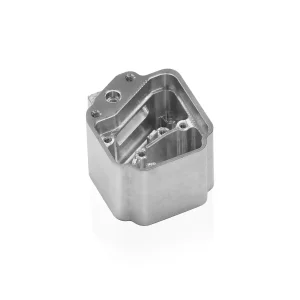
1. Executive Summary: The Structural Shift in Dominica’s Industrial Metal Enclosures Market
In the wake of rapid technological and infrastructural shifts within the Caribbean, the Commonwealth of Dominica has emerged as an active node for infrastructure upgrades, eco-tourism hardware deployment, off-grid green energy installations, and telecommunications expansion. Operating in Dominica presents a distinct set of physical, geological, and atmospheric challenges. The convergence of high ambient humidity, heavy maritime salt-spray deposition, and localized sulfurous atmospheres (originating from active geothermal spots like the Boiling Lake and Wotten Waven) necessitates a radical rethinking of protective equipment housing.
Standard off-the-shelf plastic or non-anodized steel housings deteriorate within months when exposed to this aggressive microclimate. Consequently, the demand for precision-engineered aluminum shells, advanced CNC metal casings, and hermetically sealed Kovar alloy components has surged. Aluminum, particularly high-grade alloys such as Al 6061-T6 or Al 5052, when processed through precise Computer Numerical Control (CNC) machining and treated with Mil-Spec anodization (MIL-A-8625 Type III Hardcoat), offers the optimal strength-to-weight ratio, exceptional thermal dissipation, and absolute corrosion resistance. This whitepaper analyzes the market ecosystem, localized demand dynamics, global supply chains, and the engineering principles that enable Chinese manufacturing partners to deliver unmatched cost efficiency and technical superiority to Dominican and regional Caribbean enterprises.
2. Dominica’s Industrial and Coastal Landscape: Engineering for the Environment
Designing metal casings for the Dominica market requires an understanding of the island's unique ecology and industrial trajectory. Key sectors in Dominica are moving toward automation and digital intelligence, necessitating localized application scenarios for high-end metal housing:
- Geothermal Power Generation & Heavy Industries: Dominica is actively leveraging its volcanic geography to establish utility-scale geothermal power plants. The air surrounding these development zones contains trace hydrogen sulfide (H₂S) gases, which are extremely corrosive to copper and low-grade metals. Enclosures housing sensitive monitoring instruments, power distribution sensors, and automation controllers must be completely hermetic and chemically inert.
- Off-Grid Solar Energy and Battery Storage Systems (BESS): To secure grid resilience against hurricanes, Dominica is heavily investing in distributed solar arrays. The solar inverters, battery management systems (BMS), and outdoor charge controllers rely on aluminum heat sinks and precision housings to prevent overheating under the tropical sun while keeping moisture out.
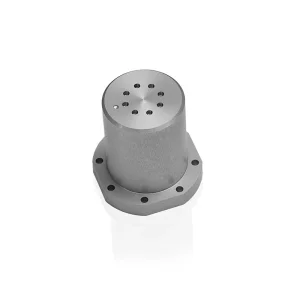
- Marine and Subsea Applications: Tourism, marine research, and commercial fishing vessels operating around Roseau and Portsmouth require marine-grade electronic sensors. CNC-machined encapsulated tubes and rotary joints are critical to maintaining electrical conductivity and mechanical integrity in subsea and splash-zone hardware.
- 5G and Fiber Telecommunications Infrastructure: Digicel and Flow Dominica are modernizing their telecommunications backbone. Outdoor 5G small cells, optical transceivers, and signal repeaters must operate continuously on mountain crests and coastal cliffs, requiring ruggedized, EMI-shielded metal housings.
< 0.005mm
CNC Machining Tolerance
480 Hrs
Salt Spray Corrosion Resistance
CTE 4.7
Kovar Alloy Thermal Expansion
100%
Quality Inspection Rate
3. Global Technical Trends in Specialty Metal Housings & Encapsulations
The global metal fabrication landscape is experiencing a paradigm shift from traditional casting to multi-axis high-speed CNC machining and rapid prototyping. For critical applications in optical communication and harsh industrial environments, materials are carefully matched according to their thermodynamic and mechanical profiles:
Thermal Expansion Matching (CTE Integration)
In high-frequency electronics and optical modules (such as 5G transceiver units), mismatching coefficients of thermal expansion (CTE) can lead to micro-fractures in solder joints, breaking hermetic seals. Kovar alloy (Fe-Ni-Co formulation) matches the CTE of borosilicate glass and ceramic materials, making it the premier material for glass-to-metal seals. Combining Kovar alloy packages with outer aluminum shells creates a layered protection system that mitigates mechanical stress and enhances thermal dissipation.
Electromagnetic Shielding (EMI/RFI)
Modern telecommunication bands operate at extremely high frequencies (e.g., 40GHz for next-generation optical modules). Outer aluminum shells act as natural Faraday cages. By machining complex internal cavities directly into a solid aluminum block, designers can isolate radio-frequency channels from one another, keeping insertion loss (IL) below 0.26dB and preventing cross-talk.
4. The China-Dominica Supply Chain: The Efficiency and Prototyping Advantage
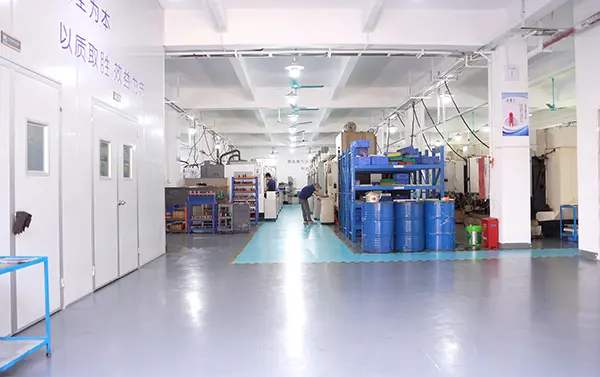
For engineering departments and procurement officers in Roseau, sourcing custom precision components from local or regional Caribbean machine shops presents severe limitations in terms of scale, technological depth, and material availability. Partnering with a vertically integrated Chinese manufacturer like Xinyunyang Precision Technology Co., Ltd. resolves these supply chain bottlenecks through several distinct advantages:
- Vertical Raw Material Supply Chain: Chinese manufacturers have direct, high-volume partnerships with major aluminum extrusion mills and metallurgy hubs. This ensures immediate access to certified, trace-analyzed Al 6061, Al 6063, Al 7075, and specialty alloys like Kovar (CTE 4.7±0.2×10⁻⁶/℃).
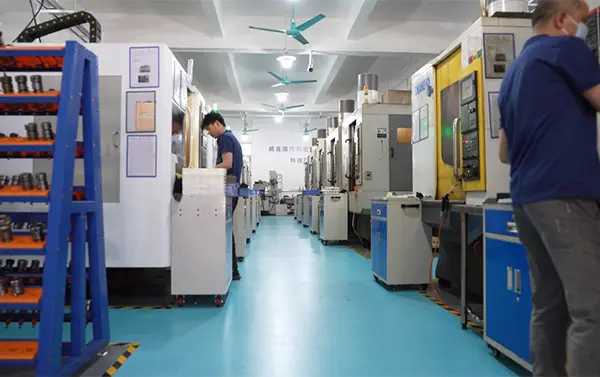
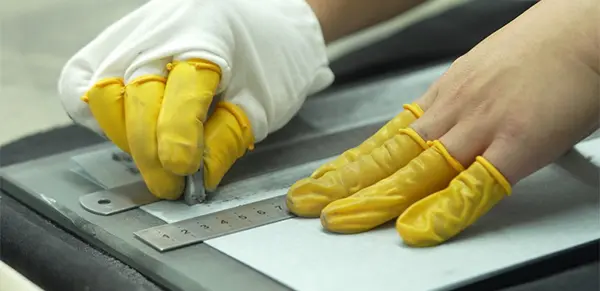
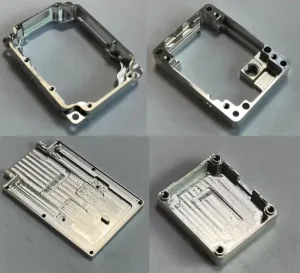
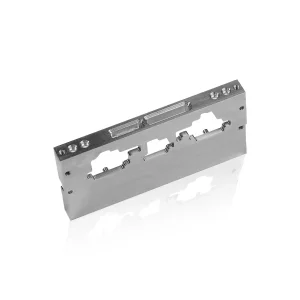
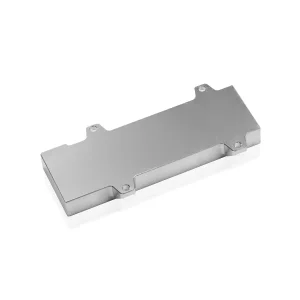
- Advanced Machinery and Multi-Axis Milling: Complex internal cavities, specialized O-ring grooves, and precision threads are machined in single-setup operations using multi-axis CNC centers (Brother, Fanuc, and Haas units). This maintains geometric tolerances of ±0.005mm.
- Advanced Surface Treatment: China-based facilities integrate in-house surface finishing divisions. From glass bead blasting and electro-polishing to nickel/gold plating and hard-coat anodization (including custom color matching), all steps are managed under one roof. This minimizes handling damage and guarantees consistent salt-spray compliance.
- Unmatched Prototyping and Production Speed: In Western markets, custom tooling and prototype development can take 6 to 12 weeks. Xinyunyang leverages an intelligent production scheduling system to deliver rapid prototypes within 5-7 days and scale to volume production in 15-20 days, accelerating time-to-market.
5. Design Specifications and Material Selection Guide for Caribbean Sourcing
When engineering housings for Dominica's infrastructure projects, selection of the proper alloy and coating grade is critical. The following table highlights the primary materials utilized in high-performance enclosures:
| Material Class |
Mechanical Properties |
Recommended Application in Dominica |
Corrosion Index |
| Aluminum 6061-T6 |
Yield Strength: 276 MPa, high machinability |
General-purpose telecommunication junction boxes, sensor mounts |
High (Anodized) |
| Aluminum 5052-H32 |
Excellent forming, highly weldable |
Sheet metal enclosures, marine control panels, solar battery cabinets |
Excellent (Saltwater resistance) |
| Kovar Alloy (Fe-Ni-Co) |
Matches borosilicate glass/ceramic CTE |
Hermetic optical transceiver sub-assemblies, vacuum feedthroughs |
Moderate (Requires plating) |
| 316L Stainless Steel |
Tensile Strength: 485 MPa, exceptional chemical resist |
Subsea connector assemblies, offshore oil/gas sensor probes |
Maximum (Corrosive agents) |
6. Comprehensive Q&A (FAQ) – Addressing Engineering Concerns for Sourcing
Why is standard aluminum insufficient for Dominica's coastal installations, and what is the solution?
Standard untreated aluminum forms a natural oxide layer, but in high-salinity and high-humidity zones like Dominica's coastlines, this thin layer undergoes pitting corrosion. The solution is MIL-A-8625 Type III Hardcoat Anodizing. This electro-chemical process creates a thick, wear-resistant aluminum oxide layer (often >50 microns) that completely insulates the raw aluminum substrate from sodium chloride and trace acidic humidity.
How does Xinyunyang guarantee the hermetic sealing of packages in geothermal regions?
For sensors placed near geothermal sites (high H₂S concentration), we utilize Kovar alloy metal packaging coupled with glass-to-metal sealing (GTMS). Because Kovar’s coefficient of thermal expansion matches the glass precisely, thermal cycling does not stress the seal. Each package undergoes helium leak testing with sensitivities up to 1x10⁻⁸ mbar·l/s to ensure zero gas penetration over a multi-decade operational lifespan.
What are the lead times and shipping routes for custom parts from China to Roseau, Dominica?
We offer flexible shipping terms (FOB, CIF, DDP). Prototyping takes 5 to 7 business days. Mass production averages 15 to 25 days depending on the design complexity. Once packed in custom anti-static and shockproof wooden crates, components can be dispatched via air freight (DHL, FedEx, UPS) arriving at Douglas-Charles Airport (DOM) in 5-9 days, or via ocean freight to the Port of Roseau for cost-effective volume delivery (30-40 days).
Can you machine internal heat sinks directly into the aluminum shells?
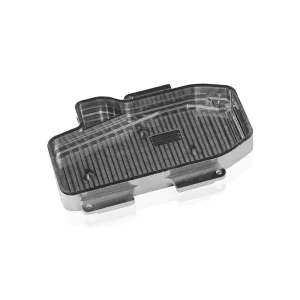
Yes, our multi-axis CNC machines can mill high-density, thin-fin heat sink configurations directly onto the inner or outer walls of the aluminum shell. This monolithic structure removes the thermal interface resistance found in two-piece assemblies, maximizing heat transfer for power electronics and high-frequency amplifiers operating in tropical ambient temperatures.
What quality control protocols are implemented during the manufacturing run?
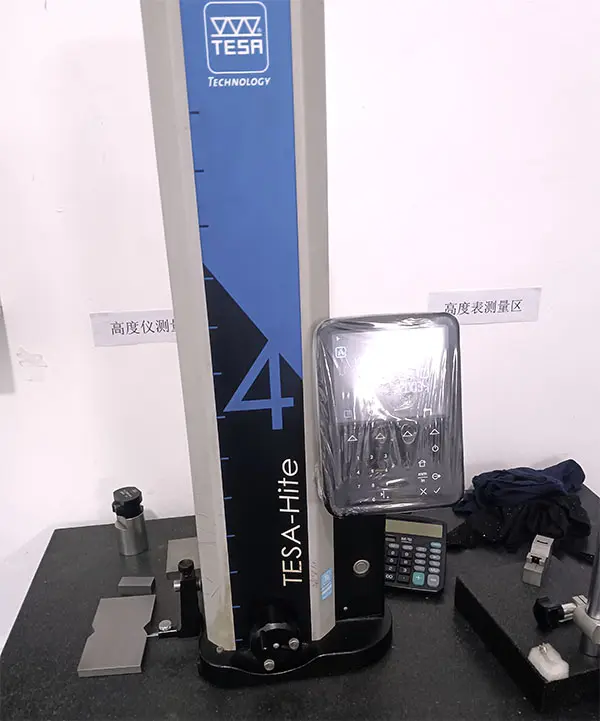
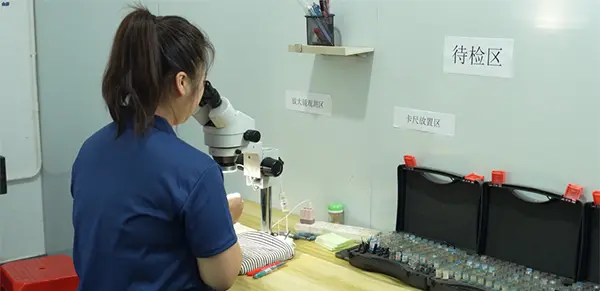
We operate under an ISO 9001 certified quality management system. Each production batch undergoes incoming raw material spectroscopic verification, in-process CMM (Coordinate Measuring Machine) dimensional checks, surface roughness measurement, salt-spray chamber testing (ASTM B117), and final optical inspection. Certificates of compliance and material test reports (MTRs) are provided with every shipment.
Do you offer custom plating options for high-conductivity applications?
Yes, we provide advanced plating including electroless nickel plating, electro-plated gold, silver, and copper. For components demanding high RF reflectivity or grounding conductivity, we typically apply a copper undercoat followed by nickel and a high-purity gold layer (MIL-G-45204) to prevent oxidation and ensure reliable solderability.

 Xinyunyang Precision