Buy CNC machining of precision metal components Suppliers, Factory

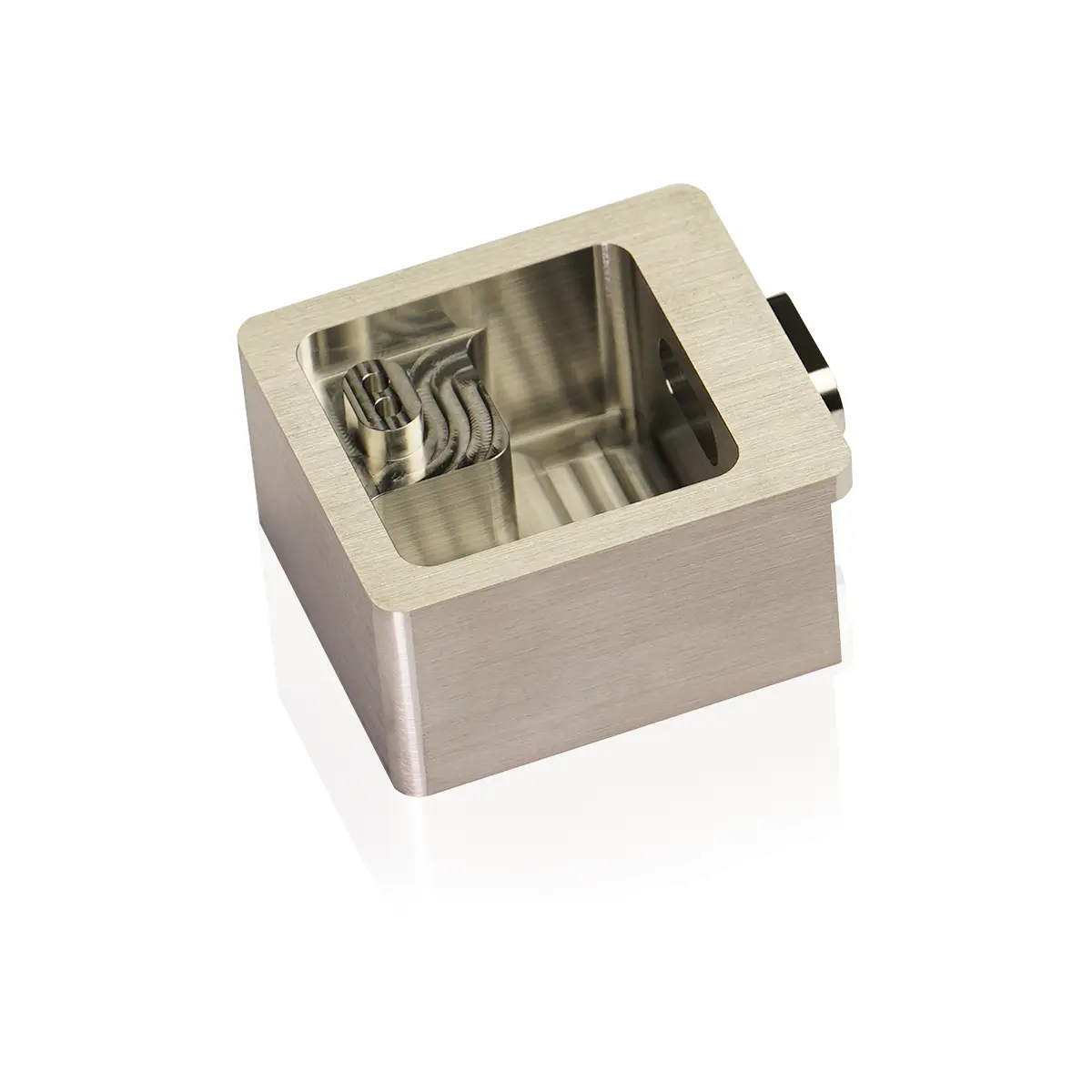
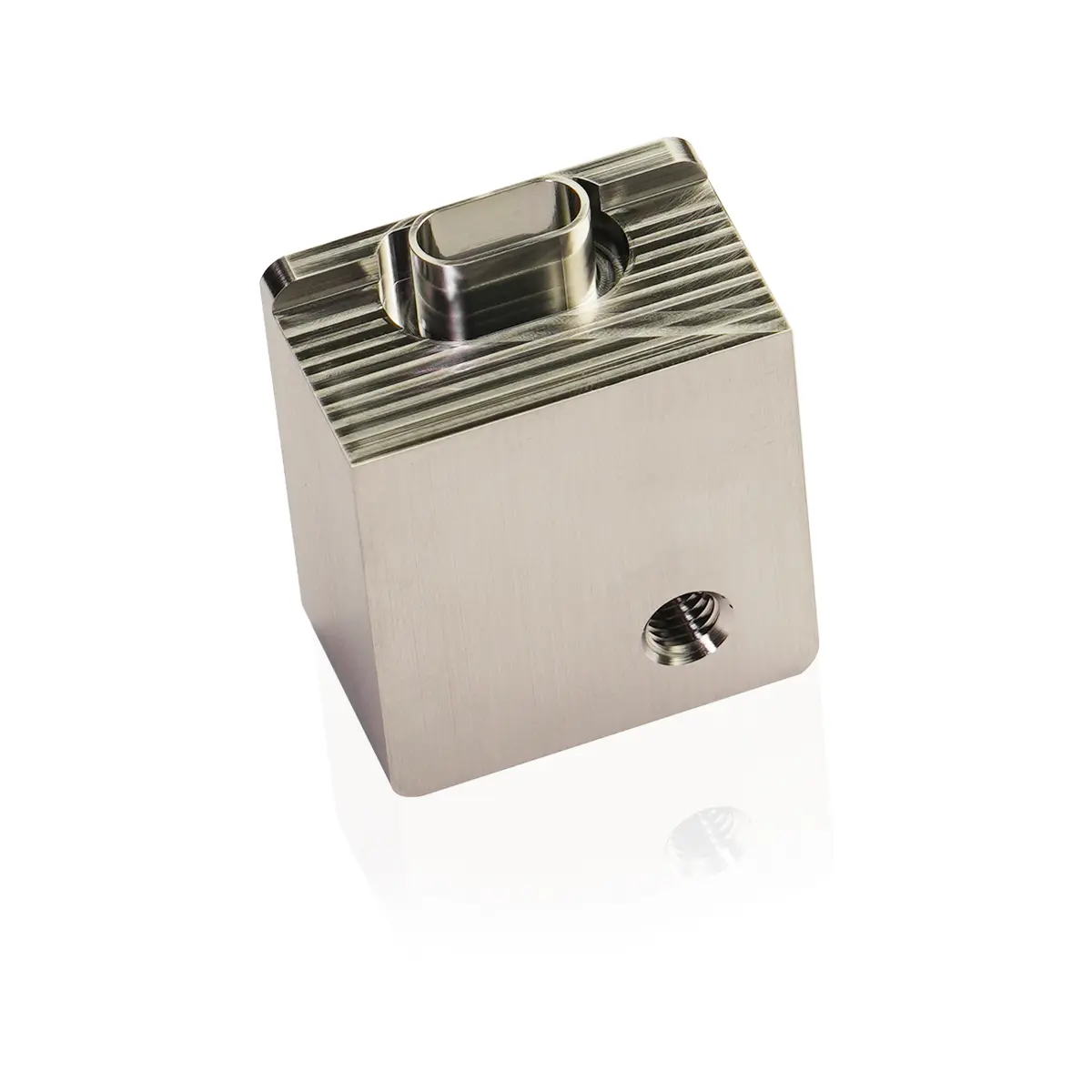
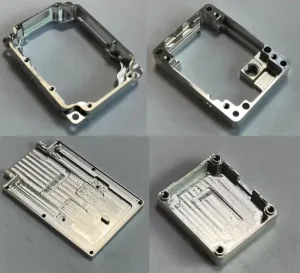
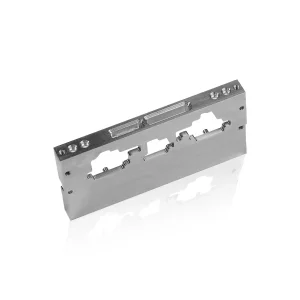
This is a precision metal component machined using CNC (computer numerical control) technology. It appears to be a regular block, with a meticulously finished metal surface that is smooth and radiant, demonstrating high-quality craftsmanship.

The structural design is ingenious, featuring a square recessed cavity on the top, nested within a small metal structure with two small holes. This nesting design may be designed to meet specific assembly or fluid/signal transmission requirements. The side features circular channels, the inner walls of which are also precision-machined to a high smoothness, facilitating component insertion and fluid diversion, reducing friction and ensuring smooth transmission.

The material is likely to be high-strength, high-hardness, and wear-resistant metals such as stainless steel, aluminum alloy, or titanium alloy. This ensures structural stability and long life under complex operating conditions, making it suitable for industries with stringent performance requirements, such as aerospace, automotive manufacturing, and precision instrumentation.

In terms of functional application, it may be a key component in large-scale precision equipment. In the aerospace industry, these components can be used as structural parts or functional components for satellites or spacecraft. Their high-precision structure ensures precise coordination and ensures equipment operation in extreme environments. In the automotive industry, they may be part of core components such as engines and transmissions, enhancing vehicle performance and reliability through machining accuracy. In precision instrument manufacturing, such as medical and scientific research equipment, their high precision and excellent mechanical properties support accurate measurement and stable operation.

Product Description

CNC Machining of Precision Metal Components

CNC machining, a core technology in modern manufacturing, enables complex, high-precision metalworking by precisely controlling machine tool motion and machining processes through computer programs. Externally, the component appears to be a neatly shaped block, with the metal surface meticulously machined to create a smooth, metallic finish, demonstrating high-quality craftsmanship.

Advanced Design Features

The component's top features a square recessed cavity, nested within which is a small metal structure with two small holes at its top. This nested design likely addresses specific assembly or functional requirements, such as precise docking with other components or fluid or signal transmission. A circular channel is located on the side, and its inner wall is also precision-machined to a high degree of smoothness.

High-Performance Materials

From a material perspective, these types of CNC-machined precision components are typically constructed from high-strength, high-hardness, and wear-resistant metals, such as:

  • Stainless Steel: Offers excellent corrosion resistance and structural integrity.
  • Aluminum Alloy: Provides a high strength-to-weight ratio, ideal for lightweight applications.
  • Titanium Alloy: Known for extreme durability and heat resistance in demanding environments.

Diverse Functional Applications

In terms of functional applications, these components serve as key elements in large-scale precision equipment:

  • Aerospace: Serving as structural members or functional components within satellites or spacecraft, ensuring operation in extreme environments.
  • Automotive Industry: Integral to core components such as engines and transmissions, enhancing vehicle performance and reliability.
  • Precision Instruments: Critical for medical devices and scientific research equipment, providing support for accurate measurement.

Precision and Flexibility

CNC machining imparts extremely high precision to these components, achieving tolerances down to the micron level. This is crucial for ensuring overall performance in equipment requiring the coordinated operation of multiple components. Furthermore, the flexibility of CNC machining makes it possible to produce complex structures, enabling precise production of components of various shapes and sizes according to design requirements.
Frequently Asked Questions

Q1: What levels of tolerance can be achieved with CNC machining?
CNC machining can achieve extremely high precision, often reaching tolerances down to the micron level, ensuring perfect coordination between components.
Q2: Which materials are most commonly used for these precision components?
High-strength and wear-resistant metals are preferred, including stainless steel, aluminum alloys, and titanium alloys, depending on the application environment.
Q3: How does the surface finish quality impact the component's performance?
A precision-machined smooth finish reduces friction in circular channels and ensures efficient fluid or gas flow, which is vital for mechanical reliability.
Q4: Can CNC machining handle complex internal structures?
Yes, the technology allows for complex designs such as nested structures, recessed cavities, and internal channels that are difficult to achieve through traditional methods.
Q5: In which industries are these precision metal components essential?
They are widely used in high-end sectors including aerospace, automotive manufacturing, medical device production, and scientific research instrumentation.
Q6: Why is CNC machining considered flexible for custom production?
It uses computer programs to control motion, allowing for quick adjustments to designs and the production of personalized components of various shapes and sizes.

Related Products