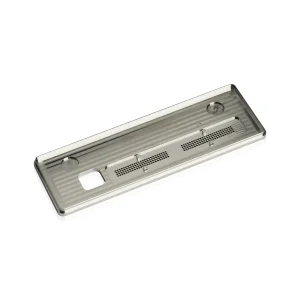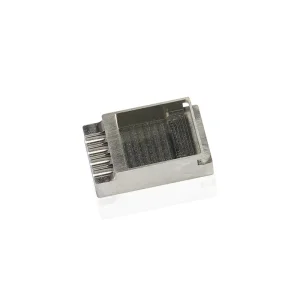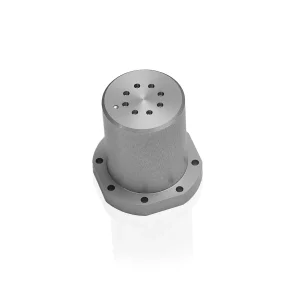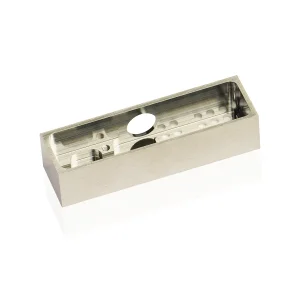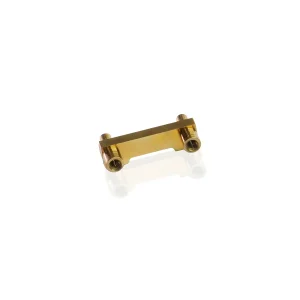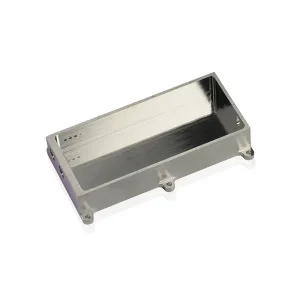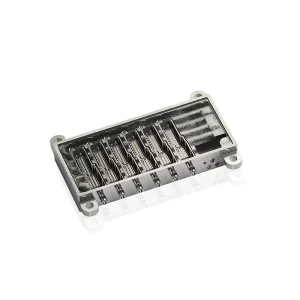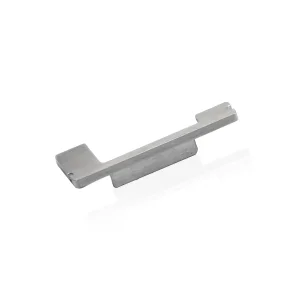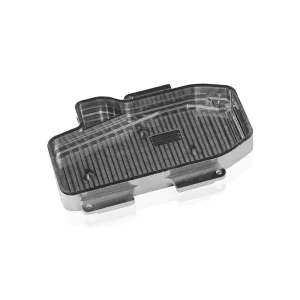
How simultaneous multi-spindle processing technologies are redefining global hardware precision, lowering cost-per-part thresholds, and accelerating modern industrial lifecycles.
In the high-stakes landscape of modern B2B manufacturing, sourcing components that combine cylindrical perfection with highly intricate milling profiles requires more than standard machining. Traditional workflows routing workpieces sequentially across stand-alone lathes and vertical milling centers introduce cumulative setup errors (fixture clamping stacking offsets) and extend lead times. True engineering breakthroughs are achieved through unified multi-tasking CNC turning-milling centers.
This dynamic integration enables highly specialized multi-axis CNC machines to completely finish intricate parts in a single cycle. Multi-tasking processing, combined with dual-spindle setups and live driven tooling on continuous B, Y, and Z coordinate axes, ensures exact alignment of all geometric parameters. Concentricity, perpendicularity, and axial run-out are maintained at sub-micron levels (±0.005mm or less). Global manufacturing directors seeking reliable, long-term procurement must look beyond basic manufacturing partners and choose strategic engineering facilities that control these exact spatial geometries under rigorous thermal controls.
Transferring workpieces between standard lathes and milling machines introduces micro-deviations. Combined turning-milling finishes parts in a single clamping cycle, securing geometric relationships.
Applying active live-tooling sub-spindles along with continuous Y and B-axis orientation permits complex cross-drilling, high-speed helical interpolation, and sophisticated radial contouring.
Eliminating manual part-handling stages and buffer queues speeds up production cycles. This helps OEMs shorten time-to-market margins and scale up manufacturing with highly responsive throughput.
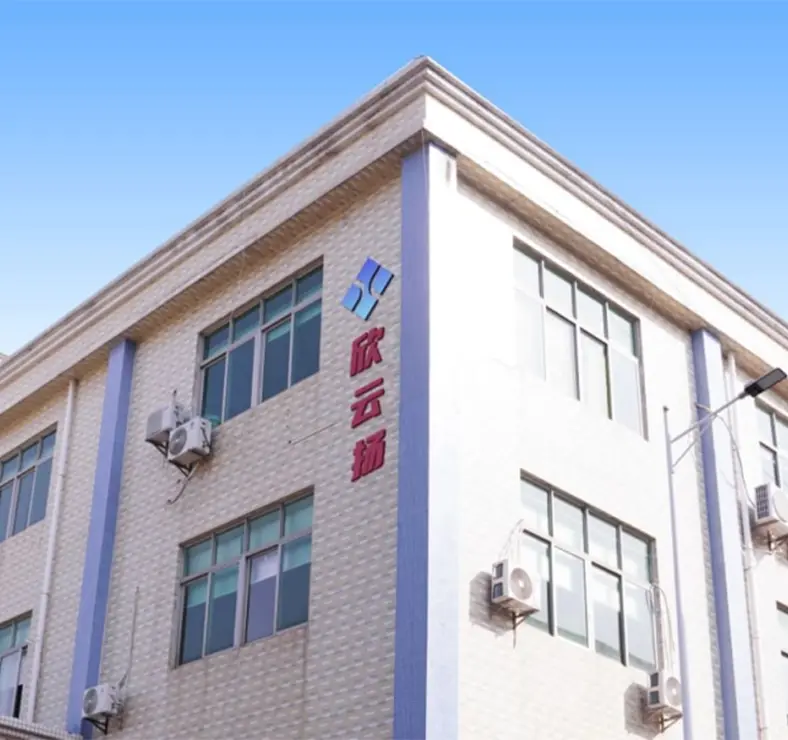
A Pioneer in Miniaturized and High-Reliability Metal Packaging Solutions Since November 2014.
Founded in November 2014, Xinyunyang Precision Technology Co., Ltd. has remained dedicated to its core manufacturing principles, building its business on integrity, innovation, cooperation, and shared success. We have established ourselves as a major supplier of hermetic package lids, Kovar alloy components, and high-precision parts in China and across the global market.
Our core competitiveness lies in our specialized Kovar precision processing technology. We deeply support and serve sectors including semiconductors, optical communications, aerospace, medical devices, and new energy/military applications. We are committed to providing highly reliable, customized, and miniaturized metal packaging designs for global customers demanding flawless field performance.
How key growth sectors rely on customized turn-mill components to meet demanding physical and chemical performance standards.
The demand for CNC turning-milling parts is rapidly increasing due to systemic shifts in hardware integration. High-tech products require smaller, lighter packages with higher pin counts, superior heat dissipation, and strict hermetic isolation. This trend is driven by major industrial sectors worldwide:
Next-generation telecom networks rely on complex optoelectronic assemblies to handle fast data transfers with minimal signal attenuation. Custom components like Kovar alloy shells, multi-channel rotary joints, and optoelectronic modules must be precision machined to strict tolerances. At frequencies of 40GHz and higher, internal surface roughness ($Ra < 0.4\mu m$) and structural concentricity are vital to keep insertion loss ($IL < 0.26dB$) within strict design limits.
In high-power semiconductor packaging, thermal stress management is crucial. Glass-to-metal (GTM) seals and ceramic mounting packages require baseplates and structural frames with a Coefficient of Thermal Expansion (CTE) that precisely matches surrounding materials. Our specialized Fe-Ni-Co Kovar alloy (4J29) components maintain a CTE of $4.7 \pm 0.2 \times 10^{-6}/^\circ\text{C}$ between $-60^\circ\text{C}$ and $+400^\circ\text{C}$. This ensures robust hermetic sealing, protecting internal sensitive electronics from moisture ingress under extreme operating conditions.
Military and aerospace electronics operate in highly demanding environments with extreme mechanical shock, high vibration, and wide thermal fluctuations. Parts like high-quality stainless steel linear actuators, weapon-grade RF coaxial connectors, and aerospace fluid assemblies must deliver reliable performance without mechanical fatigue. Every single component must comply with rigid material regulations (such as RoHS and conflict-free sourcing policies) to meet global defense and aerospace standards.
How Xinyunyang combines expert engineering, advanced machinery, and rigorous quality systems to deliver high-precision parts efficiently.
Our workforce of over 100 professionals includes a highly skilled 30% technical engineering division. This deep engineering expertise allows us to provide flexible design optimization, DFM consultation, and fast prototyping for complex multi-axis parts.
Our team brings over a decade of hands-on experience in cutting-edge composite processing. We specialize in handling tough materials like Kovar, titanium, and tungsten alloys, meeting the technical requirements of the 5G, artificial intelligence, and new energy sectors.
By combining our ISO 9001 certified quality system with dynamic production scheduling, we have increased standard order delivery times by 15% to 20%. This makes Xinyunyang a reliable, responsive supplier for the global manufacturing supply chain.
In high-precision manufacturing, material selection dictates mechanical and chemical performance. While standard aluminum alloys are widely used for general brackets and housings, advanced electronics, defense, and high-frequency communication systems require more demanding materials like Kovar (Fe-Ni-Co), Titanium (Gr5), Oxygen-Free Copper (C10100), and 316L Stainless Steel. Operating with these materials demands deep knowledge of metallurgical properties and tooling design.
Kovar is a nickel-cobalt-iron alloy formulated to have a thermal expansion coefficient closely matching borosilicate glass. While ideal for glass-to-metal hermetic seals, its high nickel and cobalt content makes it difficult to machine. It is highly cohesive, work-hardens rapidly, and has low thermal conductivity, causing intense heat buildup at the tool edge. This leads to fast tool wear, microscopic chipping, and poor surface finishes if not managed correctly.
Xinyunyang overcomes these challenges through specialized tooling and process control. We use advanced, coated carbide tools with optimized rake and relief angles to reduce cutting forces. We also employ high-pressure, flood-applied synthetic coolants to manage heat in the cutting zone. This allows us to deliver clean surface finishes ($Ra < 0.4\mu m$) and precise tolerances without compromising the alloy's structural integrity or magnetic properties.
Titanium combines a high strength-to-weight ratio with excellent corrosion resistance, but its low modulus of elasticity can cause part deflection under heavy tool pressure. We use rigid, high-torque spindle setups to prevent vibration and ensure clean cuts. For oxygen-free copper, which is highly ductile and prone to gumming up cutting flutes, we use razor-sharp, polished tool edges and high shearing speeds. This prevents burr formation, delivering clean threads and highly conductive contact surfaces.
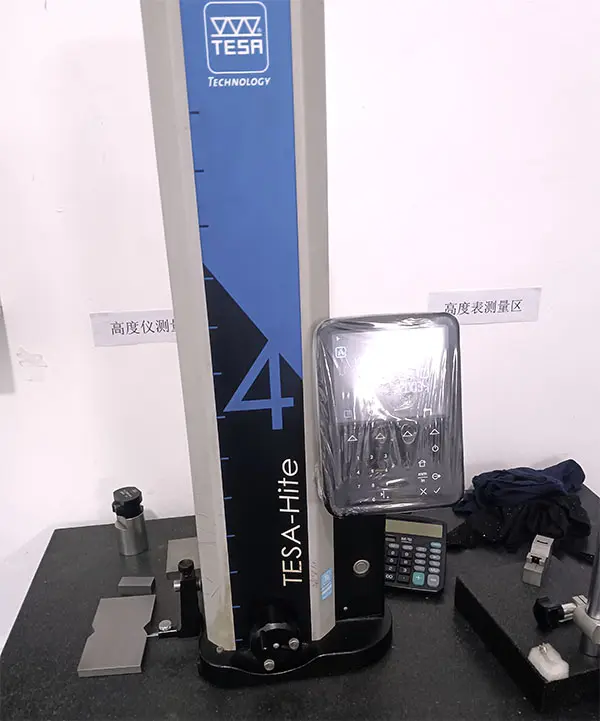
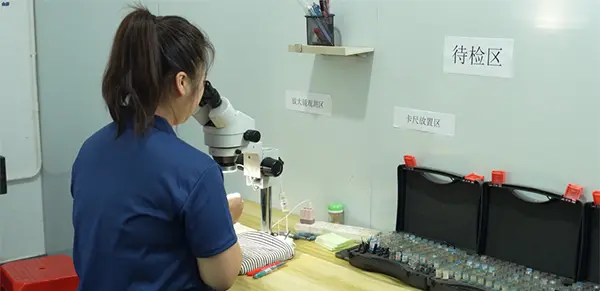
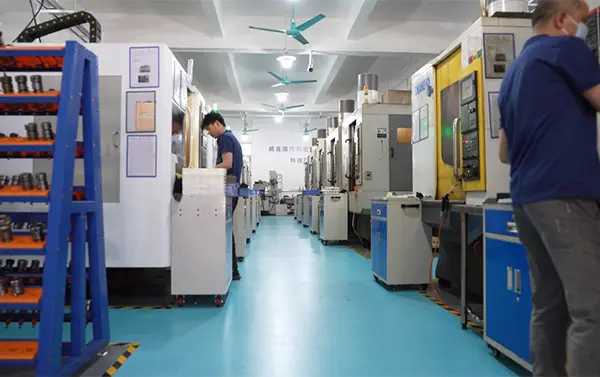
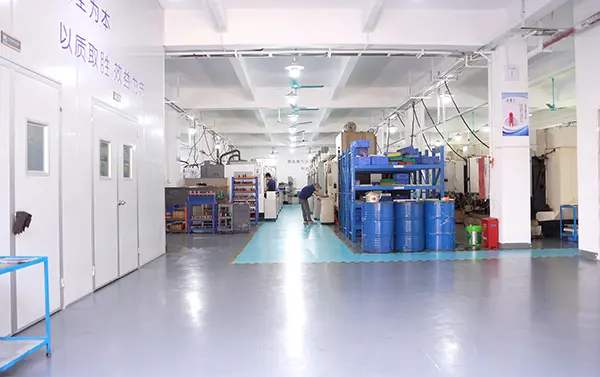
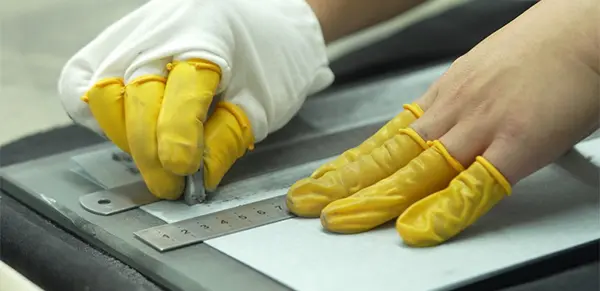
A look at Xinyunyang's advanced manufacturing floor, inspection laboratories, and manufacturing infrastructure.
Answers to key technical and logistics questions commonly asked by global procurement teams and lead design engineers.
 Xinyunyang Precision