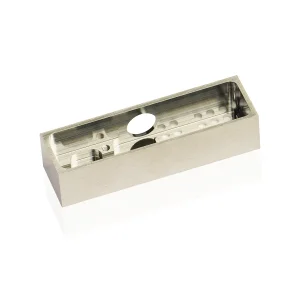
Explore our industrial-grade, ultra-precision manufactured components engineered for extreme environments and high-performance optoelectronic architectures.
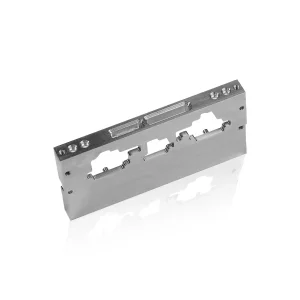
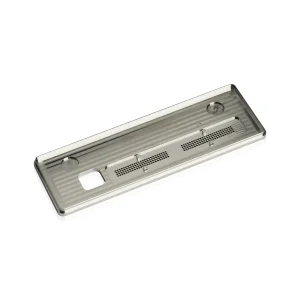
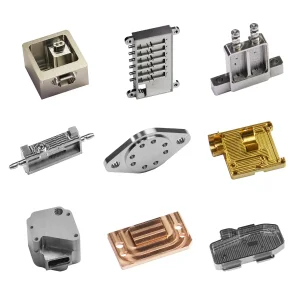
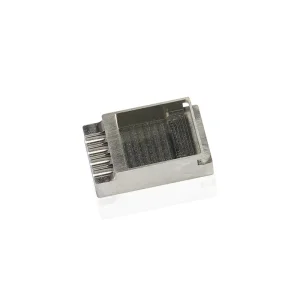
Unlocking extreme hermeticity and optimal thermal coefficient matching in high-speed optical transceivers, aerospace sensors, and robust optoelectronic interfaces.
Kovar alloy, structurally designated as 4J29 under Chinese GB/T standards and conforming to ASTM F15 specifications, is a vacuum-melted, Iron-Nickel-Cobalt controlled-expansion alloy. Its precise composition—nominally 29% Nickel, 17% Cobalt, and the balance Iron—is formulated to achieve an exceptional thermal expansion match with borosilicate glasses and high-alumina ceramics.
In high-frequency fiber optic communication systems, maintaining sub-micron optical alignment across severe thermal cycles is imperative. The Coefficient of Thermal Expansion (CTE) of Kovar ($4.7 \times 10^{-6}/^{\circ}\text{C}$ to $5.5 \times 10^{-6}/^{\circ}\text{C}$ within the $30^{\circ}\text{C}$ to $400^{\circ}\text{C}$ range) mirrors that of the sealing glass. This prevents stress-induced cracking at the critical glass-to-metal interface, thereby preserving high hermeticity ($< 1 \times 10^{-9} \, \text{atm}\cdot\text{cc/s} \, \text{He}$) and protecting delicate inner optical engines from humidity and mechanical failure.
Information Gain Insight: Beyond conventional machining, professional Kovar processing demands strict microstructural control. Without continuous vacuum annealing and meticulous decarburization processes, micro-voids and carbon deposits will emerge during high-temperature glass-to-metal sealing (GTMS), compromising structural reliability in space-borne and deep-sea networks.
As global datacenters transit rapidly toward 800G and 1.6T Co-Packaged Optics (CPO) architectures to satisfy massive AI computing cluster workloads, physical spacing and thermal thresholds have reached unprecedented limits. The optical transceiver package relies heavily on miniaturized, multi-channel Fiber Optic Kovar Ferrules. These miniaturized components act as rugged, thermally-neutral mechanical guide blocks that align multi-fiber arrays directly to high-speed silicon photonics (SiPh) dies.
Global procurement departments are shifting away from standalone component suppliers toward integrated system manufacturers capable of offering fully customized hermetic sub-assemblies. High-reliability parameters such as ultra-low insertion loss ($<0.2\text{ dB}$ at $40\text{ GHz}$) and zero outgassing under high vacuum require manufacturers to excel not only in CNC milling but also in electroplating technologies, specifically selective Gold-over-Nickel (Au/Ni) layer deposit processes.
Industrial deployments in high-power semiconductor setups, LiDAR packages for autonomous driving, and deep-space telemetry demand advanced packaging paradigms. When lasers run hot, any mismatch between the active laser chip, the submount, and the surrounding Kovar ferrule leads to localized mechanical stresses. This physical shift deflects the laser's output beam by mere nanometers, yet drastically reduces coupling efficiency and induces costly packet dropouts or sensor failures.
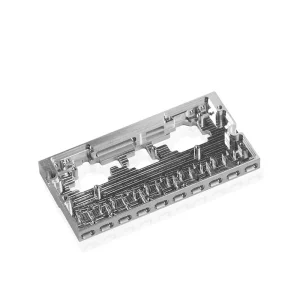
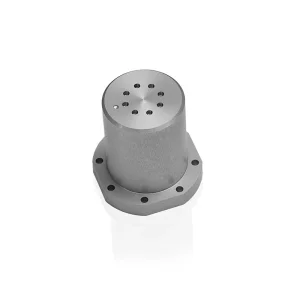
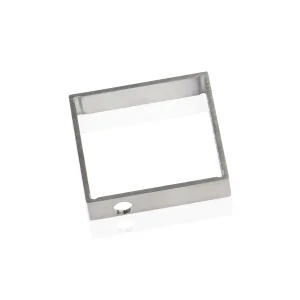
Our comprehensive macro solutions combine Kovar alloy processing with specialized metallization schemas. Our products feature specialized structures built to match customized thermo-electric coolers (TECs). The structural design of our Kovar housings, package lids, and fiber optic ferrules minimizes thermal resistance pathways while providing robust EMI shielding against high-power high-speed signaling noise, ensuring reliable operation across harsh environmental spectrums.
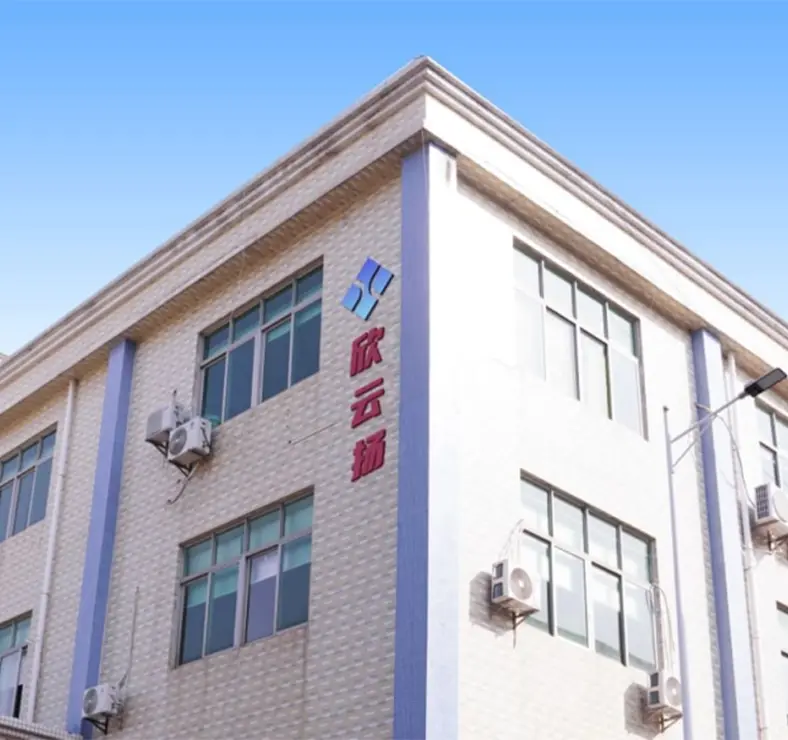
Xinyunyang Precision Technology Co., Ltd. was founded in November 2014. Since our inception, we have remained resolutely dedicated to our industrial mission, strictly operating under the core principles of Integrity, Innovation, Cooperation, and Sharing.
The company targets Kovar precision processing technology as its core competitiveness. We deeply cultivate the complex fields of semiconductors, optical communications, aerospace, medical devices, new energy, and the military industry, and are committed to delivering highly miniaturized, customized, and high-reliability metal packaging solutions to global customers. Our overarching goal is to rise as a premier hermetic package lid, Kovar alloy component, and precision parts supplier globally.
 High-precision processing capability Advanced technology & equipment Strict quality control Flexible customized services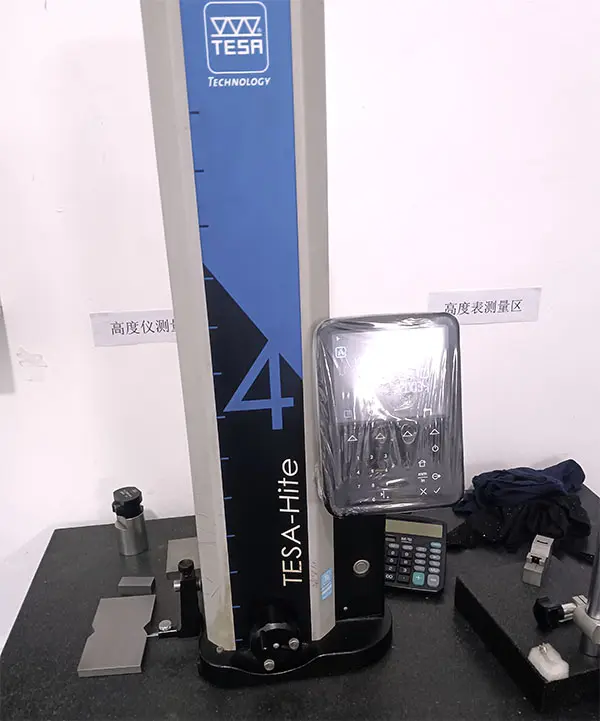
How Xinyunyang drives continuous innovation and operational excellence in specialized alloy precision manufacturing.
Our company maintains a highly trained professional workforce of over 100 people, within which dedicated technical R&D engineers account for 30% of total staff. This ensures that every high-level inquiry receives dedicated and detailed engineering support.
Our core R&D members have been deeply engaged in high-end precision metal processing for over ten years. We continue to explore advanced composite processing technologies for special alloys like Kovar and titanium, proactively designing to support cutting-edge 5G, artificial intelligence, and new energy packages.
Operating a strict, fully ISO 9001-certified quality management system and state-of-the-art intelligent production scheduling, Xinyunyang has successfully optimized the delivery efficiency of regular customized orders by 15%-20%, solidifying our status as a key global high-precision supplier.
Our strategic manufacturing journey to address future optical transceiver and deep-space communication developments.
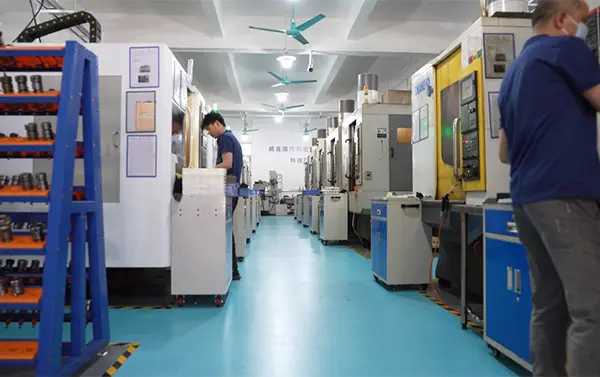
Achieving structural dimensions with ±1μm dimensional tolerances utilizing Swiss CNC turn-mill systems. Special attention is paid to inner-bore concentricity to guarantee seamless optical fiber insertion without structural micro-stress.
Exposing processed Kovar materials to protective atmosphere ovens at precise temperatures. This mitigates carbon presence and optimizes grain structure to facilitate bubble-free, perfectly hermetic Glass-to-Metal seals (GTMS).
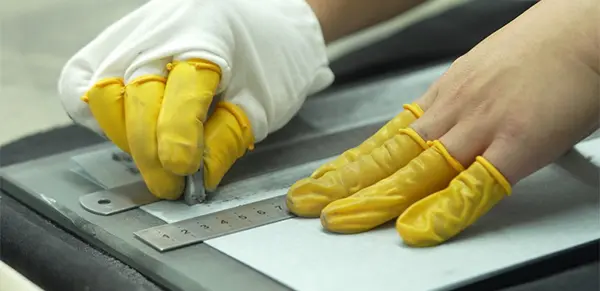
Deploying AI-driven multi-spectral optical sorting systems to evaluate plating coverage, trace residues, and check for micro-scratches down to sub-micron scales prior to final batch packing.
Pioneering multi-channel fiber optic Kovar ferrules customized for SiPh packaging, focusing on ultra-miniature profiles and high-density, multi-fiber configurations to support future 1.6T transceiver modules.
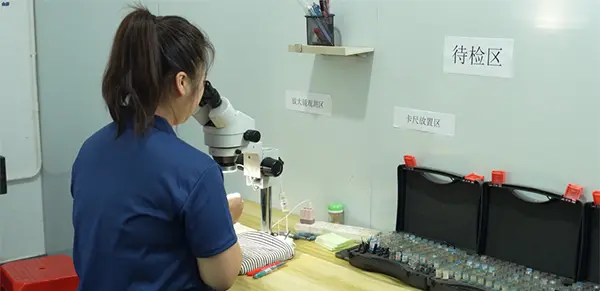
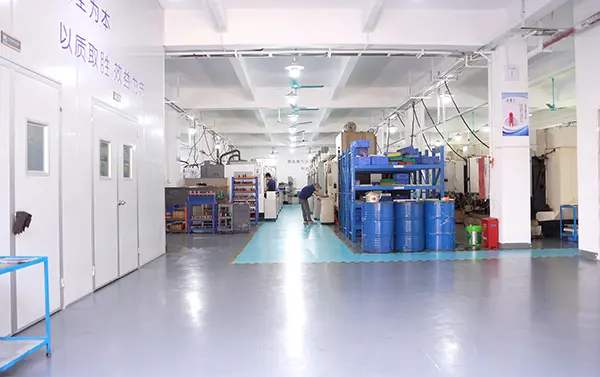
A transparent look inside our modern facility, displaying state-of-the-art CNC machine workshops, micro-measurement laboratory, and strict quality control operations.
Modern electronic and aerospace supply chains demand transparent and compliant sourcing. Global tier-1 technology integrators require validation across every node of their production lines. Under our strict operational rules, we ensure that all raw materials used for our 4J29 Kovar alloy packages are fully compliant with RoHS and REACH regulations.
Additionally, Xinyunyang takes active steps to assure that our mineral supply chains remain fully conflict-free. Our sourcing protocols strictly adhere to the guidelines set by the Responsible Minerals Initiative (RMI). Beyond structural compliance, we offer global partners comprehensive localization supply support, guaranteeing highly structured logistics, direct engineering communication, rapid prototyping pathways, and immediate localized technical service response.
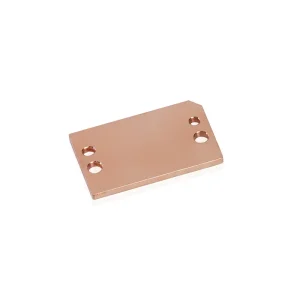
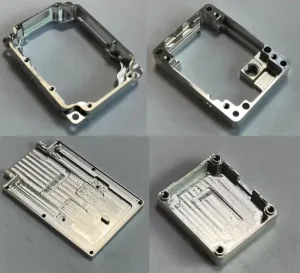
Explore the remainder of our advanced product lines, built for durability, electrical conductivity, and thermal control.
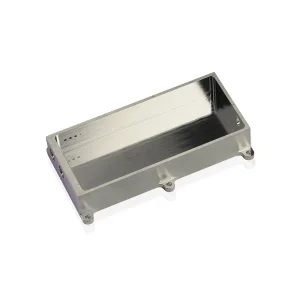
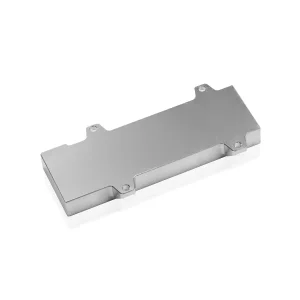
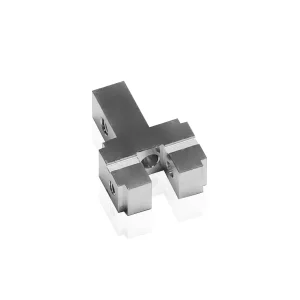
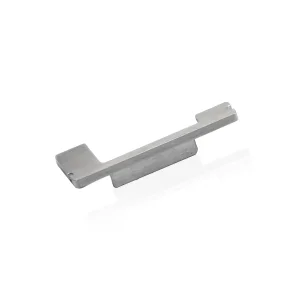
Expert, metallurgically accurate answers addressing the core questions of optic-procurement specialists and hardware designers worldwide.
Stainless steel and copper exhibit high Coefficients of Thermal Expansion (approx. $16 \times 10^{-6}/^{\circ}\text{C}$ and $17 \times 10^{-6}/^{\circ}\text{C}$, respectively). In contrast, the borosilicate sealing glass used to fix the optical fiber inside the ferrule has a CTE of around $5.0 \times 10^{-6}/^{\circ}\text{C}$. If steel or copper is sealed directly to glass, the dramatic thermal mismatch causes the glass joint to shear and fracture during thermal cycling ($0^\circ\text{C}$ to $70^\circ\text{C}$ or $-40^\circ\text{C}$ to $85^\circ\text{C}$). Kovar (4J29) maintains a perfectly matched CTE with glass, keeping the seal permanently intact and preventing moisture ingress that would otherwise degrade optical transmission.
To support optical assembly, our Kovar ferrules generally feature a dual-layer plating system: a diffusion barrier of Electroless Nickel (conforming to MIL-C-26074 or AMS 2404) at a thickness of $2.0 \mu\text{m}$ to $5.0 \mu\text{m}$, topped with a highly solderable high-purity Gold layer (conforming to MIL-G-45204, Type III, Grade A) at a thickness of $1.0 \mu\text{m}$ to $3.0 \mu\text{m}$. This electroplating recipe guarantees excellent wetting during gold-tin (AuSn) or lead-free solder reflow and prevents oxidation during long-term storage in maritime or high-humidity regions.
By leveraging Swiss-type ultra-precision CNC systems and micro-drilling techniques, we maintain standard bore-hole tolerances of $\pm1.5 \mu\text{m}$ ($\pm0.0015\text{ mm}$), with concentricity levels kept within $2.0 \mu\text{m}$ relative to the outer diameter. To confirm that every batch adheres strictly to these parameters, our QA laboratory employs automated non-contact laser measurement tools and high-resolution optical microscopes.
Yes. All our specialized Kovar packaging lines meet the requirements of MIL-STD-883 for hermeticity and are optimized to be fully outgassing-free under high thermal loads. Furthermore, we maintain full compliance with RoHS directive standards and secure conflict-free mineral sourcing credentials to ensure complete regulatory compliance for critical aerospace, defense, and international datacenter applications.
 Xinyunyang Precision