Directly from our advanced manufacturing floor, we supply custom precision-machined metal, alloy, and thermal polymer components to high-reliability industries globally.
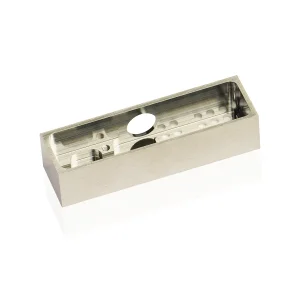
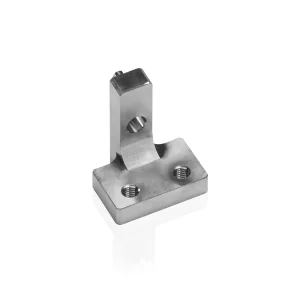
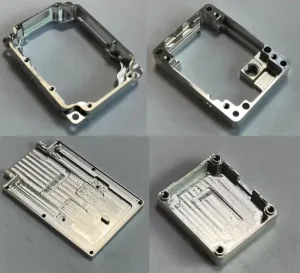
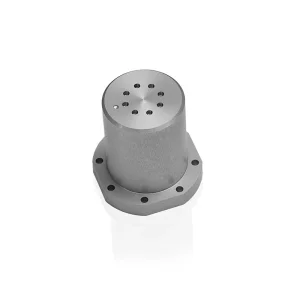
In the high-stakes sectors of aerospace engineering, semiconductor fab integration, cryogenics, and deep-space observation, engineers constantly hit the limits of standard engineering polymers. Standard plastics fail under continuous temperatures above 200°C, and metals trigger electromagnetic interference, friction losses, or excessive weight penalties. The ultimate remedy is Vespel® Polyimide (PI) components.
DuPont Vespel® is not just a high-performance plastic. It is an aliphatic-aromatic polyimide that exhibits a highly stable chemical ring structure, making it one of the very few polymers that do not have a definable glass transition temperature ($T_g$) below 400°C. Vespel® maintains continuous performance at 300°C (572°F) and easily withstands cyclic exposures up to 500°C (932°F) without outgassing or losing structural stability.
Today's global industry demands highly specialized manufacturing plants. A qualified Vespel® components factory must be more than just a typical machine shop. Machining polyimide requires intense material expertise. Because Vespel® is highly isotropic, its structural properties depend heavily on the formation method (such as Direct-Formed [DF] for ultra-efficient mass production, or Isostatically Pressed [ISO] for superior structural integrity across all three dimensions). Without deep knowledge of temperature-driven dimensional relaxation and tool geometry optimization, conventional factories will quickly produce high-yield scrap instead of high-precision components.
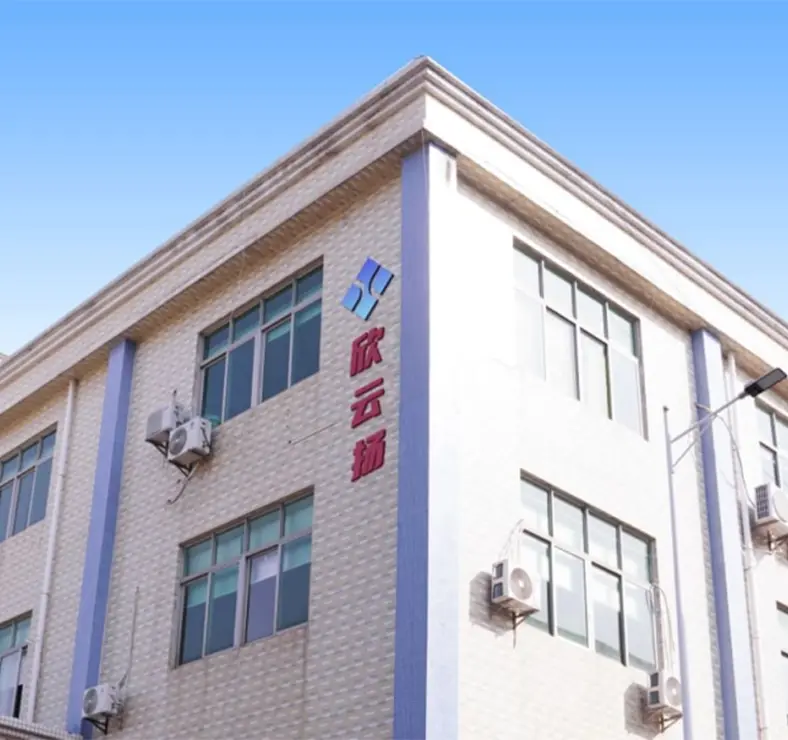
A Pioneering Force in Precision CNC Machining & Advanced Metallurgical Solutions since November 2014
Founded in November 2014, Xinyunyang Precision Technology Co., Ltd. has established itself as an elite global provider of custom high-reliability components. Driven by our foundational principles of Integrity, Innovation, Cooperation, and Sharing, we deliver engineered micro-components and complex structural parts to crucial industries including semiconductors, optical communications, aerospace, medical instruments, and new energy military applications.
While our historical expertise centers on complex Kovar alloy processing and advanced hermetic package lids, our engineering cross-capabilities have allowed us to master the integration of high-performance polymer machining (like Vespel® polyimide) alongside special metals. This dual mastery makes us the primary strategic partner for multi-material hybrid hermetic seals and ultra-precision assemblies worldwide.
 High-precision processing capability (tolerance down to ±0.005mm)
Advanced technology and equipment (Japanese multi-axis CNC machines)
Strict quality control (Full process traceability)
Flexible customized services (From prototype to millions)
High-precision processing capability (tolerance down to ±0.005mm)
Advanced technology and equipment (Japanese multi-axis CNC machines)
Strict quality control (Full process traceability)
Flexible customized services (From prototype to millions)
Our facility hosts a dedicated team of over 100 specialists, with specialized technical engineers accounting for more than 30% of the entire staff. This enables rapid structural redesign, mechanical simulations, and DFM adjustments.
Our core team has been deeply focused on precision manufacturing for over a decade. We specialize in processing difficult composite structures, handling advanced plastics (Vespel®, PEEK), and high-temp alloys (Kovar, Titanium) for AI, 5G, and military optoelectronic hardware.
Operating under a certified ISO 9001 quality management system and using our custom-engineered intelligent production scheduling system, Xinyunyang improves standard order delivery efficiency by 15% to 20%, ensuring faster time-to-market.
When purchasing custom parts from a Vespel® components factory, specifying the correct grade of polyimide is essential to match performance needs with cost limits. Each variant is engineered with specific fillers (such as graphite, PTFE, or molybdenum disulfide) to solve distinct engineering issues like wear, outgassing, high velocity, or dry friction.
| Vespel® Grade | Composition & Fillers | Primary Advantages | Key Target Applications |
|---|---|---|---|
| Vespel® SP-1 | Unfilled Base Polyimide | Maximum purity, excellent electrical insulation, ultra-low outgassing, high tensile strength. | Semiconductor wafer handlers, physical vapor deposition (PVD) insulators, aerospace valve seats. |
| Vespel® SP-21 | 15% Graphite (by weight) | Drastically reduced friction coefficient, enhanced thermal conductivity, improved wear life. | Rotary seals, thrust washers, dynamic bearings, bushings operating under high-load/velocity. |
| Vespel® SP-22 | 40% Graphite (by weight) | Lowest coefficient of thermal expansion (CTE), excellent dimensional stability at elevated temperatures. | Split rings, piston rings in aerospace engines, close-tolerance guide blocks, gas turbine bushings. |
| Vespel® SP-211 | 15% Graphite + 10% PTFE | Lowest dynamic friction, ideal for unlubricated sliding contact in ambient to moderate temperatures. | Automotive transmission washers, printer slide bearings, food processing conveyor wear pads. |
| Vespel® SP-3 | 15% MoS2 (Molybdenum Disulfide) | Engineered specifically for vacuum and dry inert atmospheres; prevents galling and sliding wear. | Satellite actuator components, outer space camera gear assemblies, ultra-high vacuum (UHV) fittings. |
Under high-vacuum conditions (below $10^{-6}$ Torr), common plastics release microscopic vapor molecules. This outgassing condenses on optics, sensors, and laser diodes, degrading missions. Raw DuPont Vespel® SP-1 displays extremely low total mass loss (TML) of <1.00% and collected volatile condensable material (CVCM) of <0.01% under NASA SP-R-0022A testing, making it ideal for deep-space missions and wafer lithography chambers.
Global procurement officers often hesitate to source critical polymer components like Vespel® from offshore factories due to concerns over raw material authenticity and tight tolerances. However, partnering with a premier ISO 9001-certified factory in China like Xinyunyang offers major strategic advantages:
1. Direct Material Sourcing Protocols: We verify all material origins. Customers receive complete documentation (material certificates, thermal analysis, batch traceability reports) to guarantee that only authentic DuPont polyimide shapes are used. This prevents performance failures caused by inferior generic PI alternatives.
2. Intelligent Scheduling & Reduced Tooling Cost: Working with expensive raw materials like Vespel® means that raw stock scrap must be minimized. Our customized, in-house digital scheduling program and nesting software minimize kerf loss, saving up to 25% on raw material costs—savings that we pass directly to our partners.
3. Multiaxial Machining & Surface Treatment: Processing polyimides requires high-speed spindles and specific tool coatings (often diamond-coated PCD) to prevent fiber pulling and micro-cracking in filled grades. Our facility houses modern multi-axis CNC mills and ultra-precise lathes capable of achieving dry machined surface finishes with a roughness parameter $R_a \le 0.3\mu m$. This is critical for achieving dynamic hermetic seals without using performance-degrading liquid lubricants.
Take a look inside our high-tech cleanrooms, advanced inspection centers, and multiaxial CNC machining workshop where our skilled team operates daily.
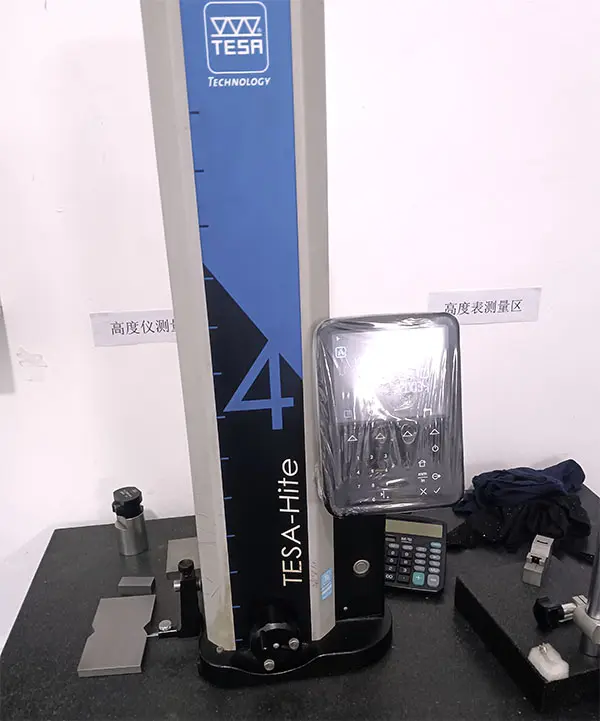
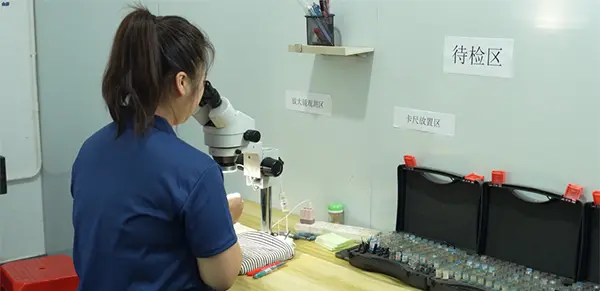
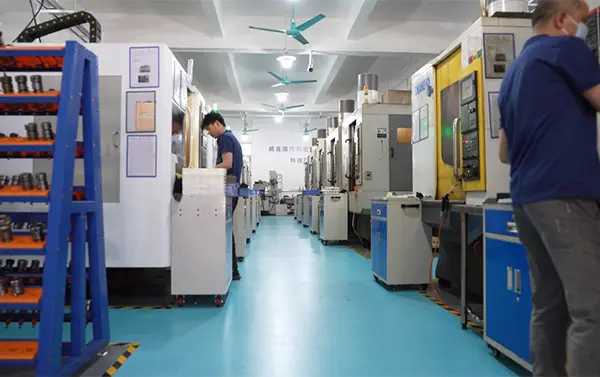
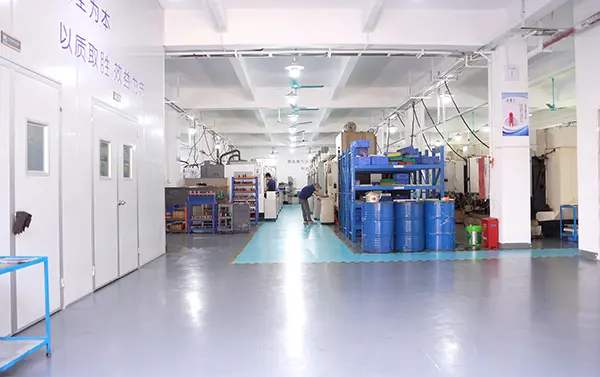
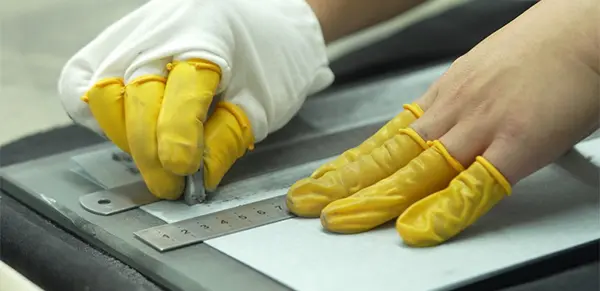
In modern aerospace optoelectronics and military high-frequency RF connectors, hybrid material integration is the primary path forward. To achieve hermetic isolation under high pressures, designs must bridge the thermal expansion gap between metal structural components and non-conductive materials. This is where CTE Matching plays a vital role.
Consider Kovar (a Fe-Ni-Co alloy formulated to match the expansion rate of borosilicate glass). It has a linear Coefficient of Thermal Expansion of approximately $5.1 \times 10^{-6}/^{\circ}\text{C}$. Typical plastics have CTEs that are 10 to 20 times higher. However, custom filled polyimides (like Vespel® SP-22) can achieve a CTE of around $25 \times 10^{-6}/^{\circ}\text{C}$. This alignment reduces internal stress during thermal cycles from cryogenic depths (-196°C) to operational hot zones (+250°C), protecting fragile glass-to-metal seals (GTMS) and preventing moisture ingress.
By combining our expert Kovar manufacturing skills with high-precision custom Vespel® components, Xinyunyang delivers optimized packaging systems that excel in harsh conditions. Whether you need isolated feedthrough guides, friction washers in defense actuators, or micro-machined internal insulating cores, we combine polymer machining and specialized metal manufacturing under a single roof, reducing structural failure risks for global Tier 1 integrators.
Everything global procurement managers and hardware design engineers need to know about purchasing, machining, and deploying Vespel® Polyimide components.
Authentic DuPont Vespel® displays unique physical characteristics, density profiles, and structural properties. At Xinyunyang, we provide raw material certificates, full mill documentation, and batch tracking labels. If required, we perform density and thermal gravimetric analyses to verify that the raw polymer is authentic Vespel® rather than cheap polyimide substitutes.
Vespel® is processed via powder metallurgy or direct forming, which is a highly energy-intensive process patented by DuPont. Unlike extruded PEEK, Vespel® raw stock is expensive, meaning any waste represents high material cost. Our advanced nesting algorithms and optimized CNC tooling paths minimize waste, lowering your per-piece costs.
With our temperature-controlled machining facilities and sharp, specialized tools, we hold standard tolerances down to ±0.025 mm. For critical mating surfaces, we can achieve ±0.005 mm. Note that unfilled Vespel® SP-1 absorbs atmospheric moisture, which can cause slight dimensional changes. We store and ship these parts in desiccated, vacuum-sealed packaging to maintain precision.
Direct-Formed (DF) shapes are ideal for high-volume orders (typically over 1,000 pieces) because the polymer powder is pressed into near-net shape molds, reducing machining waste. Isostatically Pressed (ISO) shapes are better suited for low-volume prototypes or components with complex shapes where uniform mechanical properties in all three dimensions are critical.
Yes. Unfilled Vespel® SP-1 features a low dielectric constant (approx. 3.2 to 3.5 at 1 MHz) and an extremely low dissipation factor. This makes it an exceptional electrical insulator for military-grade coaxial connector spacers, waveguide components, and high-frequency antenna mounts.
We are fully ISO 9001:2015 certified. Every batch of raw Kovar, titanium, brass, or polyimide undergoes strict incoming quality control inspection. Our parts are fully compliant with RoHS and REACH regulations, and we use conflict-free minerals in all metal packaging assemblies, helping our international clients meet their ESG targets.
Vespel® SP-1 remains highly ductile and crack-resistant at cryogenic temperatures down to liquid helium (-269°C / 4 Kelvin), unlike standard plastics that become brittle. It is highly recommended for cryogenic seals, space probe sensors, and superconducting scientific equipment.
Simply submit your design files (STEP, IGES, or 2D PDF drawings) along with your raw material choice and volume requirements through our RFQ portal. Our engineering team will review the designs, complete a Design-for-Manufacturability (DFM) analysis, and provide a comprehensive quotation within 24 to 48 hours.
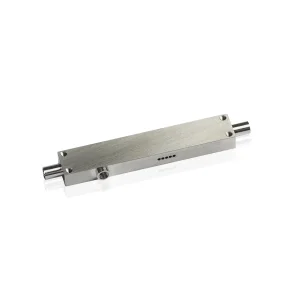
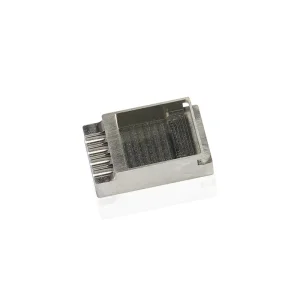
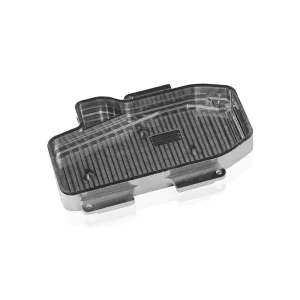
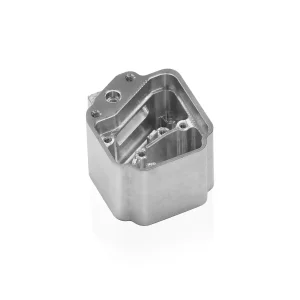
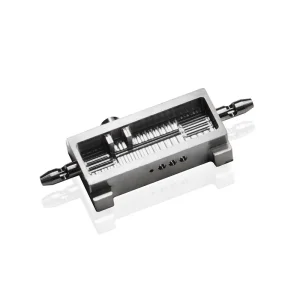
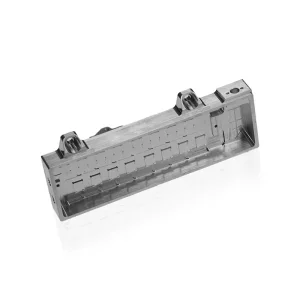
From high-heat dissipation housings to precision linear motion modules and hermetic connectors, we provide comprehensive industrial solutions.
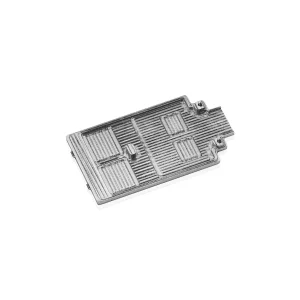
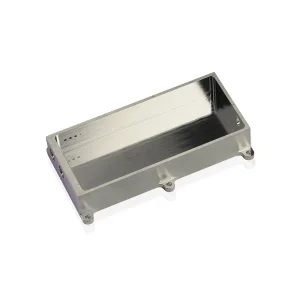
 Xinyunyang Precision