High-reliability mechanical core assemblies validated for extreme industrial duty and advanced optical/semiconductor ecosystems.
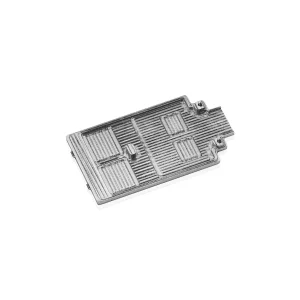
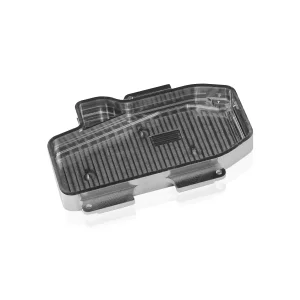
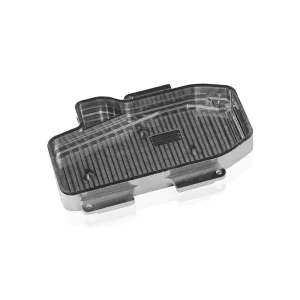
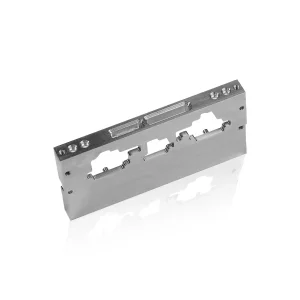
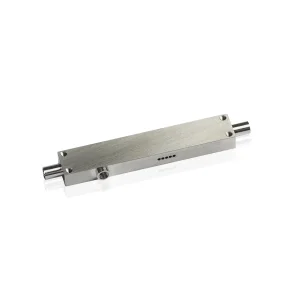
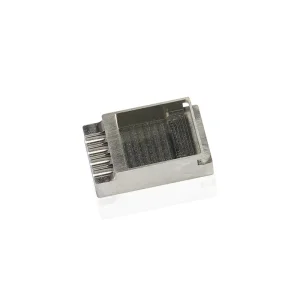
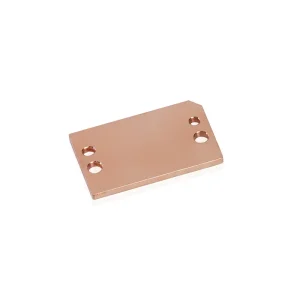
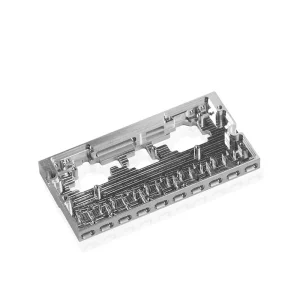
An engineering breakdown of spatial control, from traditional linear movements to continuous five-axis configurations.
Operating along the orthogonal X, Y, and Z cartesian coordinate systems. The workpiece remains static while the cutting tool moves along three linear tracks. Outstanding for planar pocketing, face milling, and high-frequency cavity profiling in components like Kovar metal housings.
Integrates a fourth degree of freedom, typically the A-axis (rotation around X) or the B-axis (rotation around Y). By securing parts on a rotary table or indexing head, complex multi-sided machining and precise radial configurations can be generated without multiple custom fixtures.
Utilizes simultaneous movement across three linear axes (X, Y, Z) and two rotary axes (often A and B, or B and C). Using Tool Center Point Control (TCPC) algorithms, it achieves unmatched geometric complexity, continuous toolpath tracking, and ultra-smooth surface finishes.
In high-precision manufacturing, choice of machine axis configuration is the most important factor in balancing throughput, mechanical alignment, and production efficiency. For advanced applications (such as hermetic sealing optoelectronic packaging or complex aerospace filters), standard 3-axis setups often encounter geometric constraints. This requires frequent repositioning, which compromises geometric dimensioning and tolerancing (GD&T) specifications. Utilizing multi-axis CNC setups allows tool contact points to remain perfectly aligned to complex curved geometries, significantly lowering positional error and cutting stress.
"Understanding the physics of multi-axis cutting profiles allows Xinyunyang to optimize surface roughness (Ra < 0.4μm) and achieve sub-micron dimensional tolerances on complex Kovar and titanium structures."
A comparative breakdown mapping degrees of freedom against geometric limits, typical lead times, and application suitability.
| Axis Configuration | Degrees of Freedom | Ideal Application Profile | Surface Finishes (Ra) | Setup Complexity |
|---|---|---|---|---|
| 3-Axis Milling | X, Y, Z (Linear) | Planar components, basic housing cavities, standard heat sinks | 0.8μm – 1.6μm | Low (Multiple setups required for multi-sided geometries) |
| 4-Axis Indexing / Continuous | X, Y, Z + A/B (Rotary) | Cylindrical tooling fixtures, spiral actuators, gear housings | 0.4μm – 0.8μm | Medium (Requires dedicated rotary calibration) |
| 5-Axis (Trunnion/Swivel) | X, Y, Z + A/B + C (Rotary) | Aerospace impellers, military RF connectors, medical packaging | 0.2μm – 0.4μm | High (Demands synchronized CAM control & collision detection) |
| Multi-Tasking Mill-Turn | Up to 9+ Axes | Ultra-miniaturized optical module housings, complex fluid components | < 0.2μm | Very High (Complete part generation from raw bar stock) |
Evaluating supply chains, high-accuracy equipment accessibility, and E-E-A-T manufacturing standards.
The global manufacturing ecosystem is experiencing a shift toward ultra-precision production, fueled by rapid growth in 5G telecommunications, artificial intelligence hardware, and high-frequency optoelectronics. Historically, heavy manufacturing relied on rigid high-volume setups. Today, demand centers on rapid customized high-precision batches where material reliability (such as low CTE expansion profiles) and multi-axis geometries merge.
In regions like North America and the European Union, rigorous aerospace standards and RoHS/REACH compliance frameworks mandate traceable manufacturing pipelines. Precision manufacturing partners must not only deliver exact physical shapes but also verify the metallurgy, environmental safety, and ESG footprint of materials like **Kovar (4J29) and high-grade stainless steel**.
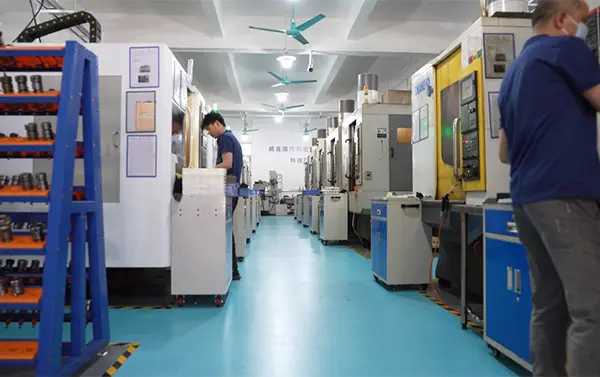
This is where seasoned global manufacturers bridge the gap. By deploying high-end automated vertical and horizontal machining cells, we resolve global supply chain bottlenecks. This delivers reliable multi-axis processing that aligns with both domestic standards and international regulatory policies.
Aligning high-precision tooling configurations to the demands of core industrial and digital fields.
High-speed telecommunications modules demand optical cavities processed with exceptional dimensional tolerances to minimize signal attenuation. By leveraging customized multi-axis tooling, we machine complex internal shelves, glass-to-metal pin connectors, and multi-angled optical fibers interfaces inside Kovar components without introducing destructive residual heat stresses.
Modern aviation components run under severe pressures and thermal fluctuations. Precision aviation components require complex geometry processing, minimal weight profiles, and impeccable concentricity. Multi-axis CNC milling prevents thin structural walls from deforming, securing reliable component life in long-term operations.
From custom titanium surgical fixtures to advanced hermetic lids for implantable pacemakers, our high-precision systems process biocompatible materials with tight micro-tolerances. This prevents micro-burrs and surface impurities from compromising long-term biocompatibility and system life.
Fulfilling modern industrial expectations through environmental stewardship and strict regulatory adherence.
Exporting high-precision industrial components to Tier-1 supply chains requires meeting strict, verifiable regulatory frameworks. Every single shipment of Kovar alloy components or customized micro-metal assemblies manufactured at our facilities undergoes deep material verification, ensuring compliance with RoHS and REACH environmental directives. Material inputs are mapped from the melt-shop to prevent raw material inconsistencies and ensure complete structural integrity.
Our commitment to conflict-free sourcing is validated by strict supply chain audits. We supply ESG-validated 4J29 Kovar that fulfills military-grade hermetic seal guidelines and high-reliability commercial optoelectronic standards, preventing trace-element contamination or hazardous compound release in the field.
We provide comprehensive global customer support, going far beyond standard manufacturing output. Our localized technical consulting centers offer engineering support, CAD/CAM review, dynamic finite element testing, and custom integration workshops for engineering teams worldwide.
Whether optimizing complex optical module cavities for a 5G supplier in North America or designing specialized aerospace filter parts for a European aviation project, our localized engineering pipeline speeds up the design phase by 30%. This helps you transition smoothly from dynamic prototyping into stable high-volume mass production.
Our strategic plan for integrating intelligent edge manufacturing, predictive tolerances, and hybrid processes.
As industrial manufacturing shifts toward smart factories, the classic distinction between CAD design models and real-world machining execution is rapidly blurring. The next decade of precision machining will center on adaptive technology and real-time adjustments. Our corporate engineering roadmap is focused on three primary areas:
Sticking to the core values of Integrity, Innovation, Cooperation, and Sharing since 2014.
Founded in **November 2014**, Xinyunyang Precision Technology Co., Ltd. has established itself as an innovative force in high-precision micro-machining. We focus on Kovar precision processing technology as our core competitiveness, deeply cultivating the fields of semiconductors, optical communications, aerospace, medical devices, and new energy/military industries.
We are dedicated to providing miniaturized, customized, and high-reliability metal packaging solutions to global partners. Our long-term mission is to grow into an internationally recognized supplier of hermetic package lids, Kovar alloy components, and high-precision mechanical parts.
 High-precision processing capability
Advanced technology and equipment
Strict quality control systems
Flexible customized design services
High-precision processing capability
Advanced technology and equipment
Strict quality control systems
Flexible customized design services
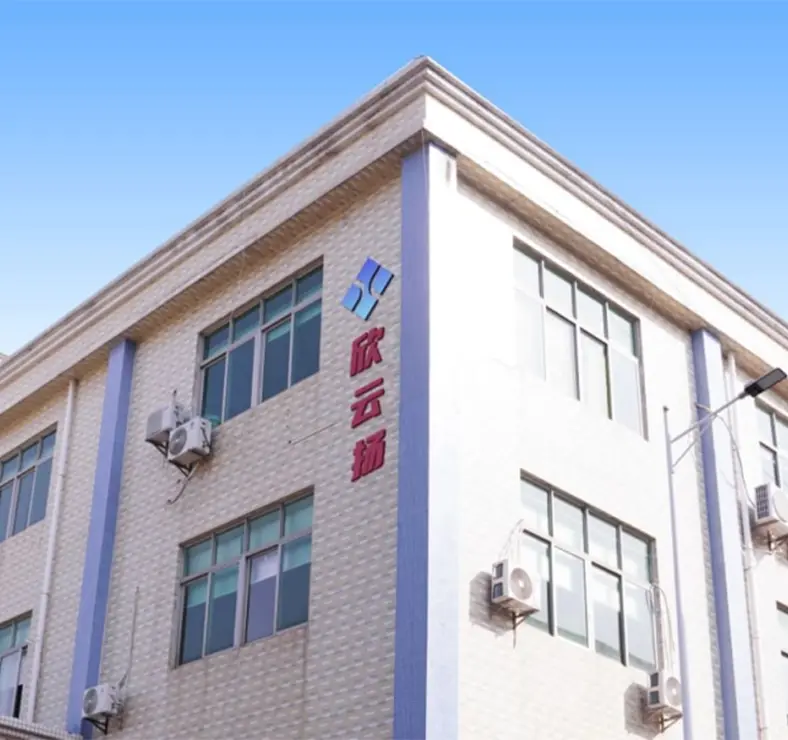
Our team consists of more than 100 specialists, with R&D and technical engineers making up over 30% of our total staff. This deep engineering expertise allows us to provide rapid prototyping, production path planning, and advanced design optimizations.
Our core engineers bring over a decade of precision metal processing experience, specializing in cutting-edge composite processing of tough alloys like Kovar and titanium. We proactively develop advanced hermetic solutions to meet the growing demands of 5G, AI hardware, and new energy systems.
Operating under an ISO 9001 quality management system and advanced digital scheduling, we have boosted delivery efficiency by 15% to 20% compared to industry averages. This allows us to serve as a reliable partner in demanding global supply chains.
Expert insights on multi-axis tolerances, material properties, and manufacturing strategies.
Kovar (4J29) is a specialized Fe-Ni-Co alloy engineered to closely match the Coefficient of Thermal Expansion (CTE) of borosilicate glass and alumina ceramics. During temperature fluctuations, it expands and contracts at virtually the same rate as the glass/ceramic seals, preventing fractures and maintaining a vacuum seal. However, Kovar's high toughness and low thermal conductivity lead to localized heat buildup during machining, which can cause internal material stresses and tool wear. Using multi-axis CNC machines helps maintain optimal tool contact angles and feed speeds. This reduces cutting stress and heat buildup, preventing microscopic part warping and ensuring precise tolerances.
Continuous 5-axis machining dynamically adjusts five axes (three linear and two rotational) simultaneously. This is a significant advantage over 3-axis systems, which require manual repositioning for each side, or 3+2 positional indexing, which keeps the rotational axes fixed during cutting. This continuous movement allows the cutting tool to remain at an optimal cutting angle relative to complex 3D shapes. As a result, it drastically reduces tool wear, improves cycle times, eliminates alignment errors from multiple setups, and achieves outstanding surface finishes (Ra < 0.4μm) on complex curved parts.
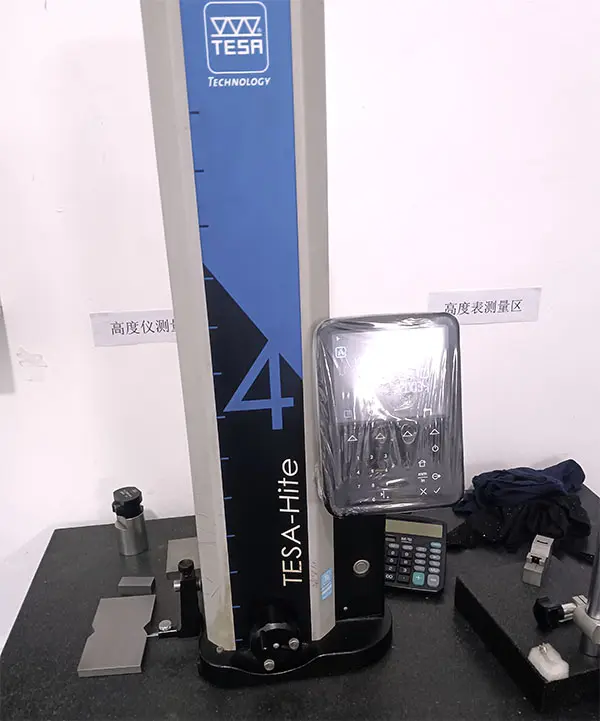
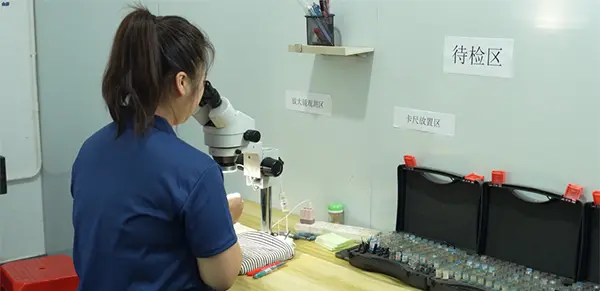
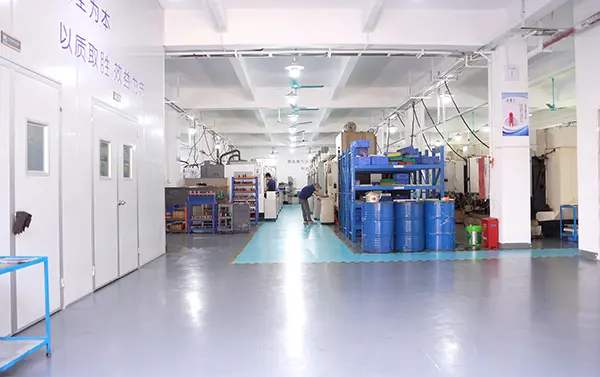
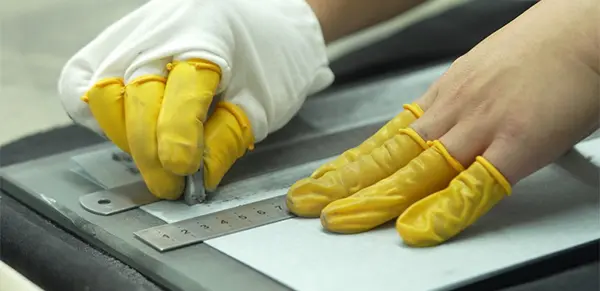
We achieve high precision through a combination of advanced manufacturing, controlled environments, and rigorous quality control. Our facility maintains a stable, climate-controlled clean room environment to prevent thermal expansion of machine tools and workpieces during operation. We use high-precision machining centers equipped with optical linear encoders and dynamic laser calibration systems to continuously verify axis positions. Additionally, we conduct thorough inspections using high-precision coordinate measuring machines (CMM) and digital optical measuring systems to ensure every component fully meets the required tolerances.
For critical applications like aerospace instrumentation, medical hardware, and military connectors, even tiny trace impurities can cause material fatigue or seal failure. We provide complete material traceability, backed by official material test reports (MTR) and chemical analysis for every batch. By sourcing raw materials from verified, conflict-free melt shops and enforcing strict in-house handling controls, we ensure every finished component complies with RoHS and REACH regulations, making them ready for immediate integration into demanding global markets.
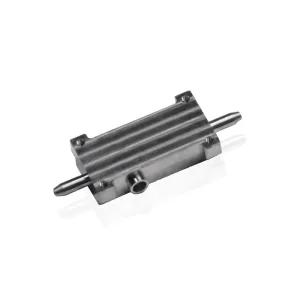
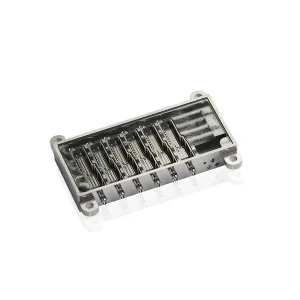
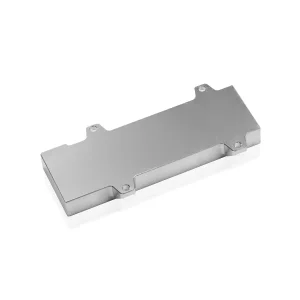
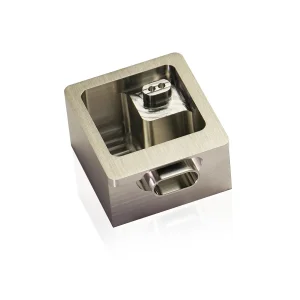
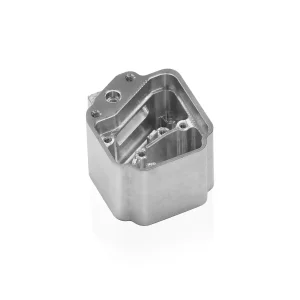
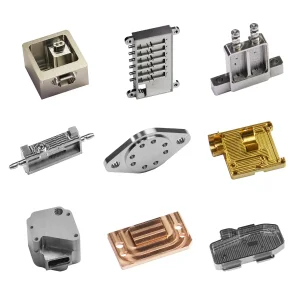
Premium optoelectronic enclosures, specialized tooling, and advanced components engineered for reliable signal integrity and strict E-E-A-T standards.
 Xinyunyang Precision