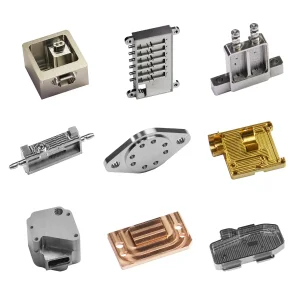
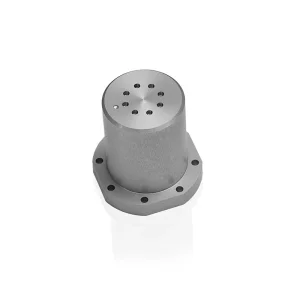
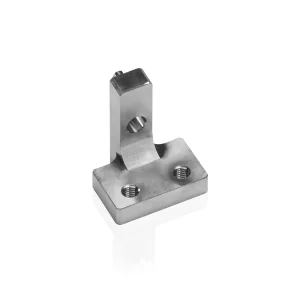
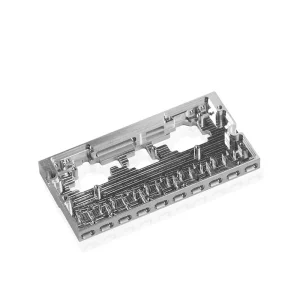
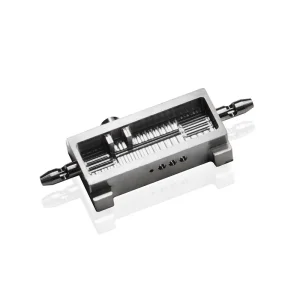
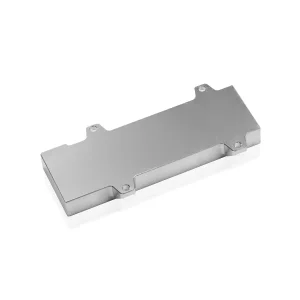
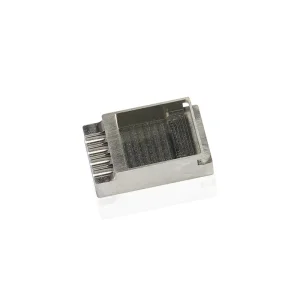
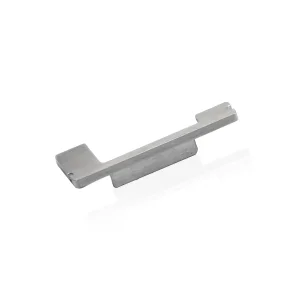
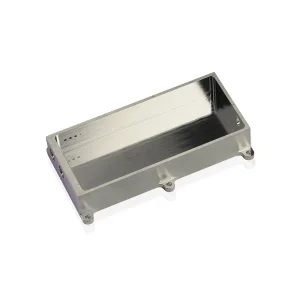
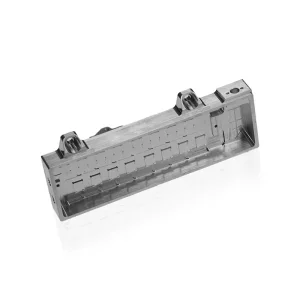
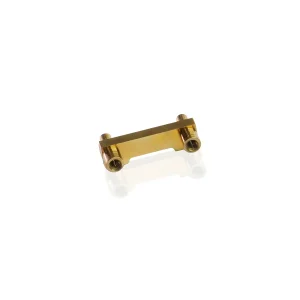
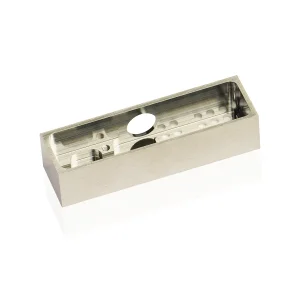
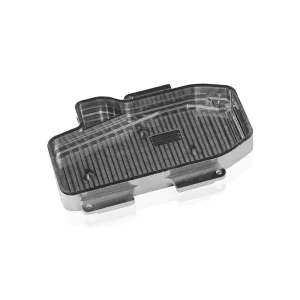
Explore our cutting-edge components engineered to micron-level specifications. Our flagship selection focuses on hermetic integration, complex structural geometries, and specialized materials engineered for aerospace, optoelectronics, and micro-electronics applications.
In the contemporary industrial ecosystem, precision CNC Machining, Milling, and Turning represent the core infrastructure enabling advanced technology integration. Modern microelectronics, optoelectronics, and aerospace systems demand component deviations of less than 2 microns. Meeting such rigorous constraints requires highly controlled, multi-axis subtractive manufacturing executed on closed-loop feedback CNC centers.
At the thermodynamic scale, high-precision milling involves complex interactions between tool cutting geometry, chip separation mechanics, and thermal dissipation rates. Our facilities leverage state-of-the-art multi-axis CNC machines capable of controlling material displacement on X, Y, Z, A, and B axes simultaneously. This eliminates compound positioning errors commonly introduced by multiple setups. CNC turning processes are optimized using variable spindle speeds and customized tool nose radii. This ensures minimal surface roughness ($Ra < 0.2\,\mu\text{m}$), preventing micro-fracturing along the crystal boundaries of machined alloys.
To control extreme thermal deformation at tool-workpiece interfaces, we implement advanced high-pressure, through-spindle cooling systems (up to 70 bar). These configurations facilitate instantaneous chip evacuation and thermal stabilization. By using AlTiN (Aluminum Titanium Nitride) and PCD (Polycrystalline Diamond) coated carbide inserts, we minimize tool wear and control thermal expansion, maintaining tight micro-tolerances throughout high-volume production cycles.
Kovar Alloy (Fe-Ni-Co / ASTM F15 / 4J29) is a cornerstone material for high-reliability hermetic packaging. It is highly valued in optoelectronics and semiconductor industries due to its unique coefficient of thermal expansion (CTE) of approximately $5.1 \times 10^{-6}/\text{K}$ from $30^{\circ}\text{C}$ to $400^{\circ}\text{C}$. This precisely matches the thermal characteristics of borosilicate glasses and alumina ceramics.
However, Kovar's high mechanical toughness, work-hardening rates, and low thermal conductivity make it extremely challenging to machine. Uncontrolled tooling parameters lead to work hardening, surface tearing, and accelerated tool wear. Managing the material's microstructural stress is critical. Residual machining stresses can alter Kovar's CTE or degrade glass-to-metal seal reliability, risking catastrophic hermetic failures in aerospace and high-frequency communication modules.
To resolve processing stress issues, Xinyunyang has developed a dedicated thermal stress-relief profiling protocol:
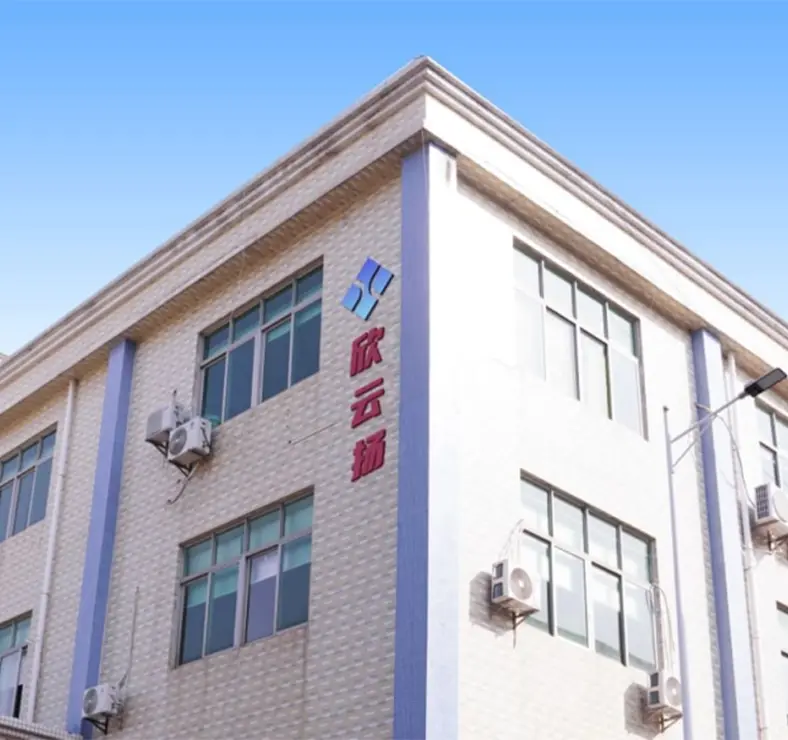
Founded in November 2014, Xinyunyang Precision Technology Co., Ltd. has remained dedicated to industrial excellence by adhering to its core business principles of Integrity, Innovation, Cooperation, and Sharing. We specialize in advanced Kovar precision processing technology. Our facility deeply serves the semiconductors, optical communications, aerospace, medical devices, new energy, and defense sectors. We are committed to providing highly reliable, miniaturized, and customized metal packaging solutions to global markets. Our ultimate objective is to establish Xinyunyang as a premier global supplier of hermetic package lids, Kovar alloy components, and high-tolerance precision parts.
 High-precision processing capability
Advanced technology and equipment
Strict quality control
Flexible customized services
High-precision processing capability
Advanced technology and equipment
Strict quality control
Flexible customized services
We field a professional workforce of over 100 specialists, with our direct technical engineering department accounting for more than 30% of our total personnel footprint.
Our senior engineering leads bring over a decade of hands-on expertise in advanced metallurgy. We specialize in processing challenging materials like Kovar and titanium alloys to meet the high-frequency and thermal demands of 5G, AI, and green energy networks.
Operating under a strict ISO 9001 certified quality management system integrated with an AI-driven production scheduling interface, we have improved global shipment lead times by 15% to 20% compared to standard industry averages.
High-precision machined parts must function reliably under challenging conditions. Different operating environments present unique engineering challenges. Our components are custom-engineered for specific end-use conditions:
Our gas-distribution plates, wafer chucks, and vacuum chamber feedthroughs are engineered to withstand extremely corrosive chemical environments, high temperatures, and ultra-high vacuums ($< 10^{-9}\,\text{Torr}$). They feature ultra-pure surface profiles to eliminate microscopic outgassing and particle generation.
High-speed optical communication transceivers (QSFP-DD, OSFP) require sub-micron precision for internal laser-diode carrier alignments. By combining high-accuracy milling with Kovar casings, we ensure long-term thermal matching that prevents optical misalignment across temperatures from $-40^{\circ}\text{C}$ to $+85^{\circ}\text{C}$.
We engineer housings and internal frames for inertial navigation gyroscopes and satellite communication transponders. These assemblies are optimized for structural strength and vibration dampening while using material lightweighting techniques to minimize aerospace payloads.
Leveraging our production facility in China's advanced manufacturing hubs, Xinyunyang offers significant logistics, raw material, and supply chain advantages. Our integration with regional material refineries and secondary finishing facilities allows us to mitigate upstream disruption risks and lower production costs.
Our supply chain efficiency relies on comprehensive vertical integration. We manage the entire manufacturing process in-house—including metallurgy verification, multi-axis milling, Swiss-turning, plating (nickel, gold, silver, tin), and final hermetic and coordinate measuring machine (CMM) testing. This reduces reliance on external processing steps, eliminates sub-contractor transport delays, and helps us maintain a strict zero-defect standard for every component we ship.
The future of subtractive manufacturing lies in digital integration and sustainable production. At Xinyunyang, we are actively implementing several advanced technological initiatives:
We are integrating acoustic and vibration sensors within our machine spindles. These sensors stream real-time operational data to our analytical interfaces, allowing our systems to predict tool wear, adjust tool paths dynamically, and optimize surface finishes. This predictive maintenance model prevents tooling failures and ensures high consistency across long production runs.
To support environmental sustainability, we utilize advanced Minimum Quantity Lubrication (MQL) setups that reduce coolant waste by up to 80%. We also employ clean alloy formulations—including low-carbon, sustainable options for 4J29 Kovar. Combined with strict recycling protocols for all alloy chips and waste materials, these practices help minimize our environmental footprint.
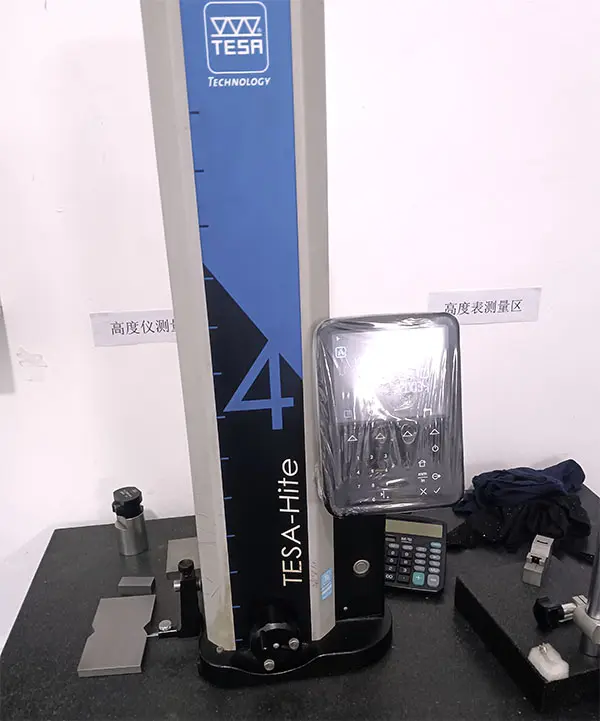
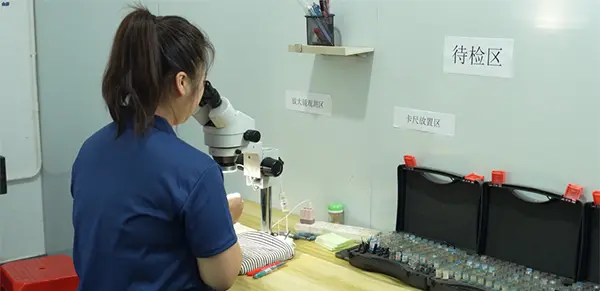
Reliability is a critical pillar of our manufacturing operations. Every finished part undergoes strict inspection procedures in our temperature-controlled metrology laboratories. Our inspection process includes:
Our Coordinate Measuring Machines (CMM) and laser scanning systems verify part geometry, thread parameters, concentricity, and parallelism to within 1.5 microns of design specifications.
Using advanced Helium mass spectrometry leak detection, we verify that our sealed electronic packages and housings maintain structural integrity at leak rates below $1 \times 10^{-9}\,\text{atm}\cdot\text{cm}^3/\text{sec}$.
All materials we use are fully compliant with RoHS and REACH standards. We supply comprehensive material test reports (MTR) and traceability documentation with every delivery.
A visual tour of our production floor, climate-controlled testing areas, and high-speed CNC manufacturing centers at Xinyunyang Precision Technology.
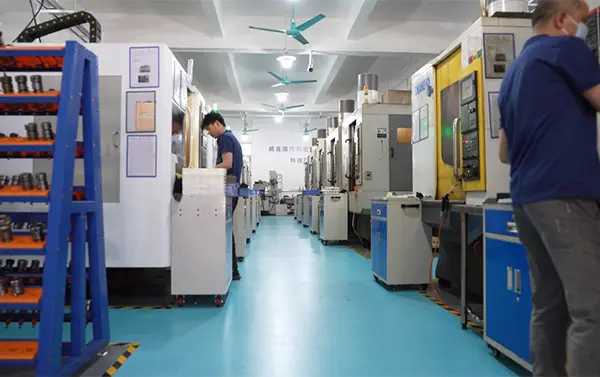
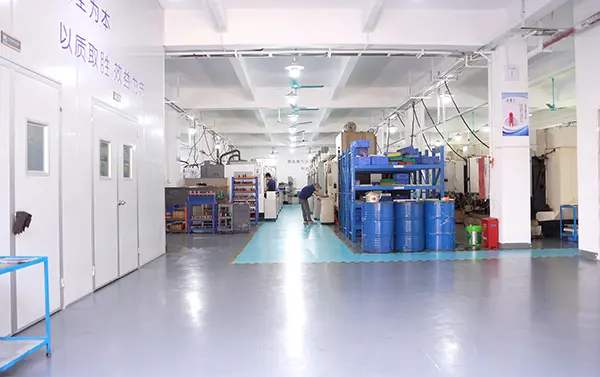
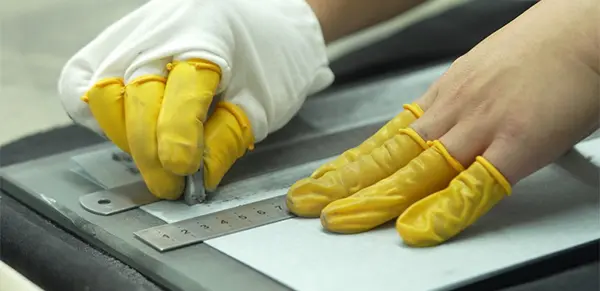
Explore our second collection of highly specialized components, which includes high-frequency connectors, heat-dissipation housings, structural frames, and custom-machined parts designed for industrial systems.
 Xinyunyang Precision