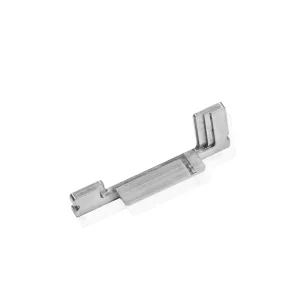
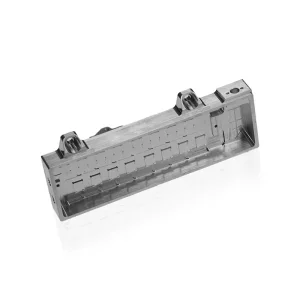
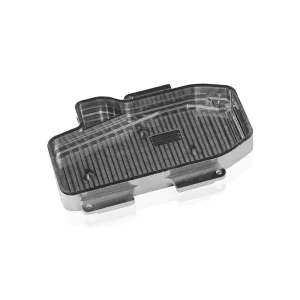
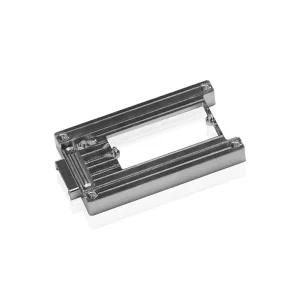
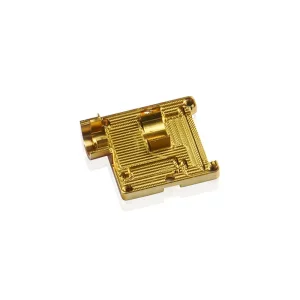
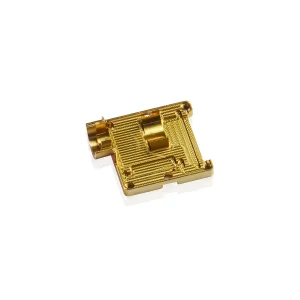
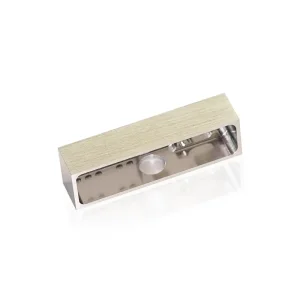
Select premium hermetic, aerospace, and high-frequency structural components certified through strict manufacturing protocols.
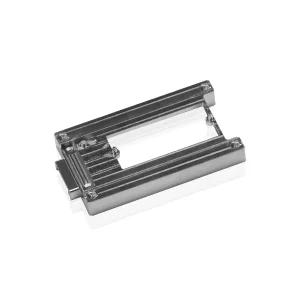
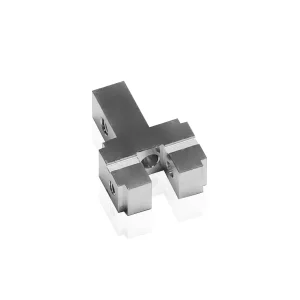
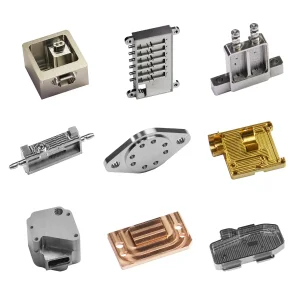
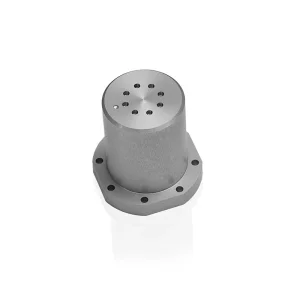
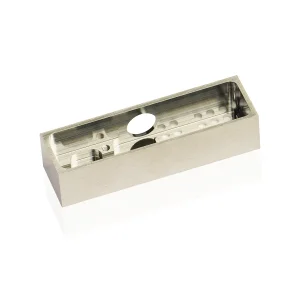
In high-reliability fields such as aerospace electronics, satellite telecommunications, and defense microelectronics, components manufactured from Kovar alloy (ASTM F15) must endure intense environmental, mechanical, and electrical stresses without losing hermetic integrity. This is where EIA-364 (Electrical Connector/Socket Test Procedures Including Environmental Classifications) becomes the absolute benchmark for material and package validation.
An EIA-364 Testing Report certifies that Kovar packages, custom glass-to-metal seals (GTMS), and precision structural housings are engineered to withstand simulated lifecycle stresses. Because Kovar possesses a precisely controlled Coefficient of Thermal Expansion (CTE) of approximately 4.7 × 10⁻⁶/°C from -30°C to 400°C—closely matching borosilicate glass—any micro-structural defect or poor brazing in the alloy under stress can result in catastrophic seal failures.
"Verifying your Kovar packages under EIA-364 standard protocols isn't just about regulatory compliance; it's about protecting mission-critical aerospace payloads and high-frequency 5G networks from micro-cracking and signal loss."
Top international procurement officers mandate detailed testing reports to verify properties like salt spray resistance (EIA-364-26), thermal shock endurance (EIA-364-32), and hermeticity leak rates under vacuum conditions. Without these reports, components cannot be approved for aerospace or advanced defense deployment.
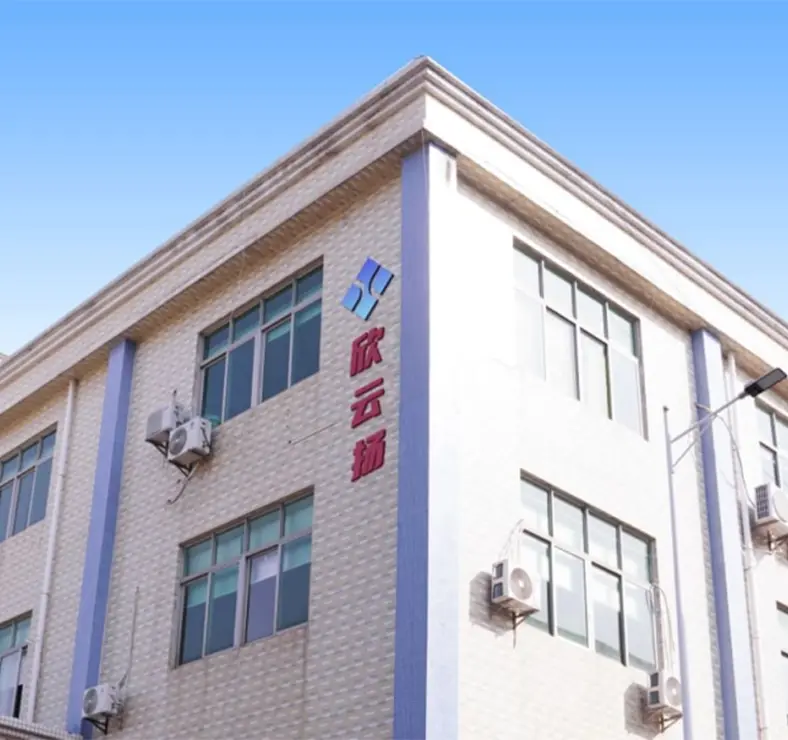
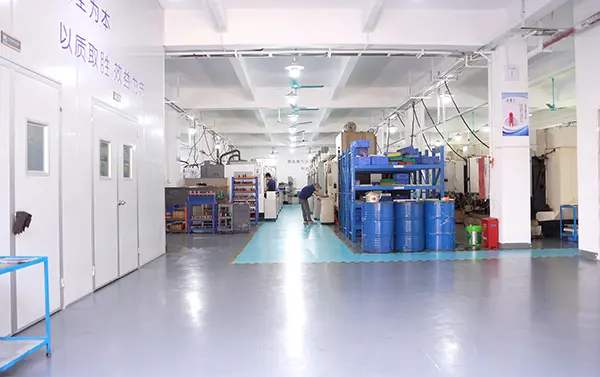
Figure 1: High-precision machining center and automated inspect lab at Xinyunyang Precision.
A comparative overview of critical evaluation procedures required for aerospace and optoelectronic hermetic housings.
| Test Standard | Parameter Evaluated | Test Methodology & Conditions | Acceptance Criteria for Kovar Components |
|---|---|---|---|
| EIA-364-32 | Thermal Shock Resistance | 5 to 100 cycles, extreme transition between -65°C and +125°C | No micro-cracking at glass-metal boundary; helium leak rate < 1×10⁻⁸ atm·cc/s |
| EIA-364-26 | Salt Spray (Corrosion) | Exposure to 5% salt solution for 48 or 96 hours at 35°C | No base-metal corrosion; validation of high-reliability gold/nickel plating barrier layers |
| EIA-364-03 | Vibration & Structural Integrity | High frequency random sweeps mimicking aerospace launch profiles | No mechanical structural displacement; continuous electrical continuity |
| EIA-364-20 | Dielectric Withstanding Voltage | High voltage application between hermetic pins and Kovar chassis | No electrical arcing, insulation breakdown, or current leakage |
| EIA-364-09 | Mechanical Durability | Repeated mating and unmating cycles of integrated connectors | Zero galling or dimensional distortion of critical mating interfaces |
Established in November 2014, Xinyunyang has adhered to its core values of Integrity, Innovation, Cooperation, and Sharing. Driven by engineering passion, the company focuses on Kovar precision processing technology as its core competitive edge, deeply cultivating high-barrier sectors like semiconductors, optical communications, aerospace, medical instruments, new energy, and defense.
Our ultimate mission is to supply miniaturized, highly customized, and ultra-reliable metal packaging solutions to global clients. Over a decade of consistent efforts and technical accumulation has empowered Xinyunyang to rise as a prominent hermetic package lids, Kovar alloy components, and high-tolerance parts supplier within China and across the global industrial grid.
Developing the future of hermetic sealing technology since 2014, backed by certified raw material traceability and premium testing protocols.
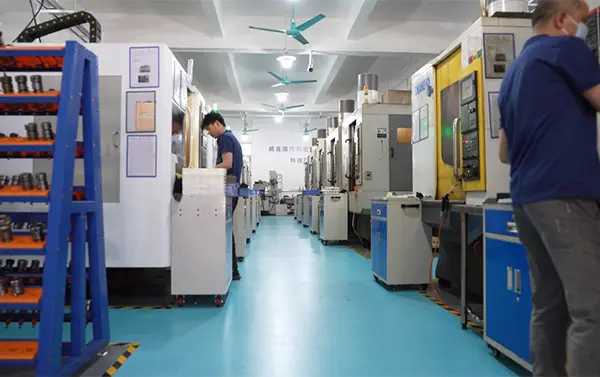
How our localized microelectronics manufacturing hub drives performance, reliability, and optimization.
The company boasts a highly specialized professional team exceeding 100 personnel. Crucially, research and engineering professionals comprise 30% of this workforce, ensuring continuous technology innovations.
Core technical members have been deeply immersed in microelectronic metal processing for over a decade. We proactively pioneer complex composite processing methodologies of specialized refractory metals, focusing heavily on 5G infrastructure, artificial intelligence packages, and military optoelectronics.
Underpinned by our robust ISO 9001 certified Quality Management System and intelligent digitized shop-floor scheduling systems, Xinyunyang has successfully optimized lead times, driving standard order dispatch efficiency up by 15% to 20%.
Raw machined Kovar parts cannot form high-reliability glass seals or perform adequately in damp environmental setups without precise plating control. Typically, EIA-364 guidelines demand verification of plating coatings. A common standard is nickel-sulfamate plating (acting as a diffusion barrier) followed by high-purity gold plating (per ASTM B488).
At Xinyunyang, our quality inspection processes strictly monitor chemical compositions and plating thickness to prevent intermetallic formation and plating peeling during thermal fusion processes. Our testing reports record coating thickness values verified via micro-XRF analyzers, assuring our overseas clients of flawless assembly performance.
By consolidating all processes within the advanced manufacturing clusters of Shenzhen, China, Xinyunyang couples superior technology with optimized production economies of scale. What does this offer you?
As operating frequencies surge beyond 40GHz into millimeter-wave spectrums, signal attenuation (Insertion Loss < 0.26dB) and thermal dispersion become critical concerns. Typical electronic packaging fails under high heat dissipation. Kovar assemblies process the structural strength and exact thermal matching required to support ceramic substrates (like Alumina or Aluminum Nitride) within modern high-power RF housings.
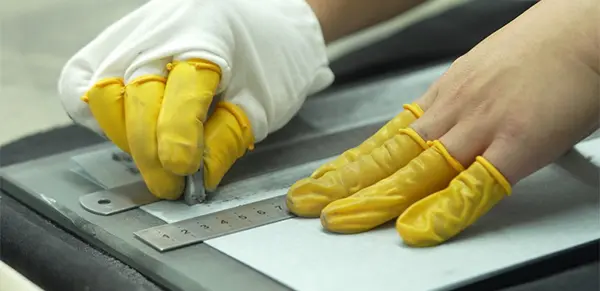
An inside look at our advanced engineering layout, specialized CNC machining floor, and QA stations.
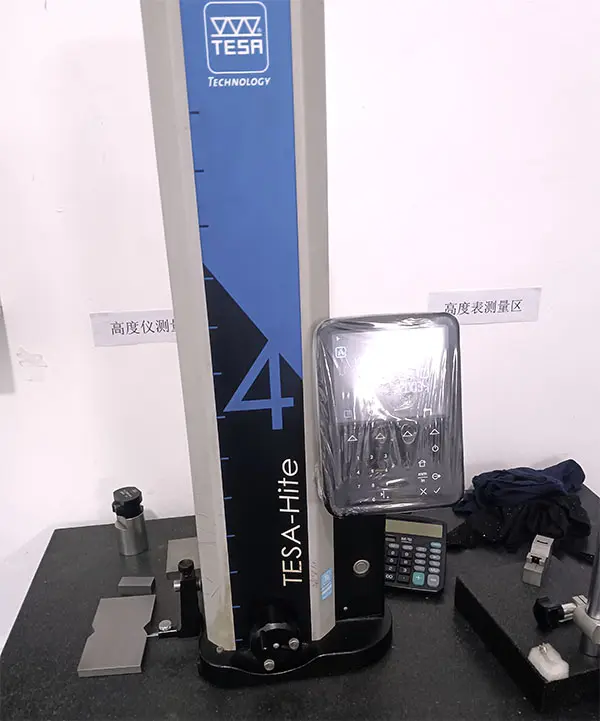
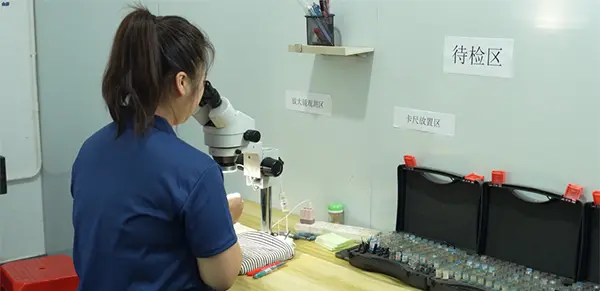
Direct, professional answers regarding compliance, procurement, material properties, and supply chain logistics.
Kovar (ASTM F15) is a specialized iron-nickel-cobalt alloy. Its chemical composition is engineered to present a thermal expansion curve matching that of hard borosilicate glass. When heated to high temperatures during sealing, the expansion values track, preventing glass fractures or joint separations as the component cools down.
Every shipment includes a comprehensive documentation pack: Material Mill Certificates detailing heat numbers and trace compositions, CMM dimensional analysis sheets, gold/nickel plating thickness maps (verified using X-Ray Fluorescence), and relevant EIA-364 environmental/hermetic test certificates, ensuring seamless entry through your internal quality control checkpoints.
Kovar oxidizes easily when exposed to standard environments without protection. We employ ultra-clean machining cooling systems, immediate clean-room degreasing, and store in controlled-humidity environments. Prior to shipment or microelectronic gold-plating, advanced acid-pickling and chemical cleaning are deployed to guarantee pure metallic interfaces.
Absolutely. Our technical engineering division (30% of our workforce) regularly collaborates with global engineering leads. We provide design-for-manufacturability (DFM) support, helping you optimize complex machining corners, reduce material wastage, and structure perfect seal geometry configurations.
Select premium mechanical assemblies engineered to perform reliably under challenging high-load operational envelopes.
 Xinyunyang Precision