Explore our certified catalog of high-performance components, precision-engineered shells, and customized hermetic packages.
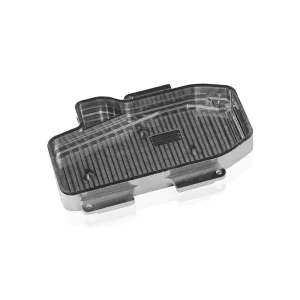
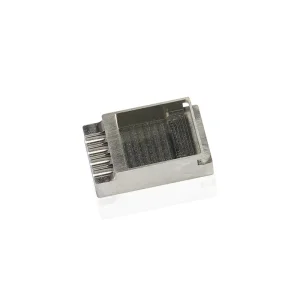
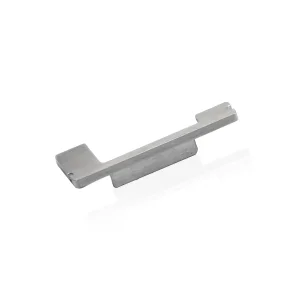
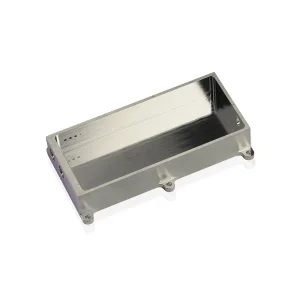
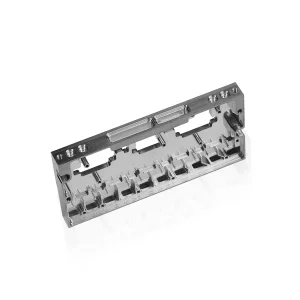
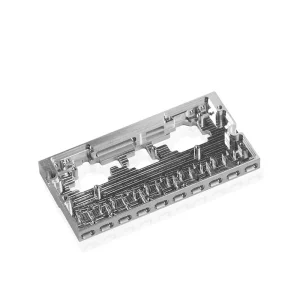
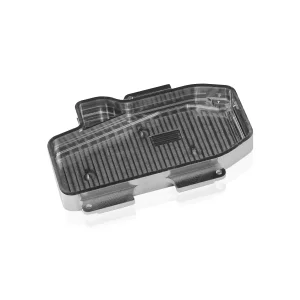
Founded in November 2014, Xinyunyang Precision Technology Co., Ltd. is a premier manufacturing enterprise that has steadfastly adhered to the foundational principles of Integrity, Innovation, Cooperation, and Sharing. Over years of continuous industry engagement, we have positioned ourselves as a significant supplier of hermetic package lids, Kovar alloy components, and high-precision finished aluminum parts both within China and across the global manufacturing landscape.
Our core competency revolves around state-of-the-art precision metal machining, advanced surface treatments, and high-reliability structural assemblies. We serve advanced, high-barrier fields including semiconductors, optical communications, aerospace, medical devices, and new energy systems. Xinyunyang is dedicated to engineering customized, miniaturized, and environmentally sustainable metal components that maintain strict hermetic integrity under the most extreme operating environments.
 High-precision processing capability
Advanced technology and equipment
Strict quality control (ISO 9001)
Flexible customized services
High-precision processing capability
Advanced technology and equipment
Strict quality control (ISO 9001)
Flexible customized services
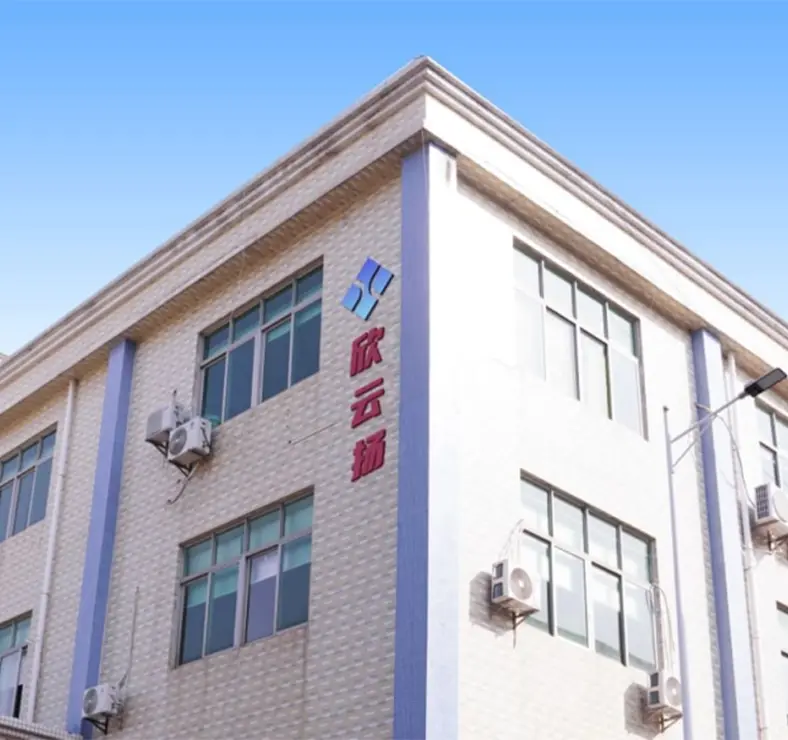
Driving operational excellence through technological depth, process design control, and systematic quality assurance.
The company maintains a high-caliber workforce of over 100 specialists, with R&D and technical engineers making up 30% of the staff. This core expertise allows us to continuously innovate complex finishing formulas and customized metallurgical layouts for our diverse clientele.
Deeply engaged in precision metal processing for over a decade, our core team proactively designs composite manufacturing practices. By coupling special alloys like Kovar with targeted high-grade Aluminium finishes, we address high-frequency (40GHz+) applications, high-density optical packages, and the strict demands of artificial intelligence hardware.
Utilizing our ISO 9001 certified quality management framework and an integrated smart scheduling system, Xinyunyang has successfully optimized lead times. General order turnaround is improved by 15%-20%, establishing us as an exceptionally agile tier-1 supplier in critical component supply chains.
A comprehensive examination of how material sciences, surface treatments, and clean initiatives shape modern hardware sourcing.
In modern industrial applications, raw aluminum is rarely deployed without specialized modification. The advancement of high-power communications, aerospace deployment, and thermal management has made the aluminium finish a crucial factor in hardware survival. Historically, finishes served basic anti-corrosion functions. Today, the focus spans multi-layer electroplating, hard anodizing (Type III), and chemical conversion coatings configured to alter surface properties like thermal emissivity, electrical grounding, and electromagnetic interference (EMI) attenuation.
As microprocessors push the boundaries of energy density, heat dissipation is paramount. Aluminum components integrated into these assemblies require high-emissivity coatings to assist radiative cooling. Concurrently, the rise of 5G and millimeter-wave telecommunications demands finishes with ultra-low surface roughness (Ra) to mitigate skin-effect losses at ultra-high frequencies. An irregular surface finish introduces signal attenuation, making precise chemical and electrochemical polishing absolute imperatives.
"Global sourcing directors are shifting away from traditional generalist plating shops to integrated manufacturing partners. Modern requirements demand a cohesive supplier capable of executing high-tolerance CNC machining alongside controlled chemical passivations on a single site."
Procurement teams facing stringent supply chains prioritize the following criteria during supplier audits:
How Xinyunyang solves critical hardware problems using advanced metal finishes and custom metallurgical assemblies.
Xinyunyang supports major industrial sectors with targeted manufacturing and finishing techniques:
| Industrial Sector | Key Challenge | Engineering Finish & Machining Solution | Target Specification/Result |
|---|---|---|---|
| 5G & Optical Communications | Signal loss and thermal buildup at frequencies exceeding 40GHz. | Precision silver or gold plating over Electroless Nickel, paired with low-roughness CNC milling. | Insertion Loss < 0.26 dB; optimal surface conductivity. |
| Semiconductor Processing | Corrosive gas exposure in plasma etch chambers. | Ultra-pure hard anodizing (Type III) with specialized hot-water/PTFE sealing. | Dielectric breakdown protection > 500V; superior chemical wear resistance. |
| Aerospace Systems | Extreme thermal fluctuations, mechanical vibration, and vacuum conditions. | Low-CTE Kovar housing assemblies with highly stable conversion coatings. | Matched CTE (4.7±0.2×10⁻⁶/℃); reliable structural hermeticity. |
| Medical Electronics | Sterilization resilience, biocompatibility, and wear resistance. | Electropolishing and biocompatible chemical passivation. | Zero surface contamination; excellent biological compatibility. |
Our ongoing research is guided by three primary technological trajectories:
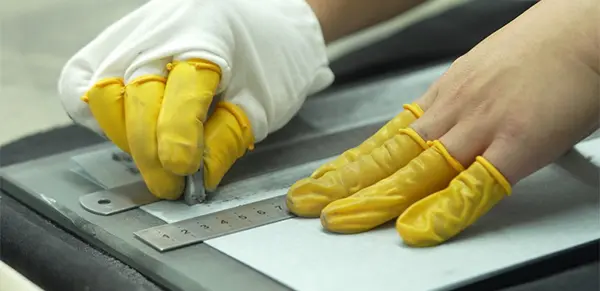
An inside look at our state-of-the-art production environments, precision testing centers, and cleanroom facilities.
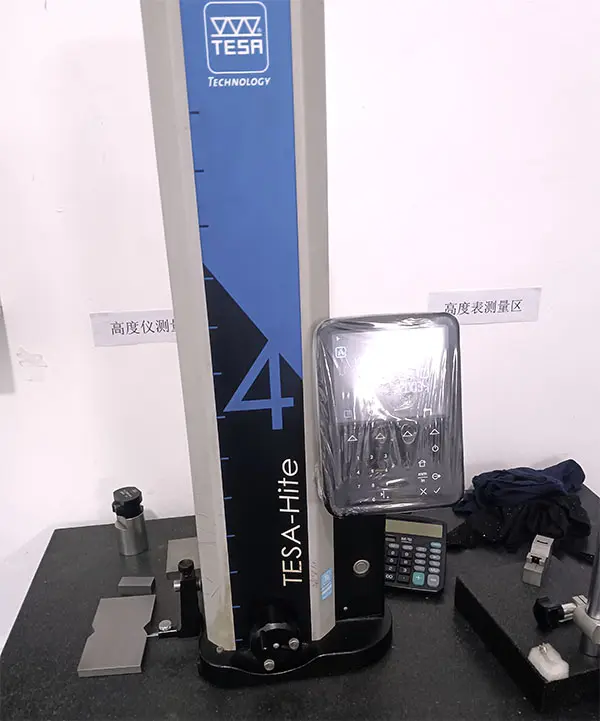
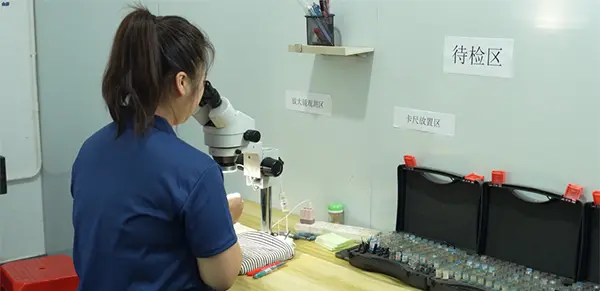
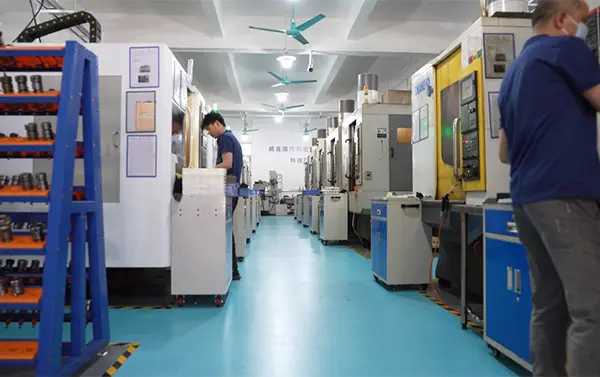
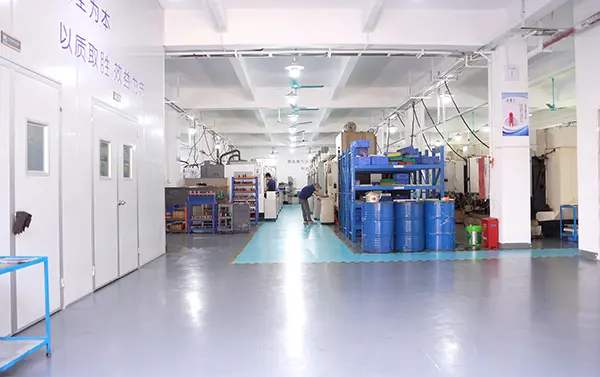
Answers to complex questions regarding material selection, surface engineering, and process capabilities.
Kovar (Fe-Ni-Co alloy) features a Coefficient of Thermal Expansion (CTE) of approximately 4.7×10⁻⁶/℃ from 30℃ to 400℃, matching the thermal contraction rates of borosilicate glasses and silicon crystals. In 5G communication components operating at 40GHz+, thermal dissipation is significant. Utilizing Kovar ensures that internal components do not shear or delaminate under high thermal cycling, maintaining a hermetic seal.
Type II anodizing refers to standard sulfuric acid anodizing, typically producing oxide layer thicknesses of 1.8 to 25 μm, primarily utilized for general corrosion protection and decorative coloring. Type III (Hard Anodizing) is conducted at lower temperatures with higher current densities, producing a dense coating > 50 μm. Type III is designed for applications demanding superior wear resistance and thermal isolation.
Direct gold plating on aluminum is vulnerable to peeling due to aluminum's rapid oxide layer formation. We deploy a multi-stage pretreatment process: first, chemical cleaning and micro-etching, followed by a double-zincation immersion layer. Next, an electroless nickel barrier (3-5 μm) is applied. Finally, gold is electrodeposited. This ensures robust chemical bonding, meeting MIL-SPEC adhesion requirements.
Yes. We specialize in co-engineering hybrid structures. By pairing aluminum heat sinks (high CTE) with Kovar sub-mounts or carrier frames (low CTE) using gold-tin (AuSn) or indium brazing, we provide localized thermal relief and structural stability, protecting fragile silicon and optical dies.
Our operations are fully certified under ISO 9001. We strictly comply with EU REACH and RoHS regulations. We offer hexavalent chromium-free alternatives (such as trivalent chromium passivations and chemical conversions like Alodine 1600/SURTEC 650) to support environmental compliance.
Insertion loss at high frequencies (>20-40GHz) is heavily influenced by surface roughness due to skin depth phenomena. We utilize ultra-precise, high-speed CNC milling to achieve low post-machining roughness (Ra < 0.4 μm), followed by controlled chemical polishing and electropolishing prior to plating. This minimizes signal resistance, keeping insertion loss below 0.26 dB.
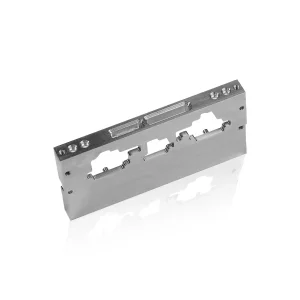
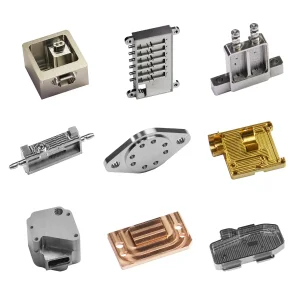
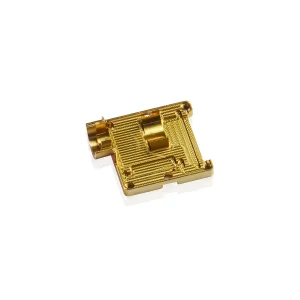
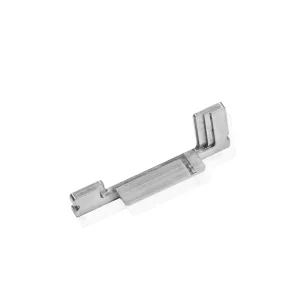
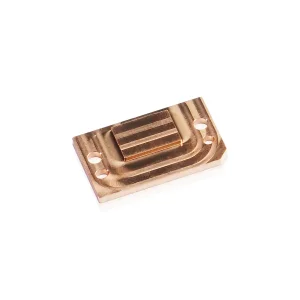
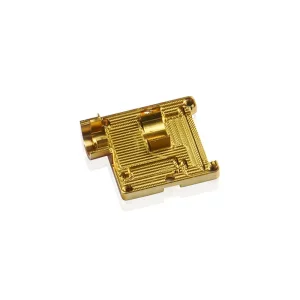
Discover our range of custom toolings, gold-plated components, copper elements, and protective armor systems.
 Xinyunyang Precision