Precision Engineering & Strategic Sourcing Guide
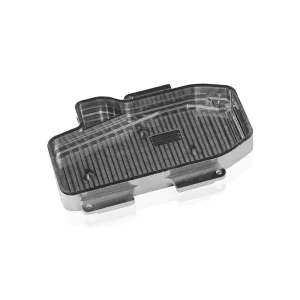
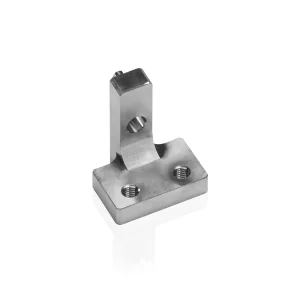
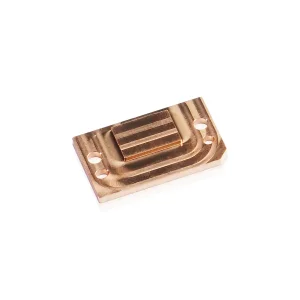
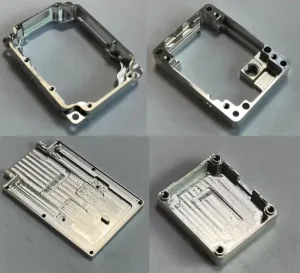
A deep dive into structural design, metallurgical sciences, and micrometer-level mechanical deviations defining next-generation global instrumentation.
In the realm of advanced manufacturing, the term CNC milling tolerance represents the threshold between functional success and structural component failure. Mechanical tolerance refers to the total permissible variation in a part's physical dimensions. As industrial equipment scales down and operational frequencies rise, the demand for precision transitions from standard millimeters to microscopic micrometer regimes.
For systems like 5G communication optical modules, semiconductor processing chambers, and medical implants, high precision isn't merely a performance indicator—it is an absolute operational requirement. Achieving these tolerances demands a synergistic integration of advanced multiaxis CNC platforms, thermal stabilization systems, and highly specialized alloy options, such as low-expansion Kovar and Titanium.
Every structural metal displays specific behavior under thermal loads. When selecting a CNC milling manufacturer, engineers must prioritize the supplier's mastery of the Coefficient of Thermal Expansion (CTE). For instance, mating components in hermetic packaging must exhibit identical thermal displacement profiles to prevent catastrophic cracking of glass-to-metal seals across thermal extremes from -65°C to +175°C.
Depending on the industry domain, milling thresholds fall under distinct tolerance bands. The standard breakdown below clarifies performance capacities under modern Industry 4.0 specifications:
| Precision Classification | Dimensional Limits (in) | Dimensional Limits (metric) | Ideal Application Sectors | Common Materials Processed |
|---|---|---|---|---|
| Commercial Standard | ±0.005" | ±0.127 mm | Structural brackets, generic housings, base fixtures | Aluminum 6061, Brass, Mild Steels |
| Fine Precision | ±0.001" to ±0.003" | ±0.025 mm to ±0.076 mm | Automotive manifolds, mechanical assemblies | Stainless Steel 304/316, Copper Alloys |
| High-End Micro-Machining | ±0.0001" to ±0.0005" | ±0.0025 mm to ±0.0127 mm | Optoelectronic modules, semiconductor wafer probes | Kovar (4J29), Titanium Gr. 5, Invar 36 |
| Ultra-Precision (Micron Limit) | < ±0.0001" | < ±0.0025 mm | Military aerospace aerospace sensors, optical arrays | Specialty monocrystalline alloys, fused silica |
With the commercialization of 5G, 6G, and terahertz signal transceivers, electronic components must shrink without sacrificing thermal dissipation capabilities. This forces CNC suppliers to implement sub-micron geometric tolerance schemes on miniature metal enclosures.
For semiconductors and optoelectronics, mismatching thermal growth results in failure. Using CNC milling for controlled expansion alloys like Kovar (Fe-Ni-Co alloy) allows manufacturers to maintain geometric tolerance while aligning CTE perfectly to glass or ceramic packaging.
Modern Industry 4.0 factories integrate real-time optical/laser measuring systems right inside the milling centers. This enables active compensation adjustments during cut stages to preserve micron level consistency over massive production runs.
Why leading global corporations leverage Chinese advanced precision ecosystems to mitigate structural inflation risk and secure production uptime.
As micro-machining supply lines face global volatility, Chinese manufacturing clusters have aggressively evolved from mass output providers to technological pioneers. The integration of Industry 4.0 intelligence within Chinese precision factories has reshaped the high-tolerance manufacturing sector.
By using localized raw material refining (such as highly consistent 4J29 Kovar and high-purity oxygen-free copper) alongside multi-axis Japanese and German milling centers, Chinese manufacturers offer a unique blend of extreme mechanical precision and unparalleled supply chain resilience.
Through close ties with localized metal-forming hubs, rapid prototyping times are cut by 30-40% compared to Western competitors. This structural speed guarantees that changes in engineering designs reach market validation faster, providing a powerful strategic advantage for complex electronics programs.
Our ISO 9001 certified manufacturing workflow integrates advanced real-time production scheduling systems. The immediate physical feedback and integrated structural logistics decrease assembly defect rates to less than 50 parts per million (PPM), even at tolerances below ±0.005mm.
Your Premier Global Partner for Hermetic Packaging & Specialized Ultra-Precision CNC Machining.
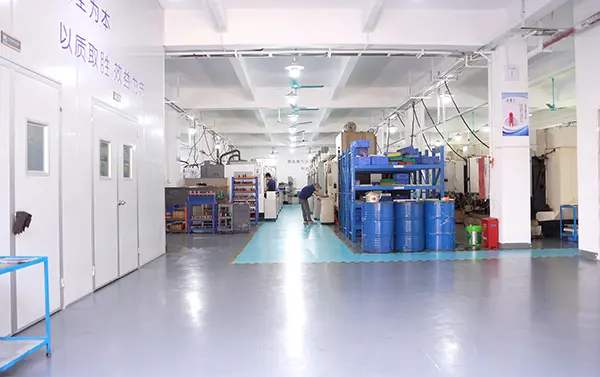
Founded in November 2014, Xinyunyang Precision Technology Co., Ltd. has established itself as an elite manufacturer committed to the highest tenets of industrial production: Integrity, Innovation, Cooperation, and Sharing.
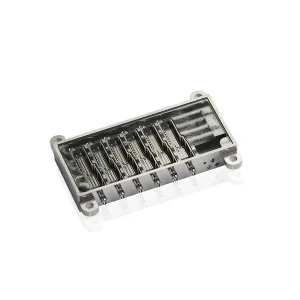
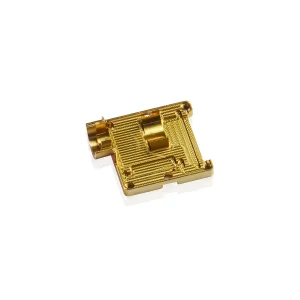
At the center of our engineering capability is our specialized mastery of Kovar alloy processing. We deeply cultivate components for semiconductors, optical communications, aerospace, advanced medical devices, and high-reliability defense systems.
We dedicate ourselves to providing miniaturized, customized, and hermetically isolated packaging solutions to global clients. Over a decade of consistent improvement has empowered us to serve as a cornerstone CNC supplier, driving high-performance components across global technological corridors.
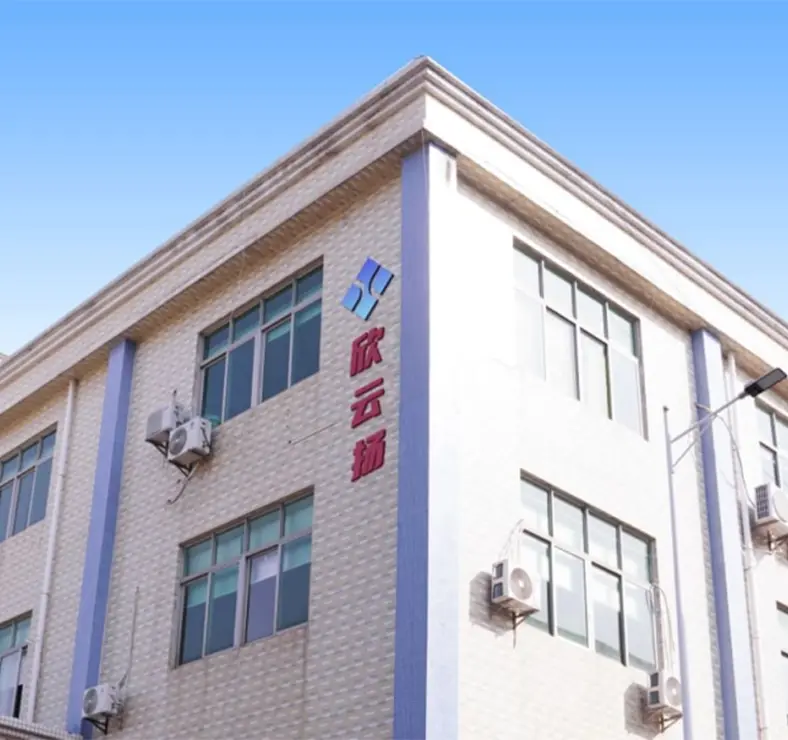

Xinyunyang employs a dedicated professional workforce of over 100 people, with mechanical and metallurgical engineers making up 30% of our entire staff. This enables fast, rigorous design-for-manufacturability feedback.
Our lead engineers have worked in micro-precision metal processing for over 10 years, continuously advancing multi-task processing techniques for special alloys like Kovar, titanium, and copper for 5G, AI, and new energy.
Using an ISO 9001 certified quality system and smart production scheduling, Xinyunyang has boosted regular order delivery times by 15%-20%. We serve as a highly agile partner for global supply chains.
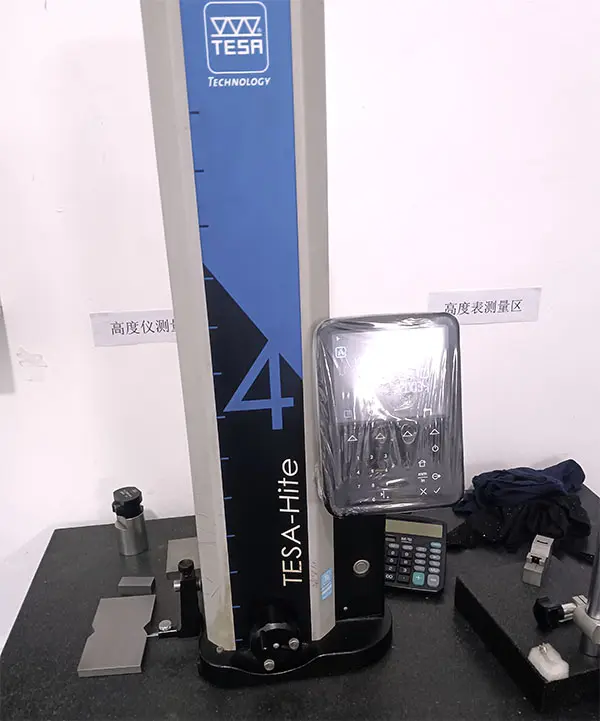
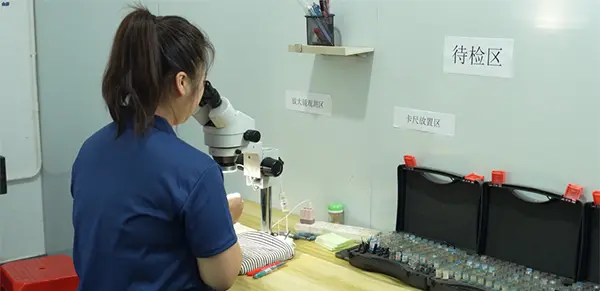
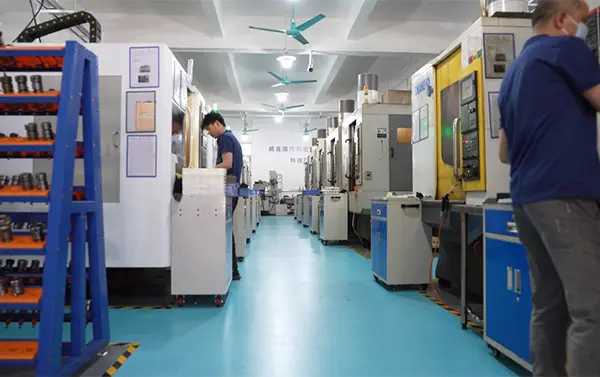
Critical strategies for engineering and global procurement teams sourcing multi-axis components with micron tolerances.
Processing alloys like Kovar (4J29) or high-strength titanium poses unique tooling challenges. Kovar's ductile yet high-toughness structure leads to severe work hardening at shear zones. Standard tool steel breaks down quickly under these conditions, causing subtle shifts in dimensional accuracy.
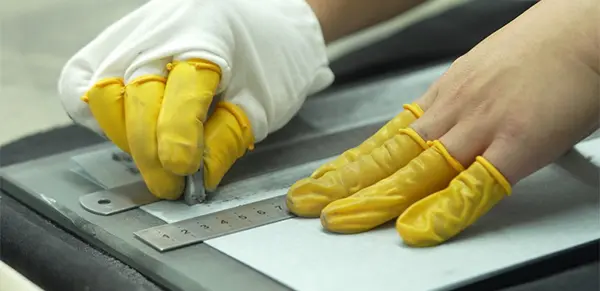
To consistently hit tolerances of ±0.005mm (5 microns), Xinyunyang uses specialized carbide tooling with titanium-aluminum-nitride (TiAlN) coatings. In addition, we deploy pressurized through-spindle coolant systems. This ensures chip clearing and thermal stability, keeping tool deflection to near-zero margins.
True precision is not limited to linear dimensions. Cylindrical profile, flatness, and perpendicularity are equally vital for high-reliability hermetic enclosures. When designing complex optoelectronic components, engineers should specify tolerance zones using ASME Y14.5 guidelines.
By understanding exact contact planes, our designers optimize milling toolpaths to prevent internal material stress. This ensures the component stays completely stable and flat after machining, preventing leaks in downstream glass-to-metal sealing operations.
Essential engineering and supply chain insights to help streamline your component sourcing process.
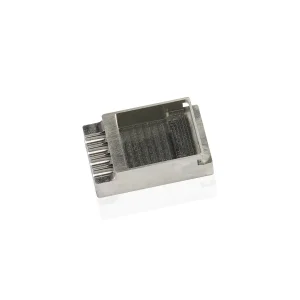
 Xinyunyang Precision