An authoritative analysis of technical routes, material sciences, thermal management capabilities, and systemic risk mitigation for Tier-1 industrial buyers.
Modern enterprises demand modular, high-cavity tool structures capable of handling complex geometries. Procurement leaders evaluate vendors based on comprehensive mold flow analyses, dynamic thermal simulation capabilities, and overall life-cycle cost efficiency (LTV).
The convergence of gigacasting initiatives across automotive sectors requires scaling manufacturing processes to accommodate ultra-large molds, high mechanical integrity tool steels (like Dievar and H13), and complex vacuum systems designed to eliminate inner-porosity issues.
Quality parameters must strictly align with international standards such as NADCA (North American Die Casting Association), ISO 9001, and advanced dimensional tolerance schemes. Precision testing methodologies protect large capital equipment investments.
Deep Metal Processing Experience
Professional R&D Specialists
Increase in Production Delivery Efficiency
Certified Quality System Architecture
Analyzing advanced cooling methodologies, custom tooling alloys, and automated simulation models engineered for extreme environment operations.
Traditional straight-drilled cooling lines fail to provide uniform thermal dissipation across highly contoured complex cavities. Next-generation manufacturers implement hybrid tooling systems featuring laser-powder bed fusion (L-PBF) 3D-printed tool inserts. These inserts follow the exact geometric shape of the casting, reducing cycle times by 15-30% and eliminating typical hot spots that cause heat checking and dimensional failure.
With aluminum pouring temperatures exceeding 650°C and injection pressures topping 100 MPa, structural fatigue is the leading cause of mold death. Standard DIN 1.2344 (H13) steels are systematically being replaced by ultra-refined electroslag remelted (ESR) proprietary grades such as Uddeholm Dievar, Orvar Supreme, or Böhler W360. These alloys prevent micro-crack propagation, sustain core toughness, and ensure mold lives exceed 100,000 shots.
To eliminate product structural porosity, molds are increasingly fitted with high-frequency acoustic and piezoelectric sensors coupled with machine learning monitoring modules. These IoT integrations monitor real-time metal flow velocity, absolute dynamic vacuum pressures, and die surface temperatures, predicting quality defects before the metal completely solidifies inside the cavity.
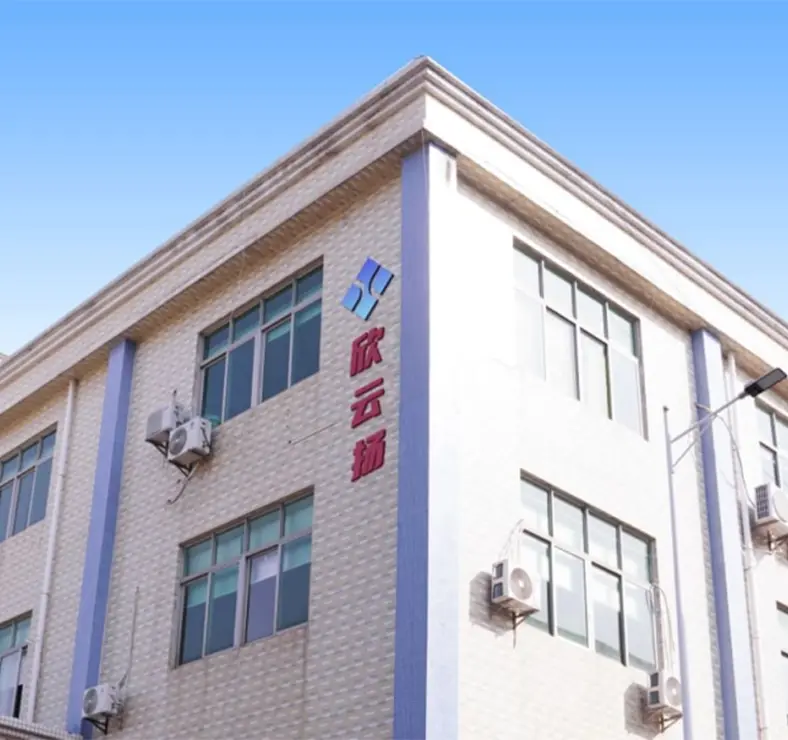
Founded in November 2014, Xinyunyang Precision Technology Co., Ltd. has established itself as an industry pioneer. Guided by its core principles of Integrity, Innovation, Cooperation, and Sharing, the company operates at the absolute apex of multi-material processing engineering.
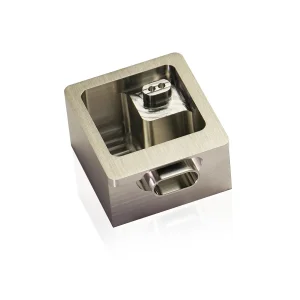
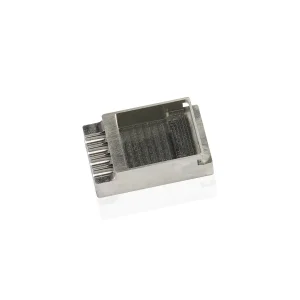
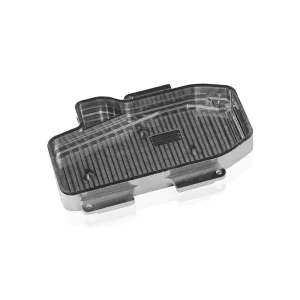
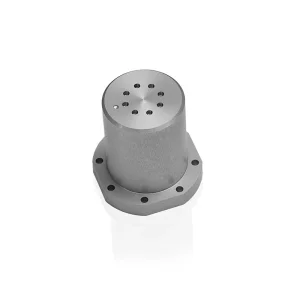
By specializing in high-precision, high-temperature material processing, including Kovar precision processing technology, Xinyunyang deeply cultivates semiconductors, optical communications, aerospace, medical instruments, and military aerospace industries. This rigorous manufacturing DNA ensures that all custom high-pressure die casting tooling components, mold inserts, and hermetic systems feature unrivaled stability under demanding industrial conditions.
 High-precision processing capability Advanced technology and equipment Strict quality control systems Flexible customized services
Our robust systemic framework translates directly into reduced total lead times, extended structural tool life, and predictable dimensional repeatability.
The company maintains a high-caliber technical team of more than 100 people, of which professional design and engineering specialists account for 30%. This concentrated intellectual capital allows us to conduct concurrent, multi-faceted engineering assessments during every initial product phase.
Our core members have been deeply engaged in precision metal processing for more than ten years. We continue to explore advanced composite processing techniques for specialized metals such as Kovar, titanium alloys, and high-thermal-conductivity tool alloys, actively supporting packaging needs in 5G, artificial intelligence, and new energy.
Operating under our strict, ISO 9001 certified quality management systems and intelligent production scheduling controls, we have increased the delivery efficiency of regular orders by 15%-20%. We represent a key technical partner capable of providing robust physical integrity to the global high-end supply chain.
Peek inside our high-precision production facilities, climate-controlled inspection laboratories, and manufacturing centers.
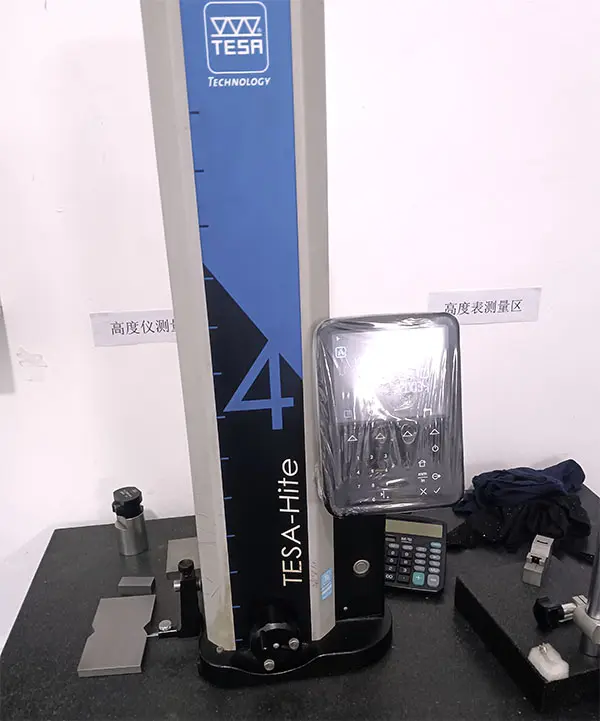
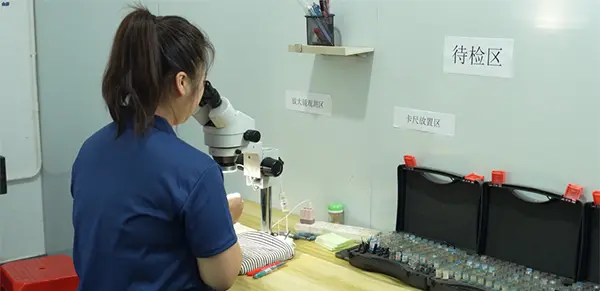
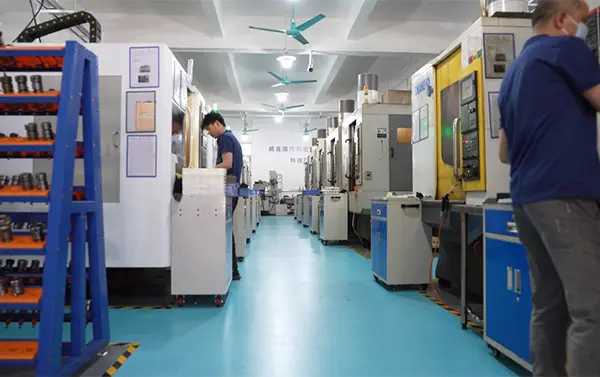
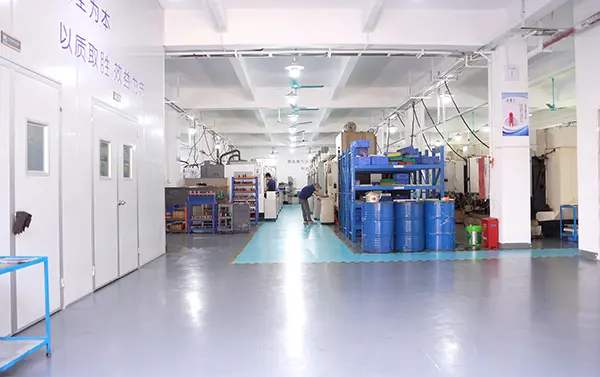
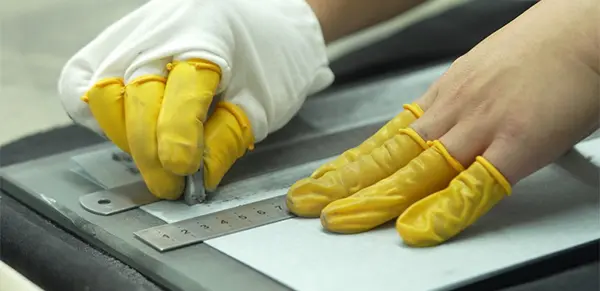
Mitigating cross-border operational risks through end-to-end certification alignments, logistics safety parameters, and regional integration models.
Our manufacturing protocols are fully integrated with international standardizations. By holding ISO 9001 compliance certificates, we ensure that every critical tool step—from preliminary hot-work metallurgical inspection to coordinate measuring machine (CMM) dimensional reports—is documented, audit-ready, and traceable.
European and American regulations mandate strict limitations on volatile chemical elements within manufacturing components. Our die casting tooling processes, structural components, and special anti-corrosion chemical treatments (such as high-end gas nitriding and PVD structural coatings) are completely compliant with RoHS, REACH, and associated material regulations.
To reduce tooling downtime and provide emergency support, we offer rapid engineering mobilization. Through strategic partnerships, our engineering teams provide on-site die alignment consulting, localized laser refurbishments, and structural modification options, significantly reducing operational downtime across North American, European, and East Asian production zones.
Industrial answers addressing thermal fatigue, dynamic vacuum architectures, metallurgical limits, and high-pressure casting process variables.
The operational lifespan is primarily dictated by five interrelated engineering parameters: (1) Tool Steel Grade & Quality: Standard H13 offers lower thermal fatigue resistance compared to premium electroslag remelted (ESR) grades like Uddeholm Dievar. (2) Thermal Stress Management: Poor cooling strategies lead to high delta temperatures across the die surface, inducing thermal cracking (heat checking). (3) Casting Injection Speeds & Pressure: High-velocity gates erode steel walls. (4) Mold Maintenance Profiles: Regularly scheduled thermal stress tempering cycles prevent stress accumulation. (5) Coating Technologies: Multilayer physical vapor deposition (PVD) coatings protect the core substrate from chemical erosion and aluminum soldering.
Eliminating inner porosity relies on intensive numerical analysis and mold design technology. By using state-of-the-art Moldflow and MagmaSoft simulation environments, engineering teams optimize gate placement, gate thicknesses, and injection vector profiles. Combined with high-efficiency vacuum valves (which actively draw out ambient atmosphere inside the die cavity before metal injection), we achieve structural component porosities near zero, making the parts heat-treatable and structurally fit for critical aerospace and automotive structural applications.
Conventional cooling lines are drilled straight using traditional CNC tooling, preventing them from accessing tightly curved features or deep-drawn cavities. This limitation leaves significant hotspots, prolonging cooling phases and creating thermal stress imbalances. Conformal cooling channels—manufactured via direct metal laser sintering (DMLS)—follow the exact physical contours of the product cavity. This spatial configuration creates optimal, uniform heat dissipation, reducing cycle times by up to 30%, improving geometric stability, and increasing tooling lifetimes.
Precision is a universally transferable metallurgical discipline. Machining aerospace-grade alloys like Kovar demands extreme geometric control, low-distortion heat treatments, and sub-micron dimensional tolerances. This rigor is directly applied to manufacturing critical mold inserts, precision slider components, core pins, and vacuum venting blocks. It guarantees that our structural mold tolerances are far superior to standard industrial tooling guidelines.
To avoid failure, critical verification parameters must be enforced: (1) Metallurgical Integrity: Microstructure grain-size validation and ultrasonic flaw testing of the main tooling blocks. (2) Hardness Profiles: Checking the rockwell hardness values of high-impact zones (typically 46-52 HRC depending on the alloy). (3) 3D Metrology Verification: High-precision coordinate measuring machine (CMM) data comparing the produced mold against the master CAD model. (4) Hydrostatic Pressure Inspections: Pressurizing all cooling lines to verify water tightness and eliminate internal casting leaks.
Our standard manufacturing and verification cycles for medium-to-large high-pressure die casting molds average 8 to 12 weeks from finalized CAD signs to first shot verification (T1 trial). Utilizing an integrated ERP-driven production scheduling architecture, we coordinate material allocations, multi-axis milling processes, and dimensional inspections, accelerating delivery speeds by 15% to 20% compared to fragmented supplier models.
 Xinyunyang Precision