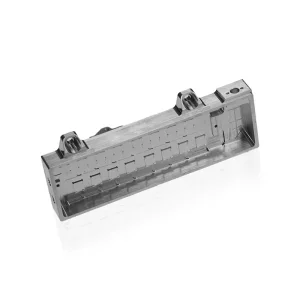
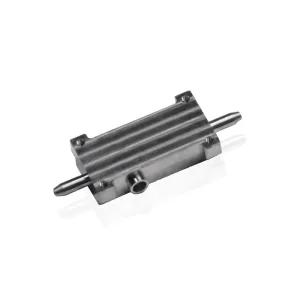
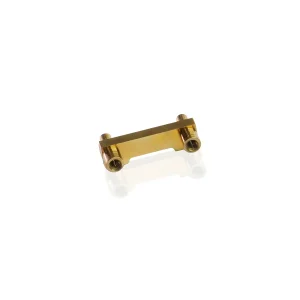
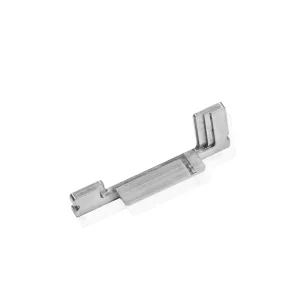
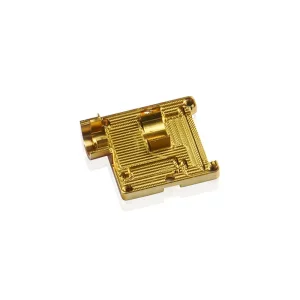
Engineered from aerospace-grade metals and processed using state-of-the-art furnace brazing technology. Click below to explore targeted configurations.
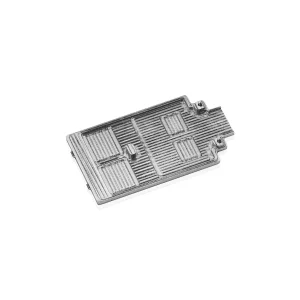
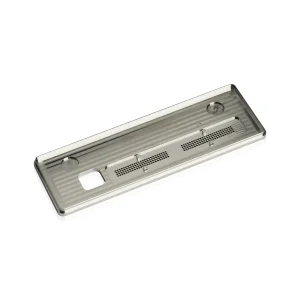
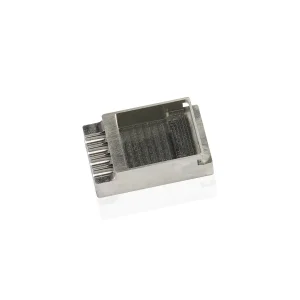
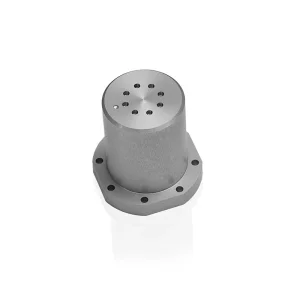
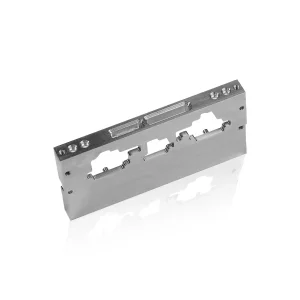
For high-stress hermetic seals, Kovar (Fe-Ni-Co) alloy stands out due to its unmatched expansion profile. However, achieving zero-defect joints requires superior material characterization and furnace optimization.
Kovar (composed of approximately 29% nickel, 17% cobalt, and the balance iron) is formulated specifically to match the thermal expansion characteristics of borosilicate glasses (such as Pyrex) and high-alumina ceramics over a wide temperature range (-70°C to 450°C). This matching Coefficient of Thermal Expansion (CTE), typically averaging 4.7–5.2 × 10⁻⁶/°C, prevents destructive mechanical stresses at critical joints during thermal cycling.
When sourcing Kovar brazing components, understanding the metallurgical phase transformations is crucial. Our state-of-the-art factory processes guarantee the stabilization of the austenitic phase down to -196°C, eliminating the risk of volume expansion associated with martensitic conversion in cryogenic aerospace applications.
 Chemical Etching: Acid etching removes surface scale and ensures maximum wetting.
Electroless Nickel Plating: Depositing a 2-5μm thick layer of nickel prevents oxidation and controls flow.
Hydrogen Annealing: Eliminates residual stresses incurred during high-precision CNC rapid prototyping.
Chemical Etching: Acid etching removes surface scale and ensures maximum wetting.
Electroless Nickel Plating: Depositing a 2-5μm thick layer of nickel prevents oxidation and controls flow.
Hydrogen Annealing: Eliminates residual stresses incurred during high-precision CNC rapid prototyping.
Choosing the right brazing environment determines the mechanical strength and vacuum integrity of the resulting joint. We utilize two principal processing routes based on target field conditions.
Operated at pressures below 1.33 × 10⁻³ Pa (10⁻⁵ Torr). Ideal for active metal brazing (AMB) without pre-metallization on alumina ceramics. Employs gold-base (Au-Ni, Au-Cu) or silver-base fillers. Best for oxide-free assemblies with ultra-low residual outgassing.
Utilizes dry, flowing hydrogen with a dew point controlled below -60°C. Highly reductive atmosphere continuously cleans Kovar and copper oxides without the need for acidic fluxes, achieving extremely clean, uniform fillets.
Integrates titanium active elements into the filler material (e.g., Ag-Cu-Ti). Directly bonds raw structural ceramics (Al₂O₃, AlN) to machined Kovar parts. This bypasses the complex, multi-stage molybdenum-manganese (Mo-Mn) metallization cycle entirely.
| Filler Alloy Composition | Liquid/Solidus Temperature | Recommended Atmosphere | Target Substrates | Joint Tensile Strength (MPa) |
|---|---|---|---|---|
| 72Ag-28Cu (Eutectic) | 780°C / 780°C | Dry Hydrogen / Vacuum | Kovar to Copper, Kovar to Metallized Alumina | 220 - 250 |
| 82Au-18Ni | 950°C / 950°C | High Vacuum | Kovar to Stainless Steel, Monel, Inconel | 310 - 350 |
| 50Au-50Cu | 970°C / 955°C | Hydrogen / Vacuum | Aerospace Feedthroughs, Optoelectronic Packages | 280 - 300 |
| Ag-Cu-Ti (Active) | 830°C / 850°C | Ultra-High Vacuum (< 5x10⁻⁶ Torr) | Direct Ceramic-to-Kovar Seals (no metallization) | 180 - 210 |
The rise of high-speed telecommunications, next-gen commercial space exploration, and medical miniaturization has transformed Kovar component sourcing requirements globally.
High-frequency transceivers require ultra-low dielectric losses. Kovar packages must feature excellent mechanical tolerances with gold plating designed to resist high insertion loss (IL < 0.26dB at 40GHz). The integration of reliable ceramic feedthroughs via vacuum brazing ensures zero signal distortion under continuous operation.
Satellites, rocket propulsion components, and telemetry modules operate in high-vacuum, extreme thermal shock environments. Procurement departments prioritize AS9100-aligned factories that guarantee zero voiding in structural brazes, mitigating structural fatigue under massive launch vibration loads.
In pacemakers and neurostimulators, absolute biological isolation is paramount. Hermetically sealed Kovar packages processed under highly controlled vacuum brazing environments ensure zero moisture ingress over 15+ years of active product lifetime inside the human body.
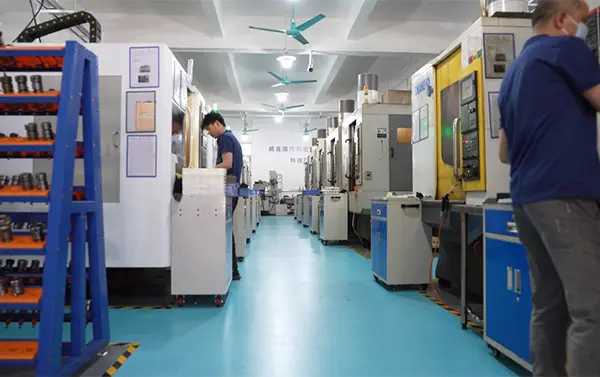
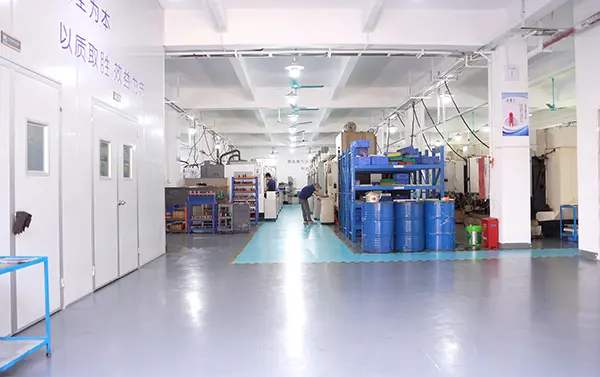
Modern manufacturing is no longer just about low labor costs. At our Factory 4.0 production facility in Shenzhen, we leverage fully integrated cyber-physical manufacturing systems. By combining advanced CNC milling, Swiss-type lathe turning, automated tooling fixtures, and localized vacuum furnace systems, we ensure maximum efficiency and quality consistency.
Through a meticulously organized raw material reserve (maintaining extensive inventories of certified ASTM F15 Kovar, high-purity oxygen-free copper, and high-purity silver/gold brazing foils), we insulate our customers from global supply chain disruptions. This strategic supply chain resilience reduces delivery lead times of complex custom configurations by 15% to 20% compared to standard Western suppliers.
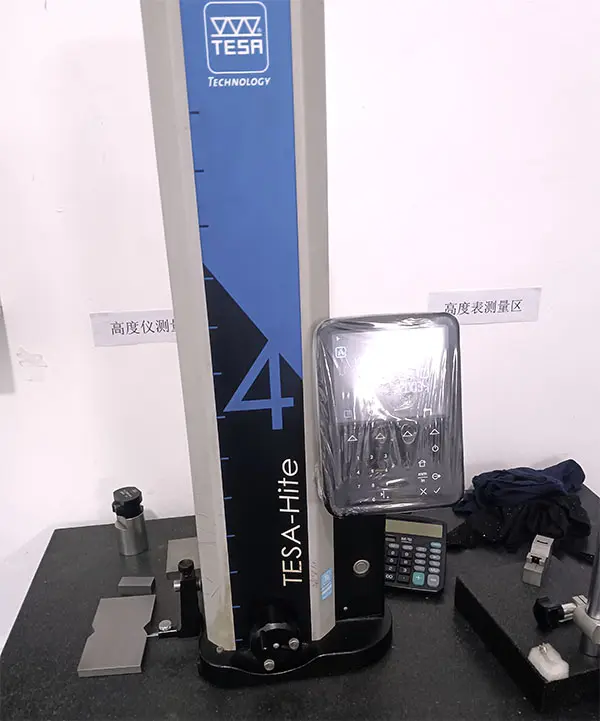
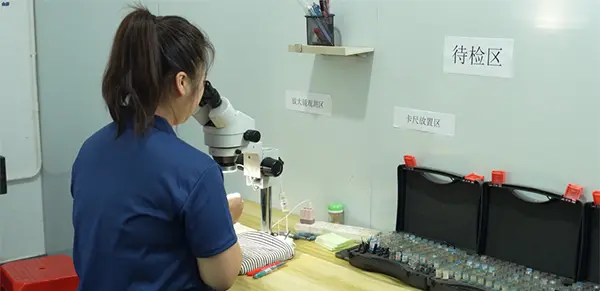
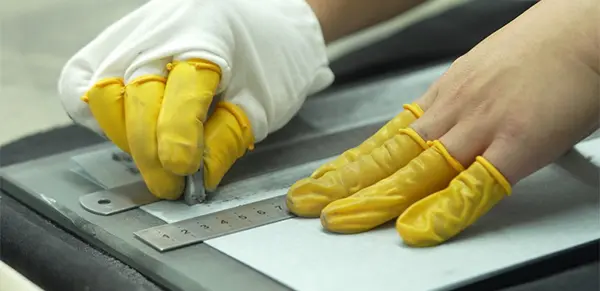
Our QA testing labs are equipped with advanced Coordinate Measuring Machines (CMM), Helium Mass Spectrometer Leak Detectors, X-ray thickness measurement instruments (for precision plating checks), and optical profile projectors, ensuring 100% compliance with MIL-STD-883 hermeticity standards.
Rapid Tooling Turnaround: CNC rapid prototyping delivers testable metal samples in 3-5 days.
Fully Traceable Materials: Mill test certificates (MTC) provided for all Kovar, Invar, and nickel shipments.
Advanced Cost-Engineering: Optimization of furnace batch configurations to minimize heating run costs.
Global Technical Support: Seamless interaction between our English-speaking engineering team and your design house.
Xinyunyang Precision Technology Co., Ltd. is a globally recognized manufacturer founded in November 2014. From our inception, we have adhered to our initial focus on industrial excellence, sticking strictly to our core business principles of Integrity, Innovation, Cooperation, and Sharing.
The company focuses on Kovar precision processing technology as its core competitiveness, deeply cultivating high-end, demanding niches in fields like semiconductors, optical communications, aerospace, medical devices, and new energy/military applications. We are fully committed to providing miniaturized, customized, and high-reliability metal packaging and brazing solutions to global customers.
Our primary goal is to remain a leading hermetic package lids, Kovar alloy components, and precision parts supplier in China and worldwide. Years of continuous effort, paired with the support of our international partners and loyal customers, drive us to continually push the boundaries of advanced metallurgy.
More than 100 dedicated employees, with professional technical engineers accounting for over 30% of our workforce.
Core members boast 10+ years in precision metal processing, pioneering composite techniques for Kovar, titanium alloys, and specialized RF packaging.
ISO 9001 quality system paired with intelligent production scheduling, boosting regular order delivery efficiency by 15%-20%.
Whether deploying components in high-altitude dry aerospace orbits, salt-fog maritime corridors, or deep subsea data links, we calibrate Kovar compositions to fit your local environmental envelope.
Continuous hydrostatic pressure and trace moisture risk demand hermetic reliability. We design Kovar assemblies with specific glass-to-metal (GTMS) designs, maintaining tight leak-rate tolerances (< 1x10⁻¹⁰ std.cc/sec He) to protect sensitive fiber amplifiers under deep oceanic pressure gradients.
In regions like the Middle East or SW North America, diurnal temperatures can swing from -10°C to +55°C within hours. The matching thermal coefficient of our Kovar alloy prevents CTE fatigue cracks, preserving internal dry nitrogen atmosphere environments without joint separation.
Salt-spray causes swift galvanic degradation between Kovar and copper interfaces. Our advanced dry-machining capabilities yield surface roughness values of Ra < 0.3μm. When coated with high-density electroless gold plating over chemical nickel barrier layers, our assemblies easily withstand 72-hour salt-fog exposure.
Answers to key engineering questions commonly asked by global procurement directors and microelectronics engineers.
Discover our wide variety of standard and customized products manufactured to extreme tolerances and tested under strict MIL-STD protocols.
 Xinyunyang Precision