Industrial Knowledge Briefing

High-Quality CNC Machine Full Meaning: Suppliers & Manufacturer Insights

Decoding Computer Numerical Control excellence, micro-tolerances, and strategic procurement frameworks for the global hardware elite.

Decoding "CNC Machine Full Meaning" and the Evolution of Modern Subtractive Fabrication

The terminology "CNC Machine Full Meaning" directly references Computer Numerical Control—a transformative digital manufacturing methodology that utilizes pre-programmed computational software to dictate the movements of factory tools and machinery.

Historically originating in the mid-20th century as simple numerical control (NC) utilizing punched paper tapes, modern CNC systems employ highly sophisticated CAD/CAM integrations. This allows for automated control over complex mechanical operations including milling, turning, routing, and EDM processing. By absolute conversion of physical human adjustments into digital Cartesian coordinates (X, Y, Z, and rotary axes), manufacturing enterprises achieve high precision levels that are practically impossible to replicate by manual machining.
In our current fourth industrial revolution, the functional capabilities of CNC technology have escalated. The integration of high-density tool paths, real-time tool wear detection sensors, and adaptive feed rate adjustments allows contemporary CNC systems to operate at micron-level tolerance bands (<±0.005mm). Global supply networks rely heavily on these systems to process high-reliability components, ensuring identical dimensional repeatability across millions of operational iterations.

Top Global Industrial Core Trends

  • Multi-Axis Synchronization: Shift toward 5-axis, 7-axis, and multi-spindle mill-turn platforms to complete geometric configurations in a single clamping setup.
  • Exotic Metallurgy Processing: Increasing application of specialized materials like low-expansion Kovar, Inconel, and titanium alloys within high-density environments.
  • AI & Smart Automation: The implementation of closed-loop optical scanning and adaptive compensation to minimize deviation due to thermal displacement.

Global Procurement Landscapes: Key Factors to Consider When Selecting CNC Suppliers

An exhaustive breakdown of critical compliance, manufacturing capability, and geographical factors governing Tier-1 industrial purchasing decisions.

01

Material Versatility & Specialized Alloys

Top-tier suppliers must showcase processing expertise across multiple materials, including standard aluminum and brass, as well as complex materials like Kovar (Fe-Ni-Co low expansion alloy), OFC copper, and titanium. Managing thermal elongation and abrasive qualities is key.

02

Rigorous E-E-A-T Certifications

Securing long-term stability requires adherence to recognized quality standards. Global OEMs look for ISO 9001, AS9100 (Aerospace), ISO 13485 (Medical Devices), and environmental directives like REACH and RoHS, ensuring complete transparency within the material supply chain.

03

Comprehensive Surface Engineering

High-quality performance is often determined by post-machining finishes. Leading manufacturers offer specialized services such as chemical passivation, localized gold or nickel electroplating, and dry-machining capabilities designed to achieve ultra-smooth surfaces (Ra < 0.3μm).
When global engineering groups source custom metal components, they aren't just looking for machining time. They are looking for strategic partners who understand how different metals behave under stress, temperature shifts, and environmental exposure. For example, in high-frequency RF connectors or hermetic packages, a mismatch in thermal expansion can lead to catastrophic system failure. Suppliers must have the technical knowledge to select the right grades of Kovar alloy or oxygen-free copper, optimizing both performance and longevity.
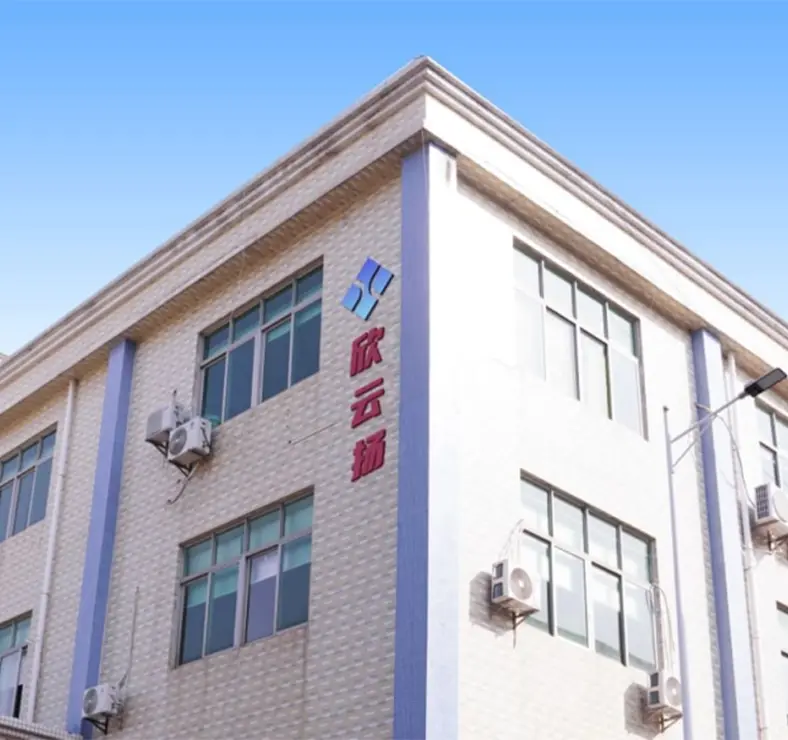
Xinyunyang Factory Main Banner

About Us: Xinyunyang Precision Technology Co., Ltd.

A premier company established in November 2014, Xinyunyang Precision Technology Co., Ltd. has remained dedicated to industrial innovation, operating on core values of Integrity, Innovation, Cooperation, and Sharing.

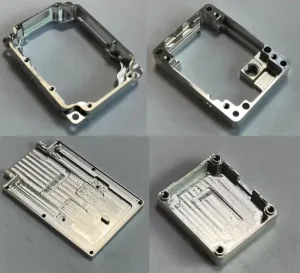
Xinyunyang focuses on Kovar precision processing technology as its core competitiveness. We specialize in serving advanced industries, including semiconductors, optical communications, aerospace, medical devices, and high-reliability defense programs. Our goal is to provide customized, highly reliable metal packaging solutions and hermetic package lids to global markets, establishing ourselves as a premier supplier in China and worldwide.
  • Icon Bullet High-precision processing capability - Achieving extreme tolerances for critical structural assemblies.
  • Icon Bullet Advanced technology and equipment - Modern multi-axis machining facilities built for complexity.
  • Icon Bullet Strict quality control - End-to-end trace inspections and internal metallurgical validation protocols.
  • Icon Bullet Flexible customized services - Agile rapid prototyping supporting quick production ramp-up.
100+
Professional Staff
30%
Technical Engineers
10+ Yr
Core Experience

Production Competitiveness: 3 Core R&D Capabilities

CAPABILITY 01

Professional Technical Team

Our professional team of over 100 personnel, with technical engineers making up 30%, provides highly skilled support from initial DFM design to final part delivery.

CAPABILITY 02

Industry Benchmark R&D

Our core engineers average over ten years in precision metal processing, continuously refining techniques for special alloys like Kovar and titanium, designed specifically for emerging 5G, AI, and new energy needs.

CAPABILITY 03

ISO 9001 Certified Optimization

Using an ISO 9001 certified quality system and smart scheduling software, Xinyunyang improves delivery efficiency by 15%-20%, maintaining excellent quality control across high-volume production runs.

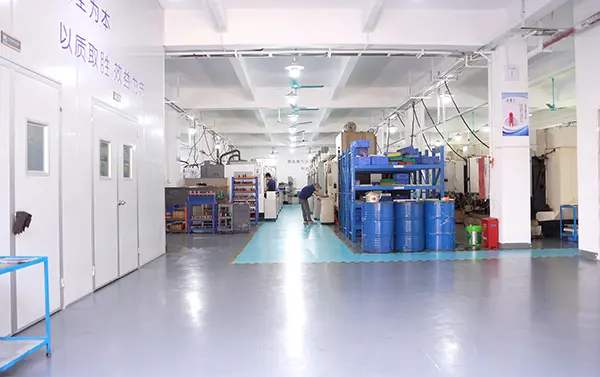
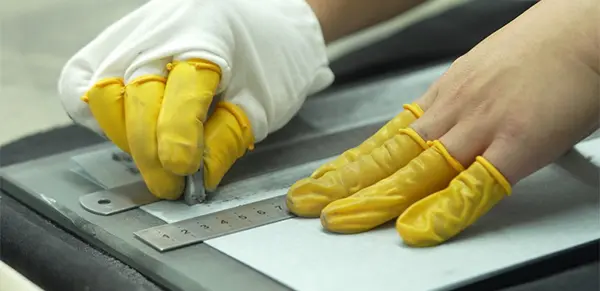
Enterprise Internal Display

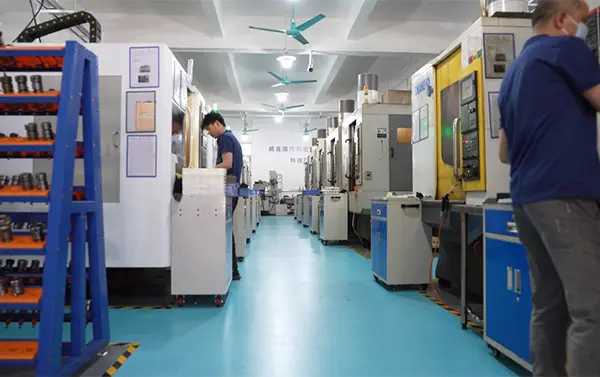
A transparent look inside our production facilities, clean rooms, and quality control departments.
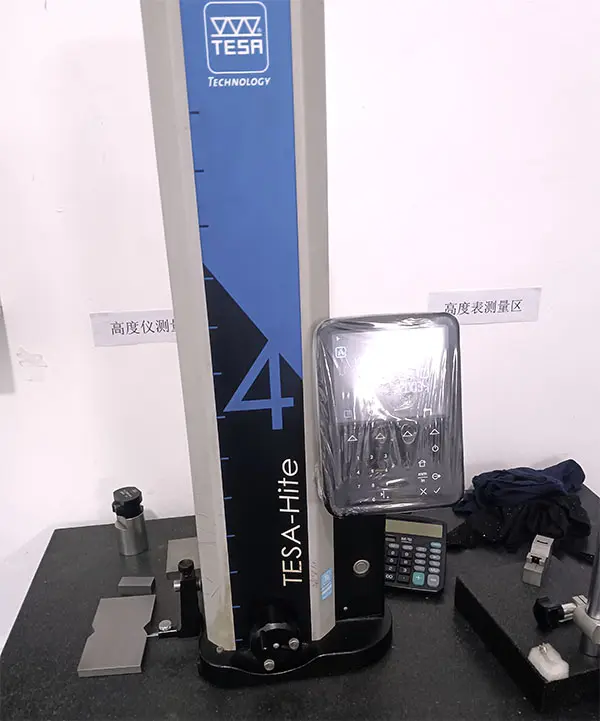
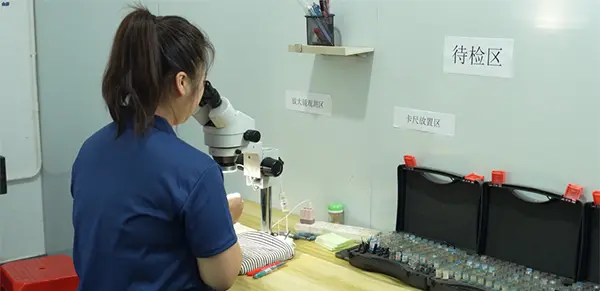
Main Production Facility Floor
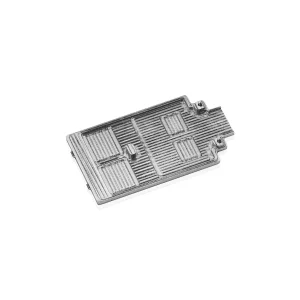
Machining Cell Close up Inspection and Metrology Dept High precision testing gear Specialized finished component storage

China Industry 4.0: Strengthening Global Supply Chain Resilience

How the integration of digital twin simulations, IoT tracking, and smart cluster ecosystems drives reliable, cost-effective manufacturing.

Modern high-end manufacturing is no longer defined solely by mechanical skill. It requires highly integrated digital networks. China's Industry 4.0 initiative connects every step of the process, linking regional raw material suppliers, specialized heat-treatment hubs, surface finishing services, and smart logistics systems into a cohesive, responsive network.
For international buyers, this structural integration offers a significant competitive edge:
  • Minimized Lead Times: The proximity of raw material stockpiles and tooling manufacturers reduces setup times from weeks to days.
  • Scalability: Scalable operations handle initial pilot batches of just a few parts as easily as they scale up to high-volume monthly runs.
  • Cost Efficiency: Smart resource management and automated high-speed production tools keep per-part costs exceptionally competitive.
Additionally, the localization of engineering talent in manufacturing hubs like Shenzhen enables direct communication between physical production teams and R&D engineers. This direct collaboration helps resolve manufacturing challenges early, optimizes component designs for cost efficiency, and reduces production errors before tool paths are initiated.
Industry Value Addition: By leveraging coordinated material sourcing and optimized machining setups, we minimize waste, improve raw material yields, and provide transparent traceability documentation for every batch of specialty alloys we process.

Localized Applications: CNC Precision in Core Industries

Detailing the exact technical role high-tolerance CNC-machined components play in tomorrow's critical systems.

5G & Next-Gen Optical Networks

Optical communication systems rely heavily on precision-milled aluminum, copper, and Kovar housings. These materials must provide exceptional EMI/RFI shielding and reliable thermal management for optoelectronic components, ensuring stable signal transmission over long distances.

Aerospace Filtration & Fluids

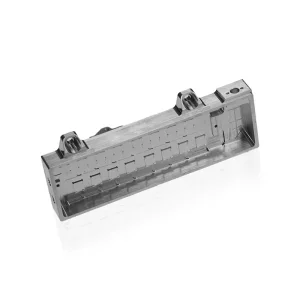
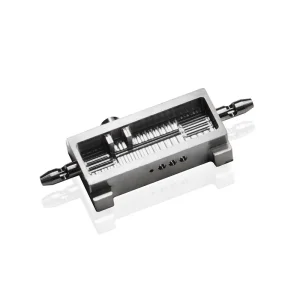
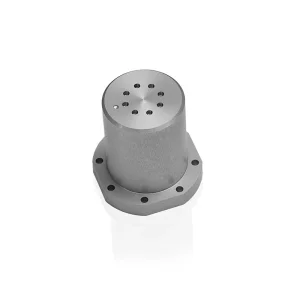
Designed for extreme pressure variations and high temperatures, our high-precision filter structures and custom fluid control housings provide reliable durability in aircraft and spacecraft hydraulic, lubrication, and environmental systems.

Semiconductor Packaging

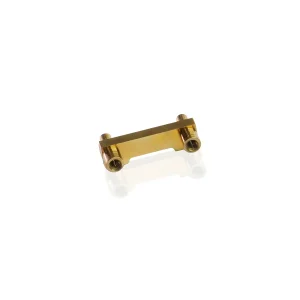
Hermetic ceramic-to-metal and glass-to-metal seals require Kovar base plates and components machined to exact dimensions. This matching thermal expansion prevents micro-fractures under extreme thermal cycles, ensuring high reliability in chip manufacturing.

Technical FAQ & Procurement Decision Support

Direct, actionable answers to key engineering and supply chain questions for high-precision components.

What are the key advantages of using Kovar alloy in CNC machining?
Kovar (an iron-nickel-cobalt alloy) is specifically engineered to have a thermal expansion coefficient that matches borosilicate glasses and alumina ceramics. This characteristic makes it essential for high-reliability hermetic packaging, optical modules, and sensor assemblies where temperature fluctuations could compromise traditional glass-to-metal joints.
How do you achieve an ultra-smooth finish (Ra < 0.3μm) on tough materials?
Achieving an ultra-smooth finish on abrasive metals like Kovar requires highly controlled dry-machining procedures, specialized diamond or carbide cutting tools, optimized spindle speeds, and micro-stepped tool movements. This combination minimizes tool chatter and heat buildup, producing a smooth surface finish that offers excellent resistance to salt spray and corrosion.
What quality certifications are necessary for critical aerospace and optical parts?
For critical applications, manufacturers should hold ISO 9001 certifications to ensure consistent, documented processes. Depending on the industry, additional qualifications like AS9100 (for aerospace validation) or RoHS and REACH compliance are essential to guarantee complete material transparency and traceability throughout the supply chain.
How does Xinyunyang improve lead times for customized CNC components?
We use integrated digital production scheduling, maintain a dedicated team of engineers, and keep raw material stockpiles of specialty alloys on hand. These practices allow us to quickly review DFM designs, minimize setup and changeover times, and improve overall delivery efficiency for standard custom orders by 15% to 20%.